
The refusal of an FSU officer to testify in a long-delayed sexual assault case raises painful questions about duty, accountability, and the protection of girls in Sierra Leone.
Dear Commander Massaquoi,
I write to you publicly because this is not a small matter, and it is not a private one. It concerns the life, dignity, and justice rights of a young survivor of sexual violence in Bo City, and it concerns the credibility of the Family Support Unit (FSU) itself.
The Family Support Unit in the Sierra Leone Police was not created to be a passive desk in the police force. It was created because Sierra Leone recognized a painful truth: that women, girls, and children face violence inside homes, families, and communities, and that ordinary policing was not enough to protect them. The FSU was established to respond with seriousness, sensitivity, and urgency to sexual abuse, domestic violence, child abuse, and other forms of family and community harm. It was created to protect the vulnerable, preserve evidence, support survivors, and help deliver justice.
That is why communities place such enormous trust in the FSU.
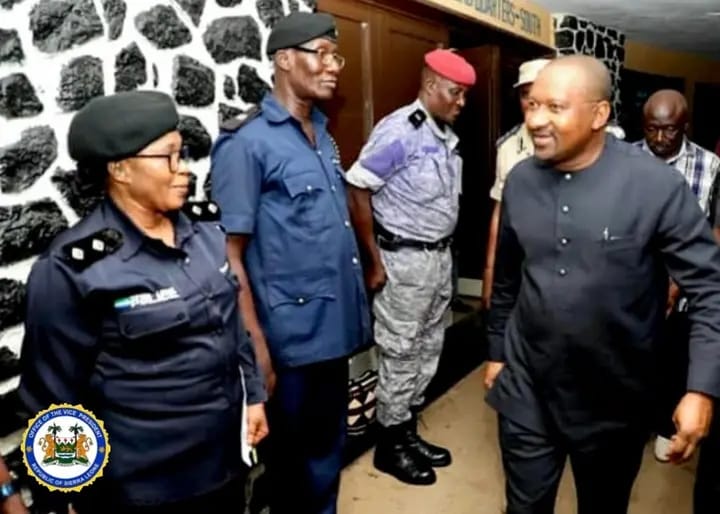
Families do not come to the FSU when life is normal. They come when something terrible has happened. They come when a child has been violated. They come when a woman has been beaten, assaulted, or abused. They come carrying pain, shame, fear, and hope. They come because they believe the FSU exists to protect lives, defend the innocent, and safeguard the family unit, especially those who are least able to protect themselves: children, girls, and women.
That trust is sacred.
And that is why the refusal of FSU officers to fully perform their duties in sexual assault cases is not just negligence. It is betrayal.
Testifying in court in a sexual assault case is not optional for FSU officers. It is not a favor. It is not something to be done only when convenient. It is part of the duty they accepted when they took on this work. More than that, it is a moral obligation. When an FSU officer documents a case of sexual violence, that officer becomes part of the chain of justice. If that officer later refuses to appear in court, that refusal does not merely inconvenience the process. It undermines the survivor’s chance at justice and strengthens the hand of the alleged perpetrator.
That is exactly why the conduct of your officer (name withheld for now) in the ongoing four-year gang sexual assault case before the Bo High Court is so unconscionable.
His refusal to testify must not be acceptable.
A young survivor and her family have spent four long years cooperating with the authorities and attending hearing after hearing, only to watch the case dragged through delay and uncertainty. For an FSU officer, whose role is supposed to center protection and justice, to then refuse to appear and testify in such a case is a grave failure of duty. It sends a terrible message to the survivor. It sends a terrible message to the public. And it sends a terrible message to every girl in Sierra Leone who may one day need the protection of the FSU.
It tells them that even if they report, even if they cooperate, even if they endure, the very officers meant to help them may fail them when it matters most.
That cannot stand.
Commander Massaquoi, leadership is tested not when things are easy, but when officers under your command fail in matters of conscience and duty. This is one of those moments. The public has a right to expect that the Bo Central FSU will not tolerate conduct that frustrates justice in a sexual assault case. Survivors have a right to expect that FSU officers will stand by the cases they document. And you, as Commander, have a responsibility to ensure that the Unit under your watch remains worthy of the trust the people place in it.
We therefore urge you to take immediate and appropriate action to ensure that justice is served in this case. That must include ensuring that your officer appears and testifies as required, and making it clear that refusal to perform such a duty in a sexual assault case is unacceptable.
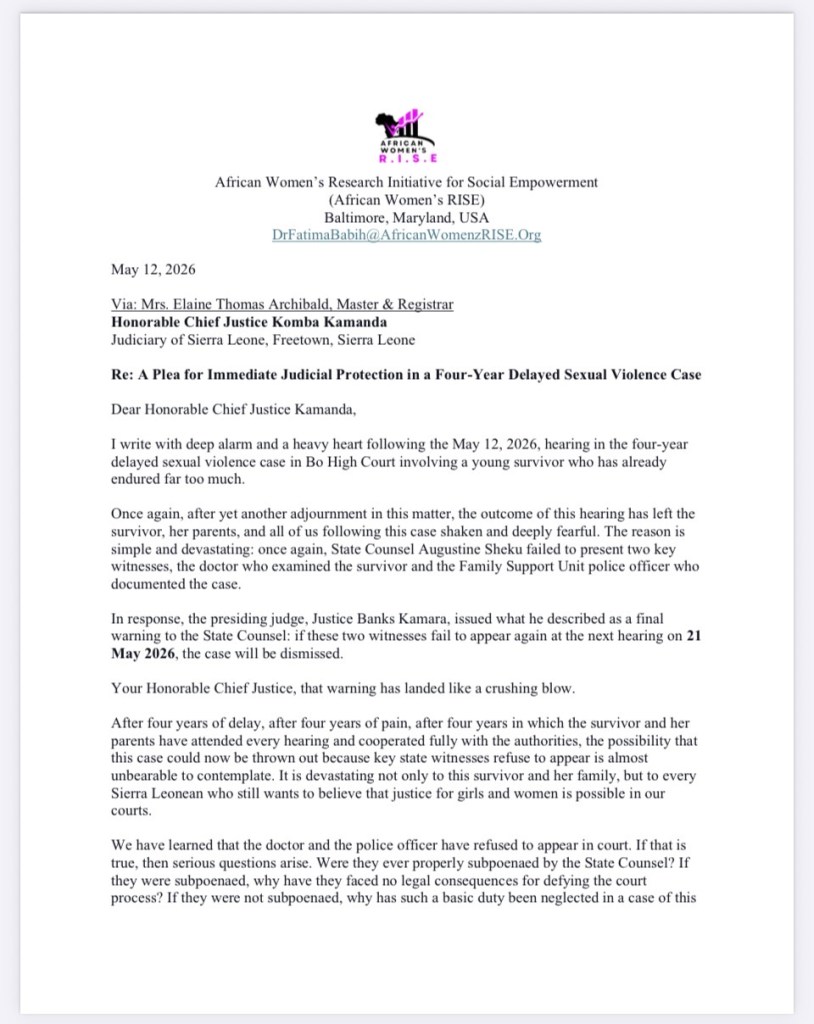
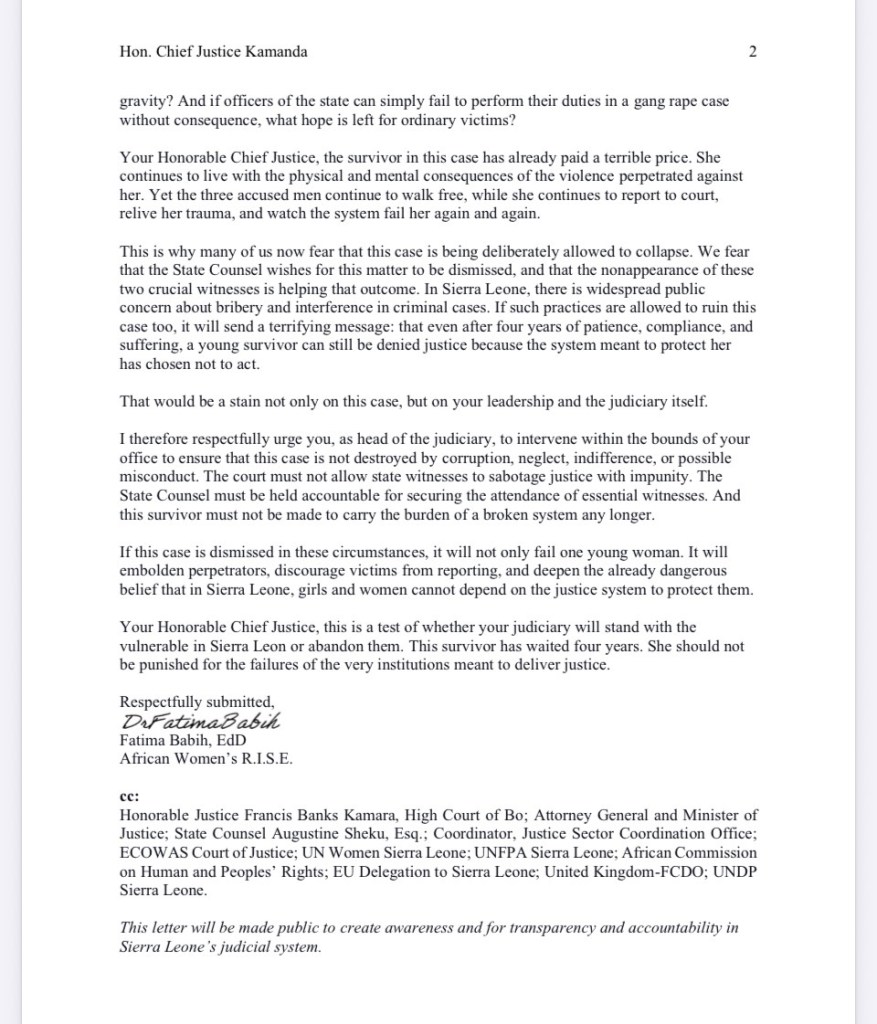
This is bigger than one case. It is about whether the FSU will stand with survivors or abandon them. It is about whether public faith in your Unit will be strengthened or destroyed. It is about whether girls and women in Bo can still believe that when they knock on the door of the FSU, they are knocking on the door of protection, not betrayal.
The survivor in this case has carried enough psychological and phisical pain already. She should not also have to carry the weight of institutional failure.
Do what your office requires.
Do what justice demands.
Do what conscience should not allow you to avoid.
The FSU cannot claim to protect women and girls while its own officers help cases collapse through silence and refusal.
Justice requires action, not excuses!
Sincerely,
Dr. Fatima Babih

