
by Fatima Babih, EdD
For years, with the help of highly paid international lobbyists, Fatima Bio has carefully cultivated a global image as a champion of girls and women.
That performance is now ending.
In a recent video speech responding to allegations of forced initiation into Bondo/Sande society, Fatima Bio revealed something profoundly troubling: she is no longer attempting to remain neutral on FGM. She is now openly defending the institution most closely associated with the practice. And in doing so, she has sent an unmistakable message to anti-FGM campaigners across Sierra Leone:
I am going to protect this institution. And there is nothing you can do to stop me.
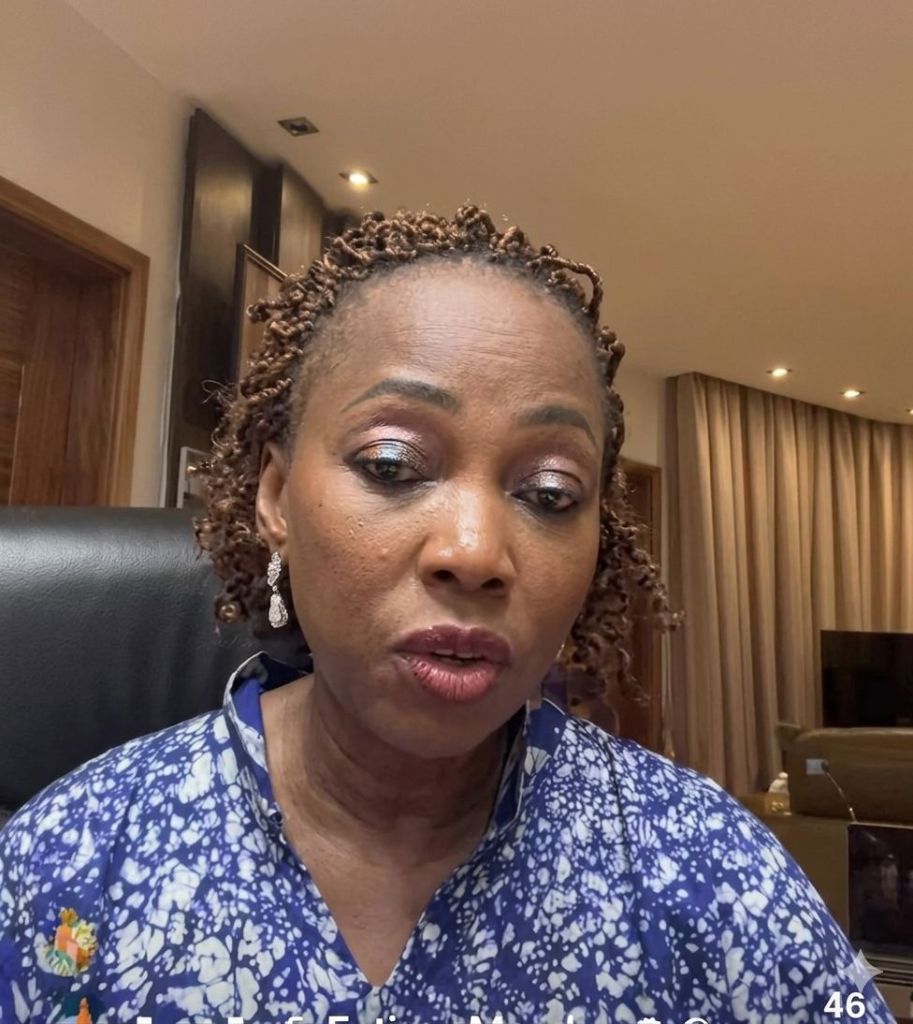
What is most striking is not her position. What is most striking is how she arrived at it, through a series of calculated moves designed to gaslight victims, delegitimize activists, misrepresent the law, and position herself as the true defender of women and African culture while systematically undermining their protection.
This is not accidental. This is deliberate.
Neutrality to Open Defense
For years, Fatima Bio largely avoided taking a clear public position on FGM itself. Whenever questioned about controversial traditional practices, the topic was carefully reframed around culture, women’s autonomy, consent, or personal choice. The language was always careful. The position was always ambiguous.
But something shifted in her recent speech.
Rather than focusing on the protection of girls, Fatima Bio devoted most of her energy to defending Bondo society, celebrating Bondo women, glorifying cultural gatherings, and establishing her own association with the institution.
The change is not subtle. It is fundamental.
Compare the two positions:
- The Position of Anti-FGM Campaigners: How do we protect girls from harmful practices?
- The Position of Fatima Bio: How do we protect Bondo from criticism?
Those are not the same questions. They are not even compatible questions. One centers on vulnerable children. The other centers on institutional preservation.
One asks: What harms are these girls facing?
The other asks: How do I defend this practice against those trying to stop it?
When a sitting First Lady shifts from neutrality to this kind of active defense, it signals something critical: political calculation has displaced child protection as the priority.
And that shift did not happen by accident. It happened because Fatima Bio is increasingly dependent on Sande networks for her growing political ambitions. Sande/Bondo structures represent social capital, cultural authority, community mobilization, and most importantly potential political constituencies.
Defending them carries rewards. Questioning them carries risks. So, Fatima Bio choses to defend them. And in doing so, she crossed a line that cannot be uncrossed.
A Law That Does Not Exist
Throughout her speech, Fatima Bio repeatedly cited “the law” as justification for her position on FGM. Her refrain was consistent:
The law says 18 years.
Nobody should be forced.
Consent matters.
The government has made it clear that at the age of 18…
On the surface, these statements sound reasonable. They sound like the position of someone committed to child protection.
But there is a critical problem: the law she is citing does not exist.
Sierra Leone does not currently have a national law that explicitly criminalizes FGM or establishes 18 as the legal age for undergoing the procedure. This is not a debatable point. This is documented fact:
- UNICEF has publicly stated that Sierra Leone’s Child Rights Act does not prohibit FGM
- International legal analyses have repeatedly noted that Sierra Leone has failed to enact a specific anti-FGM law
- International organizations including Equality Now, UNFPA, and UNFPA have continued calling for Sierra Leone to pass an FGM law, which would be unnecessary if such a law already existed
- Sierra Leone is repeatedly classified internationally as one of the few countries where FGM remains legal because no explicit national prohibition exists
What does exist in some areas are:
- Community agreements
- Local chiefdom understandings
- Voluntary Memoranda of Understanding (MOUs)
- Advocacy frameworks
- Policy discussions
Yet Fatima Bio repeatedly presents these fragile, non-binding arrangements as though they constitute binding national law passed through proper legislative channels.
The Gaslighting
This is where the analysis becomes crucial, because what Fatima Bio is doing is not simply misrepresenting the law, she is gaslighting an entire nation.
Gaslighting is the systematic practice of distorting reality so that victims begin to doubt their own perception of truth. It involves presenting false information with such confidence and authority that people start to question whether what they know to be true is actually true.
Consider what is happening: Fatima Bio states, with the authority of her office: The law says 18 years.
Anti-FGM advocates, who have spent years researching Sierra Leone’s legal landscape, say: There is no such national law.
International organizations that have studied this issue extensively say: Sierra Leone lacks an explicit FGM prohibition.
Fatima Bio continues, with apparent confidence, to present the law as settled fact. Who is the average Sierra Leonean to trust in this contradiction? The First Lady of the nation, speaking with institutional authority? Or advocacy organizations that she is simultaneously attacking as self-interested money-seekers?
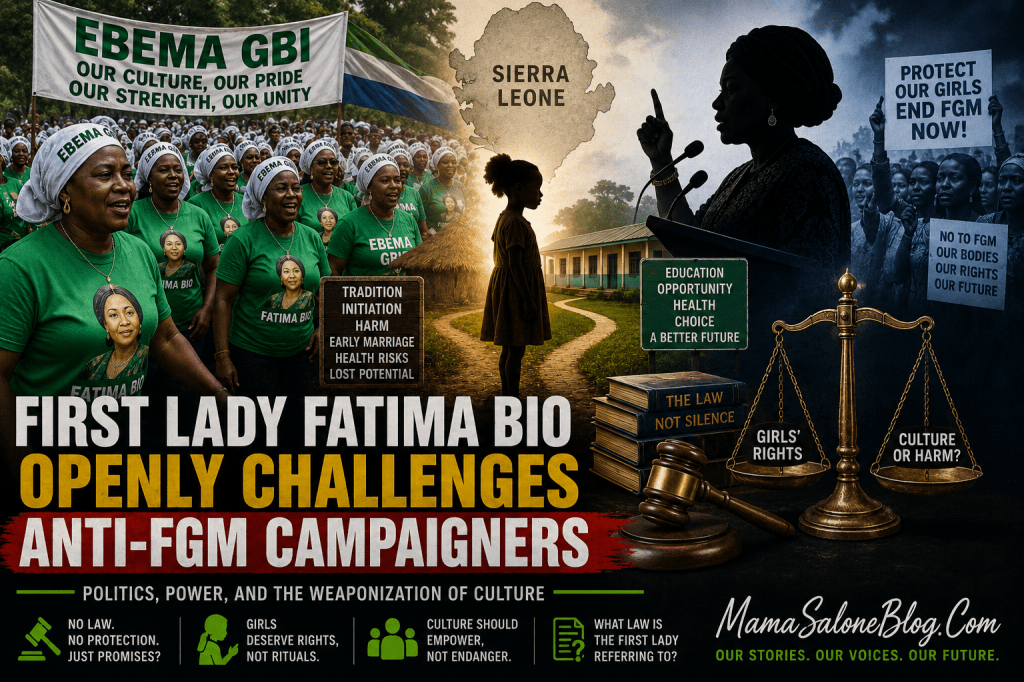
That is the power of gaslighting. It does not require the lie to be subtle. It requires only that it be repeated with sufficient authority and confidence.
Question She Never Answers
If there truly is a national law setting FGM at age 18, Fatima Bio should be able to answer these simple questions:
- What is the name of the law?
- What is the statute number?
- When did Parliament pass it?
- Which specific section sets the age at 18?
- Why does UNICEF state that the Child Rights Act does not prohibit FGM?
- Why have international organizations continued calling for Sierra Leone to pass an FGM law if one already exists?
She does not answer these questions. She cannot answer them because the law she is citing exists only in her imagination. It does not exist in the Sierra Leone legal code.
And when a First Lady repeatedly cites a law she cannot identify, while simultaneously encouraging FGM practitioners not to fear opposition from anti-FGM advocates, Sierra Leoneans have every right to question whether she is informing the public or deliberately misleading them.
The answer is increasingly clear: she is gaslighting victims, activists and the public.
Erasing of the Victim
Perhaps the most revealing aspect of Fatima Bio’s speech is what is missing from it: any genuine concern for the alleged victim.
A woman, not showing her face in a video message, alleges that she was forced into initiation. This is not a theoretical debate. This is an actual person claiming actual harm.
What would we expect from a leader genuinely focused on protecting girls and women? We might expect:
- Concern for the victim’s welfare
- Empathy for her experience
- Investigation into what happened
- Commitment to preventing future victims
- Safeguarding measures to protect others
What Fatima Bio delivered instead was:
- Questioning of the victim’s identity
- Scrutiny of her account
- Attacks on her credibility
- Dismissal of inconsistencies in her story
In other words, Fatima Bio became the judge and jury, and the alleged victim became the subject of interrogation. The Sande/Bondo institution became the subject of protection.
That reversal reveals everything about Fatima Bio’s actual priorities. The victim does not matter. Institutional preservation matters most. The harm experienced by girls and women does not matter. The defense of Bondo society matters most.
This is not the language of child protection. This is the language of institutional defense masquerading as concern for culture.
The Attack on Activists
The most politically revealing moment in Fatima Bio’s speech came when she turned her attention directly to anti-FGM campaigners themselves. She stated:
“And for certain the women who use the circumstances of circumcision just to make money, make your money. Nobody is stopping you but stop accusing other people on things that you have no clue about.”
In other words, Fatima Bio is claiming that anti-FGM activists are only in this fight to make money. And she is admonishing them to focus on that and stay silent. This statement is remarkable, not for its accuracy, but for what it reveals about Fatima Bio’s political strategy.
Notice what she did: She shifted the debate away from the actual concerns being raised and redirected attention toward the people raising them. When activists raise questions about:
- Girls under 18 still being initiated
- Adult women forced initiations still occurring
- Health and psychological consequences of FGM
- Community struggles with child protection
Fatima Bio’s response is not to address those concerns. Her response is to attack the activists themselves: “You’re making money off this. So, shut up.”
This is a classic political tactic: ad hominem deflection.
When the facts become uncomfortable, when the evidence points toward harm, redirect the conversation away from the harm and toward the motivations of those documenting the harm.
“You have financial interests,” is Fatima Bio’s defense. “Therefore, your concerns are not valid or legitimate. What you say does not matter”
But here is what matters: Whether an activist receives funding has absolutely nothing to do with whether the central questions are valid.
- A doctor receives a salary. That does not make her diagnosis false.
- A teacher receives a salary. That does not invalidate her instruction.
- A lawyer receives a salary. That does not make her legal analysis incorrect.
- An anti-FGM advocate receives funding. That does not invalidate her documentation of harm.
The Deeper Problem
What makes Fatima Bio’s dismissal of activists especially troubling is this: The protections she now claims to support were championed by the very activists she appears to be mocking.
The standards she repeatedly invokes, consent, adulthood, protection of minors, prevention of forced initiation, did not originate from Bondo society.
They originated from decades of advocacy by:
- Women’s rights organizations
- Child-protection groups
- Anti-FGM activists
- Community reformers
- International health professionals
- Survivors speaking publicly about their experiences
In other words, while attacking anti-FGM advocates, Fatima Bio is simultaneously borrowing their language and borrowing the reform standards they fought to establish.
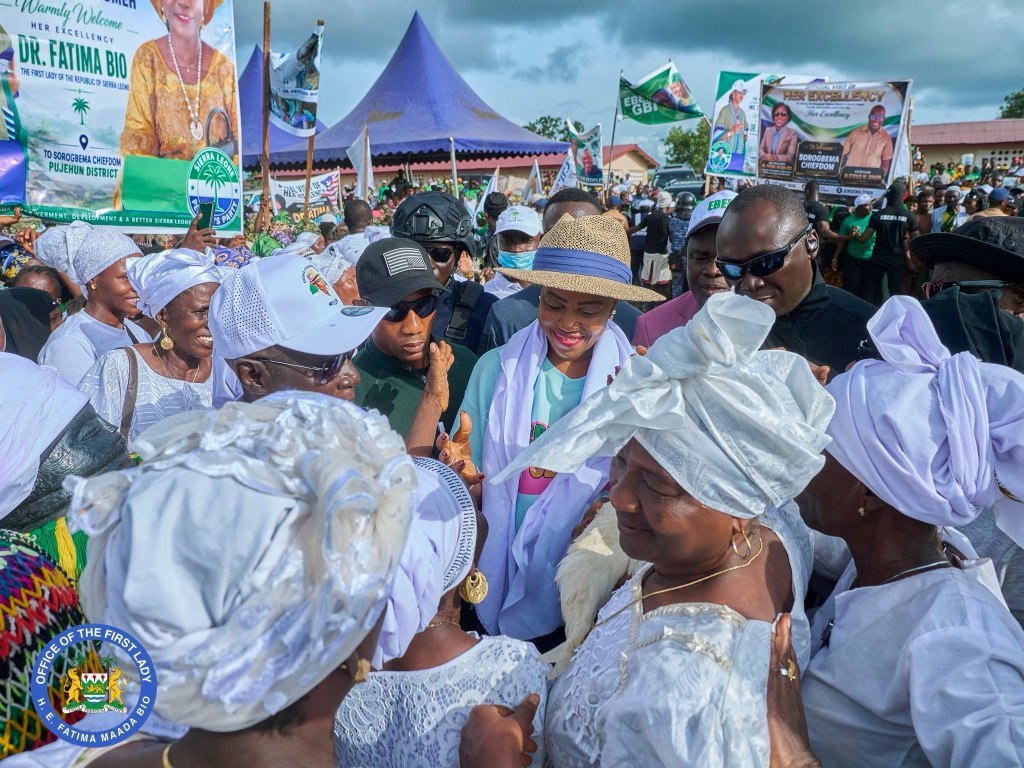
She is standing on their shoulders while kicking them away.
She is using their work while delegitimizing their efforts.
She is claiming credit for protections she did not create while attacking the people who did.
That is not just hypocritical. That is calculated political dishonesty.
When the First Lady of a nation faces allegations that a woman was forced into a harmful traditional practice, what do we learn about her priorities from how she responds?
We learn about what actually matters to her. In this case, what matters is:
Not: The welfare of the alleged victim
Not: The protection of future victims
Not: The health consequences of the practice
Not: The consent of girls involved
But rather: The defense of an institution that serves her political purposes. This is not accidental. This is not a communication failure. This is a deliberate choice of what to prioritize.
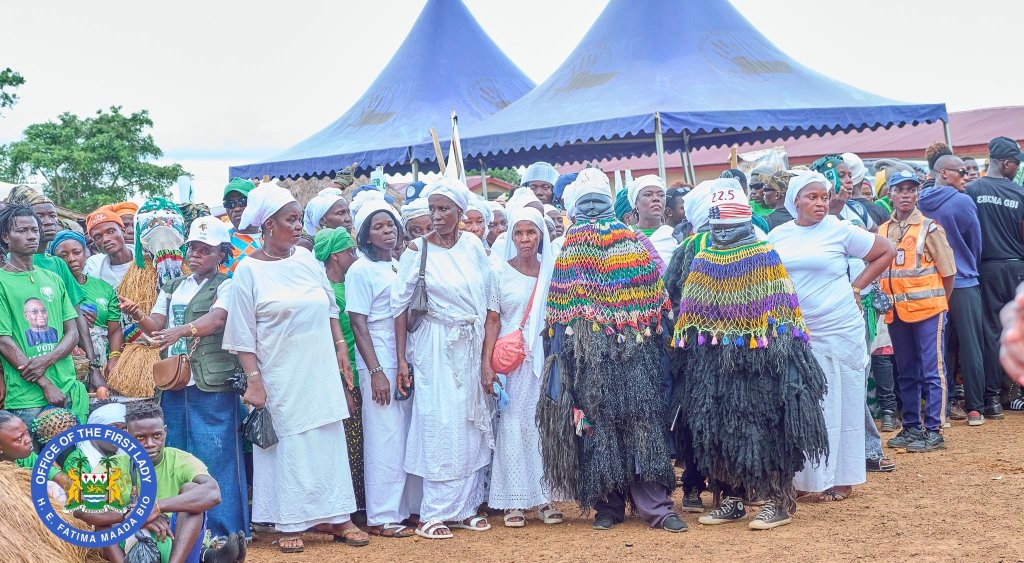
And that choice reveals something that should alarm every parent, every child-protection advocate, and every Sierra Leonean who cares about girls:
When forced to choose between protecting vulnerable girls and protecting a politically useful institution, Fatima Bio chose the institution.
Not reluctantly. Not with expressions of regret. But with apparent confidence she had made the right choice. Because in her calculation, she had.
Sande networks matter for Fatima Bio’s political ambitions. Girls’ protection does not move votes. Offending traditional practitioners carries risks. Criticizing activists carries no political cost. So, she made her choice. And she made it openly.
The Early Marriage Question
This brings us to a contradiction so profound that it deserves explicit examination: Fatima Bio has spent years presenting herself as an opponent of early marriage and receiving donor funds as a reward. This is part of her international brand. Women’s rights. Girls’ protection. Opposition to early marriage.
Yet she is simultaneously defending an institution that many reform advocates argue contribute to pathways toward early marriage.
The logic is straightforward: When Sande/Bondo initiation signals social readiness for womanhood, it frequently precedes social expectations for marriage and intimate relationships, regardless of the girl’s actual age or maturity.
Whether one accepts every aspect of that argument or not, the concern is real. It is widely documented. It is based on lived experience of survivors and research by advocates.
So, the question becomes unavoidable: How can a woman with political ambition simultaneously present herself as an anti-child-marriage champion while actively defending institutions that is linked to pathways toward early marriage?
That question does not have an answer. Because the two positions are fundamentally incompatible. Unless, of course, Fatima Bio’s anti-child-marriage position was always just another brand, another international image to be cultivated and then abandoned the moment it interfered with political ambition; just like the menstrual pad distribution.
This speech did not occur in isolation. It comes at a time when Fatima Bio is increasingly associated with:
- Sande gatherings and mass female mobilization
- Her “Ebema” political slogan
- Growing speculation about her 2028 presidential bid
- Consolidation of traditional power structures
Viewed in this political context, the speech begins to make perfect sense. Sande/Bondo networks remain influential in parts of Sierra Leone. They represent:
- Social capital and community trust
- Cultural authority and legitimacy
- Female mobilization capacity
- Potential electoral support
For an ambitious woman, alienating those networks carries significant risks. Supporting them, even at the cost of contradicting her international brand, carries substantial rewards.
That is the political calculation Fatima Bio has made. And in making it, she inadvertently revealed something crucial about her First Lady Syndrome:
It is what happens when political ambition becomes the organizing principle of all other considerations, including child protection.
My Warning Now Fulfilled
A few years ago, in my book “The Unbecoming Mrs. Maada Bio of Sierra Leone: A Case of First Lady Syndrome,” I warned that political ambition would eventually push Fatima Bio into increasingly extreme positions.
Not because of cultural commitment.
Not because of genuine tradition.
But because power demands constituencies. And constituencies demand loyalty.
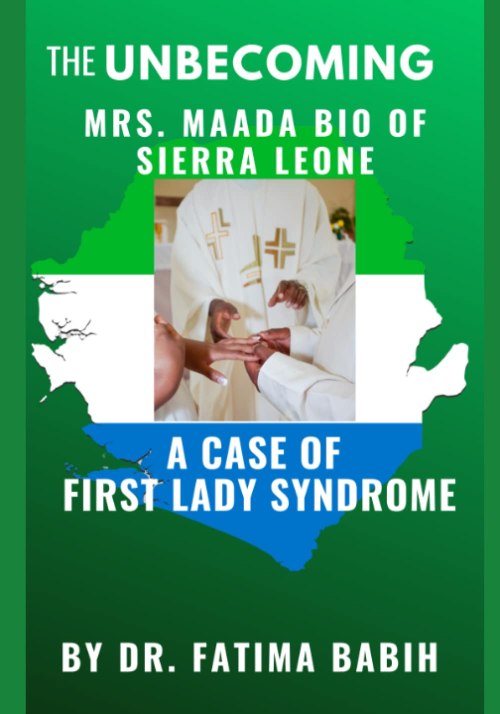
I warned that the First Lady who had built her international reputation around protecting girls would eventually face a moment where that protection conflicted with political necessity.
And when that moment came, I warned, political necessity would win.
Today, we are witnessing exactly that dynamic unfold.
The First Lady who once built her global brand around championing girls is now standing before microphones, assuring controversial traditional institutions that they have nothing to fear from her office.
That is not the language of reform.
That is not the language of protection.
That is the language of political alliance. And it represents a fundamental betrayal of every girl who has suffered under practices that Fatima Bio is now promoting and defending.
The question is no longer whether Fatima Bio supports women in some abstract sense. The question is no longer whether she has made contributions to girl-child education. The real question is: When forced to choose between protecting vulnerable girls from documented harm and protecting a politically useful institution, which side will she choose?
Her latest speech, filled with gaslighting about non-existent laws, attacks on activists, erasure of victims, and her active defense of contested harmful practices, provides the answer.
She will choose the institution.
She will choose the political constituency.
She will choose power.
And girls and women will pay the cost.
Sierra Leone now knows where Fatima Bio stands. She has made herself clear. The question is what Sierra Leoneans will do about it.
Will the citizens allow a sitting First Lady to actively undermine child protection efforts without consequence?
Will we permit her to gaslight the public about laws that do not exist?
Will we accept her attacks on the advocates working to protect girls?
Will we allow her political ambitions to override the safety of children?
Or will Sierra Leoneans demand that their First Lady who claims to champion girls, demonstrate that claim through actions, not just international public relations campaigns?
That choice now belongs to the people of Sierra Leone. But one thing is certain: Fatima Bio’s mask has slipped.
The performance of the girl-champion has given way to the reality of a woman willing to sacrifice girls’ protection on the altar of her political ambition.
And history will remember which side Fatima Bio chose when it mattered most.
References
United Nations in Sierra Leone
Ministry of Gender and Children’s Affairs-SL
 MAMA SALONE ~ Lioness of the West Coast