
by Fatima Babih, EdD
As Fatima Bio intensifies what increasingly looks like her unofficial 2028 presidential campaign across Sierra Leone’s southeast region, her political strategy is becoming clearer by the day:
Usurp the people’s culture,
weaponize their identity,
and mobilize traditional structures for political power.
Her latest appearance before Sande women in the southeast was not simply another “cultural event.” It was something far more dangerous.
It was an open political confrontation with anti-FGM campaigners and child-protection advocates in Sierra Leone.
And perhaps most disturbingly, it was delivered by the woman acting as First Lady of the Republic.
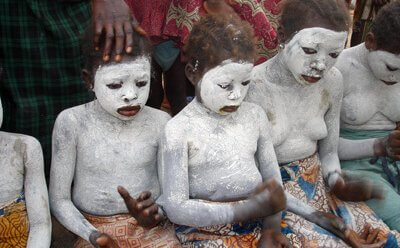
Not for Society Women
One of the most revealing aspects of Fatima Bio’s speech was linguistic. She addressed a predominantly Mende-speaking audience in Krio, a language many of the women in the gathering do not primarily speak. Why did she speak in Krio?
First of all, Fatima Bio is not a speaker of the Mende language and also because her speech was not truly meant for these southeastern women. It was meant for:
- anti-FGM activists,
- child-rights advocates,
- international NGOs,
- donor organizations,
- and critics questioning her sudden political embrace of Sande society.
This was not cultural communication. It was political signaling.
The “Kongosa” Reference
At the beginning of her speech, Fatima Bio referenced criticisms questioning her connection to Sande/Bondo society. She said some people were calling her: “kongosa,” which loosely translates as a gossiper or someone involving herself where she does not belong.
That opening statement was not random.
It was clearly directed at critics like me who have publicly questioned the authenticity of her claimed connection to Sande/Bondo structures in Sierra Leone. And frankly, the evidence supporting those doubts continues to grow.
Fatima Bio then attempted to establish cultural legitimacy with a performance of blonging by claiming:
- she joined Bondo,
- her mother joined Bondo,
- and her grandmother joined Bondo & was dancing with Bondo women.
She urged the women to see her as:
“their granddaughter”
and
“one of them.”
But this part of the speech was political theater masquerading as cultural authenticity, because the claims themselves collapsed under scrutiny.
Both of Fatima Bio’s grandmothers were Guinean. Her family lineage has no known historical roots within Sierra Leone’s traditional Sande/Bondo structures.
And perhaps the clearest evidence of this disconnect came from Fatima Bio’s own language throughout the speech. She repeatedly spoke about: “Bondo,”
while addressing southeastern women who traditionally know the society as: “Sande.”
She never once said “Sande,” which to outsiders, that may sound insignificant. But culturally, it is enormously revealing. Anyone genuinely rooted in these traditions understands the distinction instinctively:
- southeastern women identify it primarily as Sande,
- northwestern communities commonly use Bondo.
A true insider speaking naturally to southeastern women would almost certainly say:
“Sande.” That detail exposed Fatima Bio’s failed performance. And political performances eventually reveal themselves through the smallest inconsistencies.
Then Came the Most Dangerous Part of the Speech
After attempting to establish herself as culturally legitimate, Fatima Bio moved into openly confrontational rhetoric against anti-FGM efforts.
And this is where the speech crossed from political opportunism into something much more troubling.
For several years, anti-FGM campaigners in Sierra Leone have fought to protect girls from harmful practices associated with female genital mutilation.
According to 28 Too Many, the prevalence of FGM among Sierra Leonean women aged 15–49 remains approximately 83%. That is one of the highest rates in the world.
In the absence of a national ban, some communities and chiefdoms have at least attempted limited reforms through local Memoranda of Understanding (MOUs), voluntarily agreeing to protect girls under 18 from FGM.
These agreements represent fragile progress in a deeply difficult cultural and political environment. But Fatima Bio chose to stand before a microphone and directly undermine that progress.
“I Will Protect You”
In her speech, Fatima Bio assured the society women that:
- they should not fear,
- nobody can touch them,
- nobody can stop them,
- and they should continue their cultural practices freely.
She suggested that nobody has that power in Sierra Leone to stop them. That statement was not culturally neutral. It was political encouragement. And it was deeply reckless.
Because in practical terms, her message to traditional practitioners was clear:
continue the practice without fear of opposition. This directly undermines:
- child-protection advocacy,
- anti-FGM reform efforts,
- local agreements protecting minors,
- and years of work by campaigners risking their safety to protect girls.
“Ebema” Is Becoming a Political War Cry
Fatima Bio then linked this message to her emerging political slogan: “Ebema.”
Once again, the line between “culture” and political campaigning disappeared completely.
This was no longer about tradition. It was about political mobilization. She is increasingly using:
- Sande gatherings,
- women’s cultural identity,
- and FGM-linked traditional structures
as political infrastructure for her presidential ambitions. Her message to society women was unmistakable: support my political ambition, and your practices will remain protected.
That is extraordinarily dangerous politics.
What makes this moment so shocking is the contradiction it exposes. Internationally, Fatima Bio has built much of her reputation around:
- protecting girls,
- opposing child marriage,
- and advocating for women’s rights.
Yet now, as her political ambition intensifies, she is openly embracing rhetoric that strengthens institutions long criticized for harmful practices affecting underage girls.
The uncomfortable truth is this: Many girls subjected to FGM in Sierra Leone are children, some as young as 11.
And historically, initiation into Sande/Bondo has often signaled social readiness for womanhood, marriage, and sexual expectations regardless of actual age.
That reality cannot simply be hidden beneath slogans and crowd mobilization.
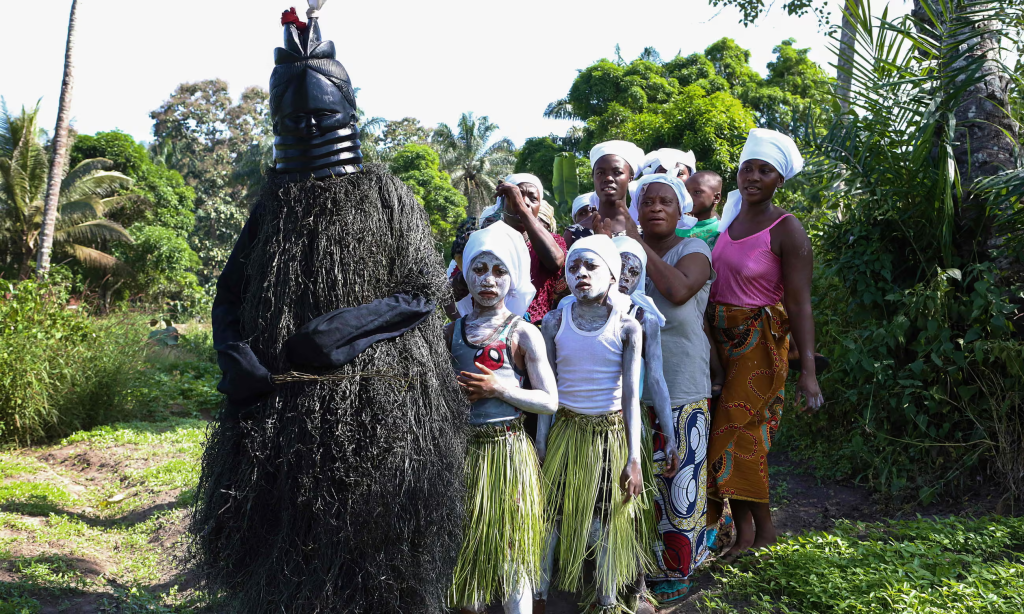
This Is Exactly What “First Lady Syndrome” Looks Like
Nothing in Fatima Bio’s speech surprised me. In fact, I warned Sierra Leoneans about this trajectory a few years ago in my book: The UNBECOMING Mrs. Maada Bio of Sierra Leone: A Case of First Lady Syndrome.
I warned that as her political ambition deepened, Fatima Bio’s behavior would escalate.
And it has.
Because “First Lady Syndrome” is ultimately about what happens when:
- an unelected figure accumulates unchecked influence,
- begins operating above criticism,
- believes herself to be untouchable,
- and gradually transforms symbolic popularity into raw political power.
That is exactly what Sierra Leone is witnessing today. And every time Fatima Bio stands before a microphone, which now seems almost daily, she proves my warning correct.
The Stakes Are No Longer Cultural But National
This issue is now bigger than Fatima Bio herself. The real question is:
What kind of political future is Sierra Leone building when presidential ambition begins aligning itself against child-protection advocacy?
Because when a First Lady openly signals protection for controversial practices affecting underage girls, while dismissing reform efforts as interference, the consequences extend far beyond politics. They reach into:
- public health,
- women’s rights,
- child protection,
- international reputation,
- and the moral direction of the nation itself.
And history will remember who stood silent while political ambition wrapped itself in the language of culture to protect practices many Sierra Leonean girls are still suffering under today.

