
As Sierra Leone’s First Lady Fatima Bio embraces FGM politics at home, holds on to UK government housing while homeless veterans are homeless, one of the world’s most prestigious universities in UK helps polish her tarnished image abroad.
by Fatima Babih, EdD
When one of the world’s most prestigious universities chooses its speakers, it does more than organize an event. It confers legitimacy.
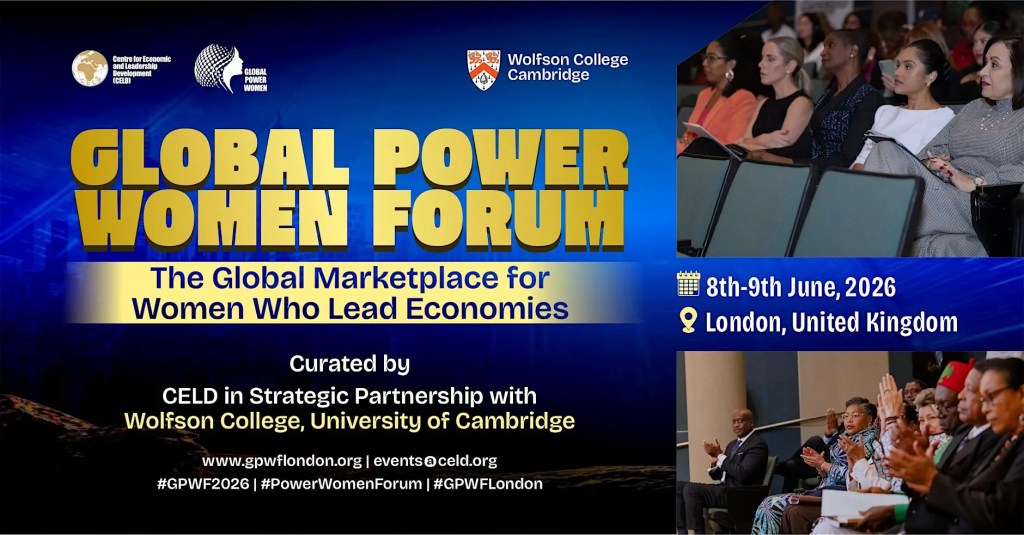
That is why the decision by Wolfson College, University of Cambridge, to host Sierra Leone’s First Lady, Fatima Jabbie Bio, at the Global Power Women Forum deserves serious scrutiny.
The controversy surrounding the event is not driven by opposition to African women in leadership. Nor is it driven by hostility toward female empowerment. The criticism arises because many women’s rights advocates could not understand why a platform dedicated to advancing women would elevate a public figure whose record raises profound questions about women’s rights, accountability, and the protection of girls.
The issue is bigger than Fatima Bio.
The issue is whether prestigious Western institutions are applying the same standards to issues affecting African women that they claim to apply everywhere else.
The Contradiction at the Center
For years, Fatima Bio has presented herself internationally as a champion of women and girls with no tangible outcome at home. She has spoken at global conferences. She has appeared on international stages.
With the help of her well paid western lobbyists, She has cultivated an image as an advocate against child marriage and sexual violence, without actually doing anything to help deal with these issues in the country.
Yet that carefully crafted image increasingly collides with another reality.
As women’s rights activists have repeatedly pointed out, Fatima Bio has consistently refused to take a clear and unequivocal position against Female Genital Mutilation (FGM), a practice that continues to affect a significant number of adolescent girls and women in Sierra Leone.
The contradiction has become even more pronounced in recent weeks.
While campaigners continue pushing for stronger protections for girls, Fatima Bio has appeared at highly publicized political rallies with Sande/Bondo women and has publicly defended those gatherings against criticism. In one recent speech, she went beyond defending culture and criticized anti-FGM campaigners themselves, suggesting that they were motivated by money rather than concern for girls.
For many activists, that was not the language of a reformer.
It was the language of a defender of FGM.
Yet this is the same woman being celebrated on international stages as a symbol of women’s empowerment.
The contradiction is impossible to ignore.
Whose Voices Are Being Elevated?
Every invitation is also an exclusion. When Cambridge invited Fatima Bio, it implicitly chose her voice over countless legitimate voices.
- Where are the survivors of FGM?
- Where are the grassroots activists working in rural communities?
- Where are the Sierra Leonean women who have spent years advocating for legal protections for girls?
- Where are the mothers whose daughters have suffered harm?
- Where are the campaigners who continue to fight for reforms despite political pressure?
Those women represent courage. Those women represent progress.
Yet too often, western elite institutions prefer proximity to power over proximity to truth.
The result is that women with political connections become the only face of women’s empowerment while the women doing the difficult work remain invisible.
First Lady Syndrome Problem
In my book, The Unbecoming Mrs. Maada Bio of Sierra Leone: A Case of First Lady Syndrome, I argue that one of the most dangerous aspects of First Lady Syndrome is the transformation of unelected influence into unaccountable power.
- A First Lady becomes more than a spouse.
- She becomes a political actor.
- A public policymaker.
- A national spokesperson.
- An international representative.
Yet she remains largely free from the accountability mechanisms applied to elected officials.
- The result is a gray zone of influence.
- The office does not officially exist in the Constitution.
- Her role is not elected.
- Her powers are undefined.
- The accountability mechanisms are weak.
Yet the influence can be enormous.
This phenomenon is precisely why international institutions must exercise caution when elevating politically connected figures whose records remain controversial.
Fatima Bio’s Growing Credibility Crisis
The Cambridge invitation comes at a time when questions surrounding Fatima Bio continue to multiply.
Her name has repeatedly surfaced in controversies involving corruption in governance, political conduct, public accountability, and questions about privilege.
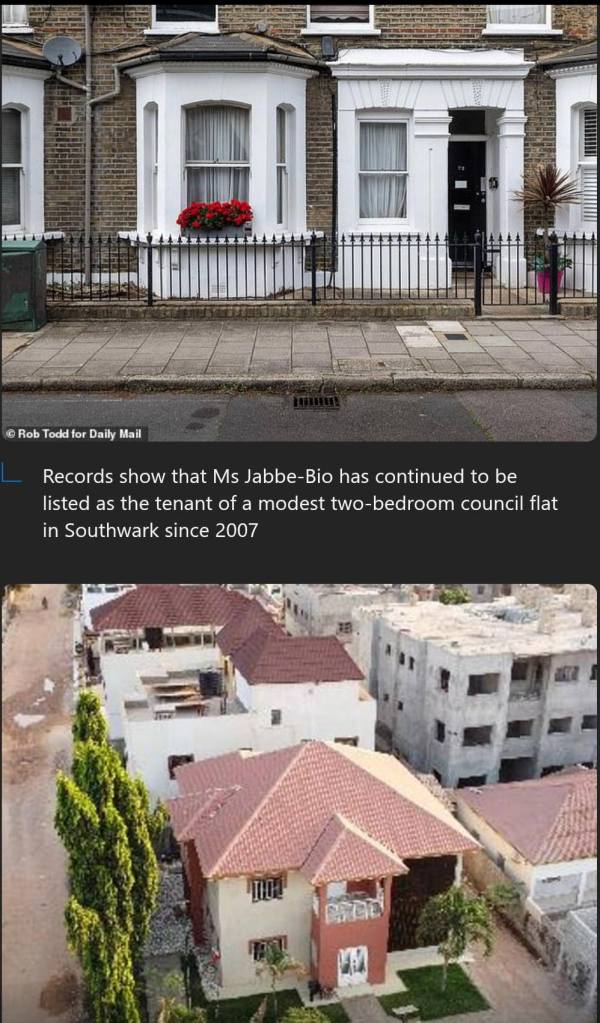
Recent international reporting has highlighted concerns surrounding her continued use of government subsidized housing in the United Kingdom despite her status as the wife of a sitting head of state.
Meanwhile, investigative reporting and public debate continue to raise questions about her sudden, unexplained wealth, influence, and the role she plays within Sierra Leone’s political system.
Whether one agrees with every criticism is beside the point.
The point is that these controversies exist. They are documented. They are being discussed internationally.
And they form part of the public record.
Universities dedicated to critical inquiry should not ignore that context.
Cost to Women’s Rights
The greatest damage may not be to the reputation of Cambridge.
It is certainly to the women’s rights movement itself, not only in Sierra Leone but in Africa.
When institutions celebrate powerful figures connected to politics without critically examining their records, they send a dangerous message.
- They tell the world that symbolism matters more than substance.
- That branding matters more than accountability.
- That speeches matter more than outcomes.
Meanwhile, Sierra Leone continues to face staggering challenges:
- Persistent sexual violence against girls.
- Low prosecution rates for sexual assault cases.
- Long delays in GBV in the justice system.
- Ongoing debates over FGM and child protection.
- Deep inequalities affecting women and girls.
These are not public-relations challenges. They are real crises affecting real people in real time.
Women’s empowerment cannot be measured by conference invitations and honorary platforms.
It must be measured by results.
Question for Cambridge
Universities are supposed to challenge power. Not merely celebrate it. The question Wolfson College should answer is not whether Fatima Bio deserves to be heard.
Everyone deserves to be heard.
The question is whether Cambridge adequately considered the concerns of the many women’s rights advocates who believe her record stands in tension with the values the Global Power Women Forum claims to promote.
Because if institutions committed to women’s empowerment cannot distinguish between advocacy and image management, between accountability and public relations, between symbolism and substance, then they risk becoming participants in the very problems they claim to solve.
And that would be a tragedy not only for Sierra Leonean women, but for the global movement for women’s rights itself.
 MAMA SALONE ~ Lioness of the West Coast