Gallery

SHREDS OF EVIDENCE OF MRS. BIO INCITING & PERPETRATING VIOLENCE IN SIERRA LEONE

By United Voices for Sierra Leone With her unregulated access to the flow of money from the government of Sierra Leone and international donors, Mrs. Fatima Jabbie Maada Bio continues to pay lobbyists in the UK and the U.S. to … Continue reading →
Gallery

Maada Bio’s Abuse of Power Takes Sierra Leone in a VICIOUS Direction

This gallery contains 5 photos.

Sierra Leone President Maada Bio is taking the country toward a brutal era in the country’s history. He has literally declared war on the people, especially the youth. Anyone who opposes him in any sense will face the brute force … Continue reading →

Podcast Episode: Our Rights Must Not Depend on Who Is in Power: A Call to Sierra Leoneans at Home

Pip: There is a phrase that sounds obvious until you realize how rarely it is honored: your rights should not depend on who is in power. Mama Salone Blog is making that case directly, and it is pointed at Sierra Leone right now.

Mara: Today we are looking at judicial independence, the detention of a lawyer mid-hearing, and what ordinary citizens can actually do when they believe due process has broken down.

Pip: Let's start with the case that set this off.

Our Rights Must Not Depend on Who Is in Power

Mara: The question this piece is asking is whether fundamental legal protections held in a specific, documented moment — and whether Sierra Leoneans at home and abroad have a role in pressing for an answer.

Pip: The facts as laid out are stark. On 8 October 2026, lawyer Joseph Fitzgerald Kamara was ordered into custody by the Chief Justice of the Supreme Court while he was actively representing the opposition in constitutional proceedings.

Mara: The post frames it precisely: "This is not simply about JFK. It is about the rights of every Sierra Leonean. It is about the independence of our legal profession. And it is about the safeguards that must exist whenever judicial power is used to take away a person's liberty."

Pip: That framing matters. Detaining a lawyer mid-case is not a procedural footnote — it reaches the question of whether the courtroom itself remains a protected space for legal argument.

Mara: The post is careful to acknowledge that courts do have contempt powers. Nobody disputes that. The issue is whether the principles of fairness, impartiality, and proportionality were applied here.

Pip: And Sierra Leone has been bound by the International Covenant on Civil and Political Rights since 1996, so there is an existing international framework to measure this against — arbitrary detention and the right to a fair hearing before an impartial tribunal are not aspirational, they are treaty obligations.

Mara: The response proposed is civic and procedural. The author has formally written to UN Special Procedures — specifically the Working Group on Arbitrary Detention and the Special Rapporteur on the Independence of Judges and Lawyers — and is inviting others to do the same, at urgent-action@ohchr.org.

Pip: The guidance on how to write is genuinely practical: use your own words, stick to facts you can source, keep it respectful. As the post puts it, credibility is the strongest tool available.

Mara: The closing line captures the whole argument in one sentence — judicial independence and judicial accountability are not opposites; they must go together.


Pip: Rights that only apply to the politically convenient are not rights at all.

Mara: And knowing the specific channel to raise your voice — that turns a principle into an action. More from Sierra Leone next time.

Gallery

Our Rights Must Not Depend on Who Is in Power: A Call to Sierra Leoneans at Home and Abroad

This gallery contains 7 photos.

Fatima Babih, EdD On 8 October 2026, lawyer Joseph Fitzgerald Kamara (JFK) was ordered into custody by Chief Justice of the Supreme Court, Komba Kamanda, for contempt of court. It happened while he was representing the opposition in constitutional proceedings … Continue reading →

Podcast Episode: PART VI FINAL: WHO APPOINTED FATIMA BIO? THE VENICE DOCUMENTS SHOW A GOVERNMENT

Pip: MAMA SALONE ~ Lioness of the West Coast has been following a paper trail from Freetown to Venice, and the trail just delivered its final answer — which turns out to be a question the Sierra Leonean government still has not answered.

Mara: Mama Salone Blog's investigative series closes today with documents obtained directly from La Biennale under Italian transparency law — records that show who signed what, in what order, and under whose instruction.

Pip: Let's get into the appointment that may not have been an appointment at all.

Who Appointed the Commissioner — and Did She Appoint Herself?

Mara: The central tension of this final installment is procedural and constitutional at once: La Biennale's rules require a government minister to appoint the Commissioner, and the Commissioner must flow from that authority — not the other way around.

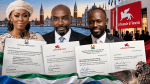
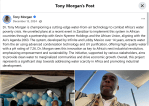
Pip: The released correspondence shows the first letter to La Biennale came not from any ministry but from Office of the President letterhead, signed by Tony Morgan, Head of Strategy and Communication at State House. His opening line sets the tone: "I am under instruction by the First Lady H.E Dr. Fatima Maada Bio."

Mara: So the pavilion team — Commissioner, Deputy, curators, general organizers — was proposed before any government decision appears in the record. La Biennale's president wrote back reminding Morgan that only a competent governmental authority could sign, and that deputy commissioners would not be accepted.

Pip: Then the Foreign Minister's letter arrived. A minister signing is exactly what the procedure requires. Except his first sentence reads: "I am acting under the instruction of Her Excellency Dr. Fatima Maada Bio."

Mara: The post lays out what that inversion means in practice. The authority that was supposed to appoint the Commissioner is shown taking direction from the person to be appointed. As the piece states plainly: "a process in which the appointee instructs the appointer is not an appointment. It is ratification."

Pip: And ratification of a decision nobody on paper seems to have made — no Cabinet resolution, no stand-alone appointment instrument, no budget appears in anything La Biennale released.

Mara: The minister's letter also tracks Morgan's earlier draft almost word for word, and the only copy recipient listed is the Chief of Staff of the Office of the First Lady. The Ministry of Tourism and Cultural Affairs, the body Part I of this series identified as built for exactly this work, does not sign, is not copied, and is not mentioned anywhere.

Pip: The later operational records are just as pointed. Paolo Mozzo submitted catalogue texts in January 2026 and told La Biennale in February that "we have chosen" the pavilion's press office. The press agent then described Mozzo to Biennale staff as "il responsabile del Padiglione Sierra Leone" — the person in charge. No ministry, no Commissioner appears in any of those exchanges.

Mara: The piece also flags a catalogue discrepancy worth noting: the English text says the pavilion is "Sponsored by ECOWAS," while the Italian says patrocinato — patronage. Sponsorship and patronage are legally different, and the post asks directly who selected the exhibiting artists and whether any gallery or exhibitor paid a fee, which the procedures prohibit.

Pip: The series closes by naming exactly which offices owe answers — Foreign Affairs, State House, Tourism, the Office of the First Lady — and urging Parliament, the press, and the Anti-Corruption Commission to put those questions in writing under Sierra Leone's Right to Access Information Act.

Mara: The final framing is unambiguous: "The plan came first. The government's signature came second." The pavilion carried the Republic's name. The Republic is owed an account.


Pip: Six parts, one question — and the documents answer it by showing what's missing where authority should be.

Mara: Accountability gaps at the level of a national pavilion tend to point toward larger questions about how public power moves in Sierra Leone. Those questions aren't going away.

Gallery

PART VI FINAL: WHO APPOINTED FATIMA BIO? THE VENICE DOCUMENTS SHOW A GOVERNMENT MINISTER ACTING UNDER FIRST LADY’S “INSTRUCTION”

This gallery contains 3 photos.

by Fatima Babih, EdD La Biennale’s response to my request provided records that settle who signed Sierra Leone’s application. They also expose the question this series began with: where did the Commissioner’s authority come from, and did it come from … Continue reading →

Gallery

PART V: SIERRA LEONE GOVERNMENT MISSING IN ACTION AT THE NATION’S PAVILION IN VENICE

This gallery contains 1 photos.

by Fatima Babih, EdD An Italian network, an unexplained financial trail and a national pavilion that carries the name of the Republic but not its visible government authority. A country does not enter the Venice Biennale by accident. It enters … Continue reading →

Podcast Episode: The Human Cost of Koidu Limited Closure in Kono: The People Speak Out

Pip: Diamonds leave Kono in the ground, and something else gets left behind too — the people who dug for them.

Mara: This episode draws on reporting from Mama Salone Blog about what the Koidu Limited closure actually did to the workers, families, and community of Kono District — after the headlines moved on.

Pip: The headlines always move on. Let's start with the human cost that didn't.

The Human Cost of Koidu's Closure

Mara: The central question this piece asks is deceptively simple: what happened to the workers after the dispute ended and the cameras left? Not the political fallout — the daily reality in Kono Town for families who lost their primary income.

Pip: And the piece opens with a worker named Moses Mboma, who spent years in Koidu Limited's dewatering department. He doesn't romanticize the job, but he remembers what it provided. His words are direct: "There was peace in homes, regardless of how inadequate some of my colleagues thought our pay was."

Mara: That quote reframes the entire dispute. A worker can acknowledge imperfect pay and still desperately need the job. The piece makes that distinction carefully — workers had legitimate grievances about wages and working conditions, including Reuters reporting from May 2025 about an outdated exchange rate and inadequate access to clean water. But Mboma adds something harder to dismiss: "Politicians interfered, even though they didn't provide us with a job."

Pip: The politician in question is First Lady Fatima Bio, who joined the protest in March 2025, publicly criticized the company, and then — once the mine announced care-and-maintenance status and laid off over a thousand workers — largely moved on. The piece notes she has since built ten mansions in The Gambia. The workers are still in Kono.

Mara: The scale of what disappeared is worth stating plainly. More than a thousand jobs gone. The company reported over sixteen million dollars in losses and estimated twenty million would be needed to restart. But the piece puts it differently: "A salary is food. A salary is medicine. A salary is school fees."

Pip: And the ripple doesn't stop at the terminated employee. A community leader in the video explains it with what the piece calls devastating simplicity.

Mara: His words: "Someone who didn't need help for their child's school fees would now need your help for it." Engage Salone's September 2026 reporting corroborates that — contractors, market traders, landlords, informal suppliers all felt the collapse. One lost job can destabilize several households. Multiply that by a thousand.

Pip: Then there are the deaths. Mboma says between 36 and 38 former workers have died since the shutdown. Engage Salone puts the figure at more than 30, with former colleagues attributing some deaths to financial stress and inability to afford healthcare. The piece asks the right question: does the Sierra Leone government even know their names?

Mara: The piece also pushes back on a narrow reading of who was affected. Women worked at Koidu Limited as cooks and in administrative roles, and others earned livelihoods as contractors and suppliers. Gender activist Victoria Favour Pombo says women were deeply involved in the workers' struggle. Counting terminated employees alone, the piece argues, dramatically understates the damage.

Pip: The closing charge is direct — to government, to the First Lady, to everyone who exercised power in this crisis. Kono doesn't need another protest march. It needs paychecks, functioning dispute-resolution institutions, and answers.

Mara: And the piece ends where it begins — with that sentence from a former worker: "The government doesn't care about us." Whether or not you accept his conclusion, the pain behind it is the story Sierra Leone still hasn't fully reckoned with.


Pip: The diamonds are still underground. The question the piece leaves open is whether the people above them will finally be put back at the center.

Mara: That's the accountability gap worth watching — what comes next for Kono, and whether Sierra Leone builds the institutions to prevent this from happening again.

Gallery

The Human Cost of Koidu Limited Closure in Kono: The People Speak Out

This gallery contains 2 photos.

By Fatima Babih, EdD First Lady Fatima Bio moved on and even built ten mansions in her adopted country, The Gambia. The politicians also moved on, some to different ministries. The headlines faded. But in Kono District, especially Koidu Town, … Continue reading →

Podcast Episode: PART IV: Kevin Nyerere, The Business Connections and The Foreign Network Around

Pip: Sierra Leone's first-ever National Pavilion at the Venice Biennale — historic moment, art, culture, commerce, and apparently a Tanzanian businessman with a title that needs some unpacking.

Mara: Mama Salone Blog has been running a detailed investigative series on exactly that — who assembled the pavilion, under whose authority, and what relationships existed before Venice. Today we're following the money, the titles, and the network.

Pip: Let's start with Kevin Nyerere, Honorary President, and the trail that leads back well before anyone set foot in Venice.

—

Kevin Nyerere and the Network Behind Sierra Leone's Venice Pavilion

Mara: The central tension here is one of authority and disclosure — a Tanzanian businessman holds a prominent title at Sierra Leone's national pavilion, and the public record does not explain how that appointment happened or who approved it.

Pip: The official La Biennale page lists the pavilion's leadership plainly, and the Sierra Leone Pavilion website goes a step further, describing him as "S.A.S. Prince Kevin Nyerere, Honorary President, AMAA / Business Associate."

Mara: That description raises immediate questions the post lays out directly: what is AMAA, what does "Business Associate" mean in this context, and what governmental authority, if any, approved that appointment?

Pip: And Nyerere's background matters here — Forbes Italia profiled him in 2020 as a business intermediary connecting European companies with African governments and investment opportunities, operating through Jasiri Ltd and Kevin Nyerere Holdings. That's not a curatorial resume.

Mara: The post is careful to note that nationality is not the issue. Foreign professionals can legitimately participate in national pavilions. The question is function and appointment — especially because Tony Morgan was simultaneously speaking about investors, commercial infrastructure, and logistics hubs.

Pip: So a pavilion framed partly around commerce has an Honorary President whose documented expertise is connecting European businesses to African markets. The roles rhyme a little too neatly for the appointment to go unexplained.

Mara: And then comes the discovery that reframes everything. In December 2024 — more than a year before Venice — AYV Media Empire reported on a water technology project in Zanzibar, describing it as "Dr. Tony Morgan's partnership with Kevin Nyerere Holdings."

Pip: Pre-existing business associates. That shifts the question from "who is Kevin Nyerere" to "how did a pre-existing business associate of Tony Morgan become Honorary President of Sierra Leone's National Pavilion."

Mara: The Zanzibar reporting added another layer: the initiative was explicitly linked to First Lady Fatima Bio's advocacy on water and sanitation. So by December 2024, the public record had already connected all three names — Morgan, Nyerere, and Bio — around a shared African development project.

Pip: The post is precise about what this does and doesn't establish. It's a documented chronology and a network of pre-existing relationships. The appointment process itself, and the institutional authority behind it, remain unanswered.

Mara: There's still the Italian curatorial and organizational infrastructure, the question of financing, and sixteen exhibiting artists — only four of them Sierra Leonean — all of which the series flags as the territory Part V will examine.

Pip: The network behind the pavilion runs deeper than three people — and the financial accountability questions are still open.

—


Mara: Authority, disclosure, and pre-existing relationships — the investigation keeps returning to the same gap between the public presentation and the documented record.

Pip: Next stop, apparently, is Italy and the money. Which is either where the answers are or where the questions get more complicated.

Gallery

PART IV: Kevin Nyerere, The Business Connections and The Foreign Network Around Sierra Leone’s La Biennale Pavilion in Venice

This gallery contains 4 photos.

by Fatima Babih, EdD The Tony Morgan trail to Nyerere, including their earlier business relationship, Nyerere’s Tanzanian identity, his business interests, his designation as Morgan’s business associate in earlier material, and the unexplained pathway by which he became Honorary President … Continue reading →

Gallery

PART III: State House, Private Businesses and The Foreigners Behind Sierra Leone’s La Biennale Pavilion in Venice

This gallery contains 1 photos.

by Fatima Babih, EdD From British State House official Tony Morgan and Tanzanian Honorary President Kevin Nyerere to the Italian curators and organizers: Who was actually behind Sierra Leone’s historic National Pavilion? By the end of Part II, my investigation … Continue reading →