
by Fatima Babih, EdD
Mr. Tamba Fallah’s recent Facebook post defending First Lady Fatima Bio rests on a false premise: that opposition to Female Genital Mutilation (FGM) is somehow opposition to Sierra Leonean culture.
It is not.
This is one of the most persistent and misleading arguments made by Fatima Bio and her supporters. By framing the discussion as “culture versus activists,” they divert attention from the primary issue: protecting minor girls.
The question has never been whether Sierra Leoneans have a right to celebrate their culture. Nor is it about adult women aged 18 and above freely choosing to become members of Sande/Bondo or to undergo circumcision. The issue here is the protection of girls who are subjected to cutting before they are old enough to make an informed decision for themselves. Framing this debate as a battle against culture is therefore a deliberate and deceitful distortion.
The debate is not about culture versus activists; it is about whether the rights and welfare of minor girls should take precedence over traditions imposed upon them without their consent.
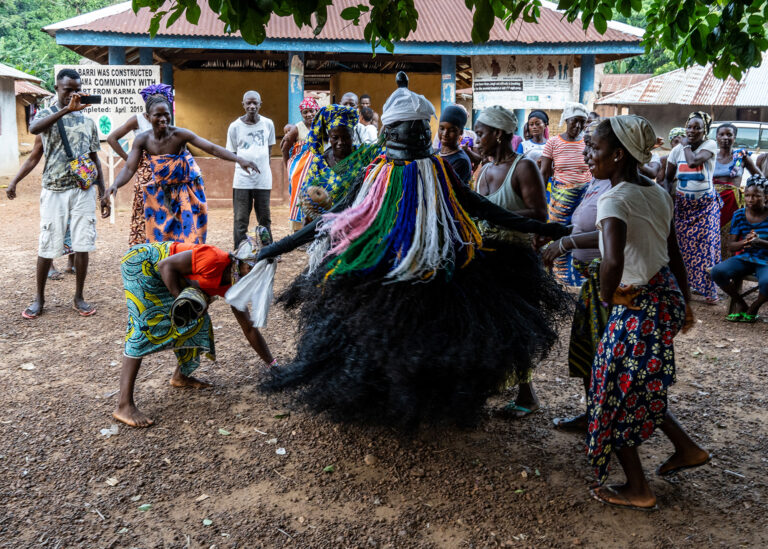
Culture Is Not Under Attack
Nobody is campaigning against Sierra Leonean music.
Nobody is campaigning against Sierra Leonean languages.
Nobody is campaigning against Sierra Leonean traditional dances.
Nobody is campaigning against storytelling, family values, community celebrations, or the abundant cultural heritage that makes Sierra Leone so unique.
What is being opposed is the circumcision of minor girls and the forced cutting of adult women.
Reducing this entire discussion to “respecting culture” is therefore disingenuous and misleading. A society can preserve its culture without cutting children. In fact, cultures evolve all the time.
Many cultural practices once considered normal have been abandoned because societies recognized that they caused harm. The true test of a culture is not whether it never changes. The true test is whether it has the courage to protect its most vulnerable members.
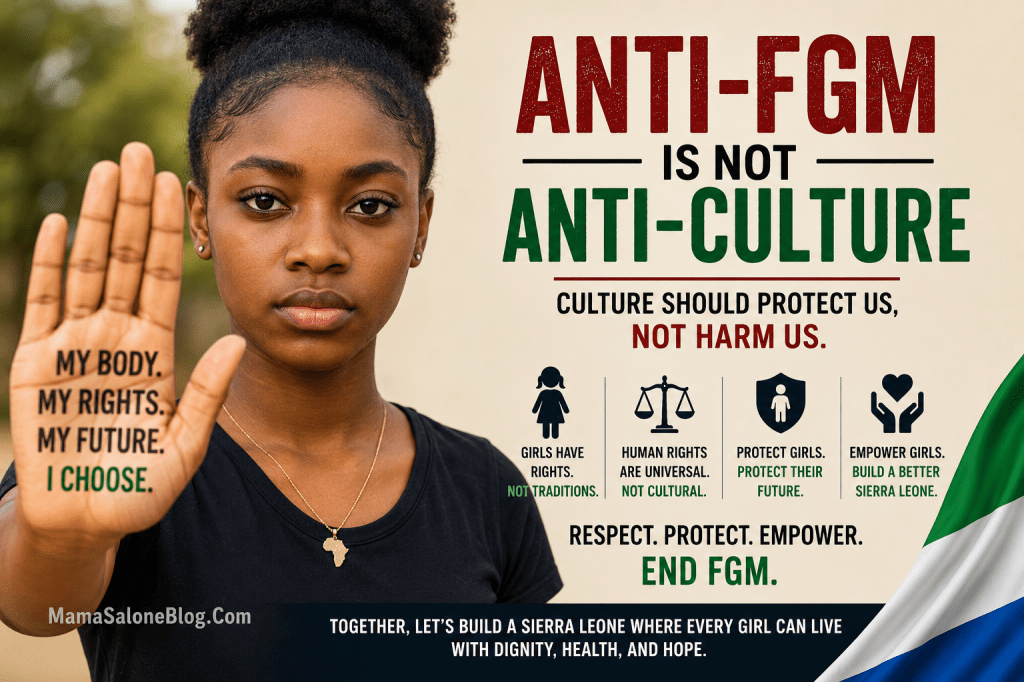
The Constitution Does Not Authorize Harm
Mr. Fallah based his premise on Sierra Leone’s Constitution, which promotes and protects culture. Yes, that provision exists. However, the Constitution does not place culture above the rights and welfare of citizens.
While Mr. Fallah invokes Section 12 of the 1991 Constitution regarding the promotion and preservation of culture, that provision cannot be read in isolation from the Constitution’s broader protections for human rights, equality, and individual dignity.
- Section 15 guarantees fundamental human rights and freedoms to every person in Sierra Leone, while
- Section 27 protects citizens from discrimination.
Cultural preservation, therefore, cannot be interpreted as a license to ignore concerns about the rights, dignity, and welfare of girls and women.
If culture alone were sufficient justification, then no harmful traditional practice could ever be challenged. Child marriage, for example, was long defended in many communities as a cultural norm. Yet Sierra Leone and the international community now recognize that marriage should not be imposed upon children simply because a culture permits it.
In the same way, the fact that a practice is rooted in culture does not place it beyond scrutiny when questions arise about consent, bodily autonomy, health, and the protection of minors.
The Constitution calls for the preservation of culture, not the unquestioning preservation of every practice carried out in its name.
The Real Issue Is Consent
One of the most misleading aspects of Fatima Bio’s recent statements is her repeated effort to shift the conversation away from the issue of consent.
Anti-FGM campaigners are not fighting against culture, nor are they fighting against adult women making genuinely informed and voluntary choices about their own bodies. They are fighting against the reality that many girls subjected to circumcision are minors who are incapable of providing meaningful informed consent to an irreversible procedure.
However, the issue extends beyond children alone.
Campaigners have also documented cases in which adult women have alleged being pressured, coerced, threatened, deceived, or forcibly subjected to circumcision against their will. In such cases, age does not eliminate the human rights concern. A forced circumcision of an adult woman is no more consensual than a forced circumcision of a child.
Consent means more than the absence of physical restraint. It requires a free, informed, voluntary, and uncoerced decision. Where intimidation, social pressure, threats, family coercion, or physical force are involved, genuine consent is absent regardless of age.
This is why the debate cannot be reduced to culture alone.
At its core, the issue is whether girls and women have the right to bodily autonomy and whether irreversible procedures should be imposed on them without their full, free, and informed consent.
For minor girls, the issue is one of child protection.
For adult women who are forced or coerced into the practice, the issue is one of personal liberty, bodily integrity, and human rights; all of these are protected under the Constitution.
The common thread in both cases is consent.
That is why anti-FGM campaigners must continue to focus on protecting vulnerable girls and women. The debate is not about attacking culture. It is about defending the right of every girl and every woman to decide what happens to her own body.
The Fatima Bio Contradiction
Mr. Fallah argues that Fatima Bio is neither a supporter nor an opponent of FGM. However, Fatima Bio’s public statements increasingly suggest otherwise.
- When anti-FGM campaigners speak, she attacks them.
- When a survivor came forward, she chastised her and called her a liar.
- When activists raise concerns, she accuses them of being scammers.
- When she speaks to Sande/Bondo women, she says, “Continue what you do, I will protect you.”
- When international criticism emerges, she defends the institution associated with the practice.
These are not the actions of a neutral party. They are the actions of someone who has chosen a side in the debate.
The question is simple: Why is the First Lady, who claims to be a leading advocate for girls, spending significant time criticizing those who seek to protect girls?
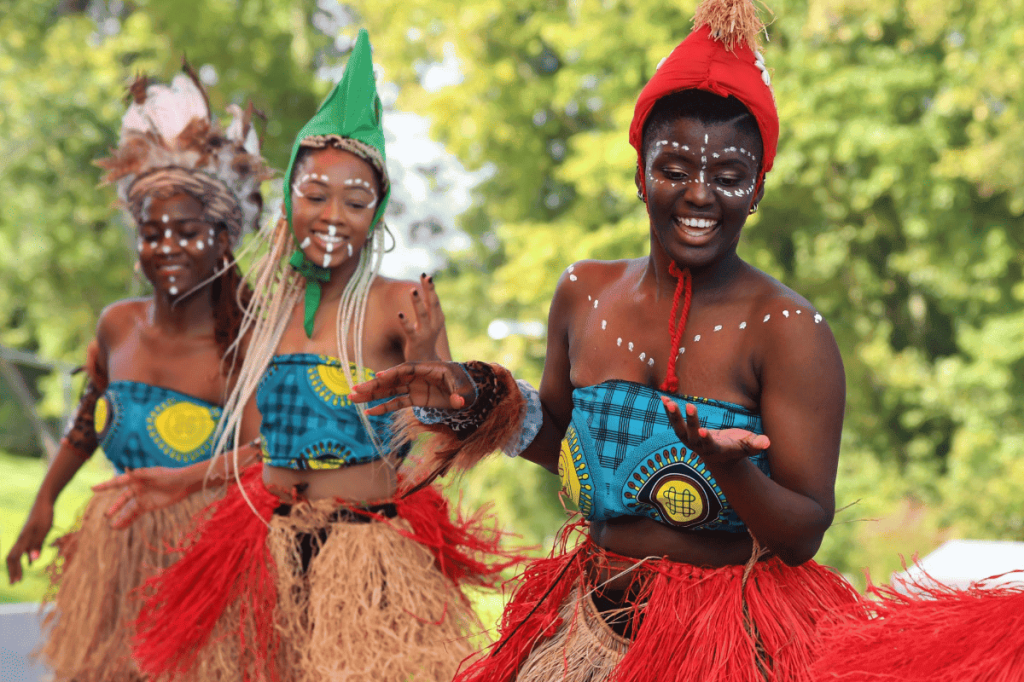
Human Rights Are Not a Foreign Concept
Another common Fatima Bio trick is to portray anti-FGM advocacy as foreign interference, even though she knows most of them as Sierra Leoneans.
But the right of a child to bodily integrity is not a Western idea. The right of a child to be protected from harm is not a European idea. The right of a girl to grow up free from coercion is not an American idea. These are universal human rights principles.
Many Sierra Leonean women, community leaders, traditional leaders, and survivors have spoken against FGM. To dismiss all criticism as foreign influence is to erase the voices of Sierra Leoneans themselves.
The Debate Sierra Leone Needs
Fatima Bio and her defenders want the public to believe that this is a fight between culture and activists. It is not.
It is a conversation about how Sierra Leone can honor its cultural heritage by protecting its daughters. Those goals are not mutually exclusive. Culture can survive. Traditions can evolve. Communities are able to thrive.
What cannot be justified is using culture as a defense against legitimate concerns about children’s welfare and women’s right to choose.
The real question is not whether Sierra Leone should preserve its culture.
The real question is: Will the nation place the rights, dignity, and protection of its girls and women at the core of its culture and laws?
 MAMA SALONE ~ Lioness of the West Coast