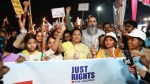
By Dr. Fatima Babih On November 27, 2026, the world observed the first International Day for the Elimination of Child, Early and Forced Marriage. No country was better positioned than Sierra Leone. It was given the privilege of presenting the … Continue reading →
by Fatima Babih, EdD Opposing Fatima Bio’s 2028 ambition to replace her husband is not fear of a woman’s success. It is scrutiny, and it is the right thing to do. Recently, First Lady Fatima Bio, posted on Facebook that, … Continue reading →
By Fatima Babih, EdD Who Speaks for Isata Kamara, a woman who currently cannot speak for herself? Isata Haja Kamara is a Sierra Leonean woman and the mother of two sons. Posts circulating in our community this month say she … Continue reading →
Fatima Babih, EdD As 47,454 Young Sierra Leoneans Sit In Limbo for Alleged Malpractice, Who is Investigating the Adults Who Reported Their Alleged Crimes? A piece of paper lands on the floor of an examination room. Nobody, it seems, can … Continue reading →
by Fatima Babih, EdD Fatima Bio’s paid Ebema Gbi crusaders are flooding social media with adjectives and no proof. They fail to accept that it is a candidate’s record, not her marriage, privileged international visibility, or lobbyist publicity, that can … Continue reading →
Dear Mrs. April Omodu Kamara Jagaban, I write to you not to diminish your ambition, your support for your husband, or your right to be celebrated by those who admire you. I write because the recent images and videos of … Continue reading →
by Fatima Babih, EdD La Biennale’s response to my request provided records that settle who signed Sierra Leone’s application. They also expose the question this series began with: where did the Commissioner’s authority come from, and did it come from … Continue reading →
Pip: Mama Salone Blog has a knack for finding the exact moment when a symbol collapses under the weight of what it was supposed to mean — and this week, that moment arrived at an airport, on a red carpet, with hundreds of schoolgirls standing in the sun.
Mara: The episode covers one central collision: girls' education as political performance, and what it costs the girls themselves when advocacy becomes spectacle. Let's start with the homecoming that documented its own contradiction.
Fatima Bio's Homecoming and the Girls Left Out of School
Pip: The post sets up a specific irony — a First Lady returns from the UN General Assembly, where she championed a resolution on girls' education, and the welcome she arranges requires schoolgirls to miss school to attend it. The question the piece is asking is whether that contradiction is accidental or structural.
Mara: The author frames it precisely: "on the day those girls held those signs, they were not learning. They were not dreaming. They were not leading. They were standing in the sun, missing their education, serving as human scenery for Fatima Bio's political performance."
Pip: That sentence does the work. Sierra Leone already has one of the highest rates of female illiteracy in West Africa, and the research the piece cites is direct — irregular attendance predicts dropout, and dropout predicts early marriage. The very harm she claims to fight at the UN is the harm her event reinforces.
Mara: The piece is careful about the scale. The photographs distributed by the Office of the First Lady itself show hundreds of uniformed students from multiple schools, which means this was coordinated. Someone contacted those schools. Someone gave instructions. The office that stamped its seal on those photographs is the same office that organized the mobilization.
Pip: And the posters those girls were holding? Every single one featured Fatima Bio's face — not the lawyer who drafted the resolution, not the parliamentarian behind Sierra Leone's Prohibition of Child Marriage Act, not the anti-FGM activists she has publicly called scammers. Just her image, her name, her campaign branding.
Mara: The piece connects this to a documented pattern. The author references the book "The Unbecoming Mrs. Maada Bio of Sierra Leone," describing what she calls First Lady Syndrome — a relentless construction of international image that bears no relationship to domestic impact. The gap, she argues, is not incidental. It is deliberate.
Pip: Which is the part that makes this more than a bad optics story. If dropout is a predictor of early marriage, and early marriage is what she flew to New York to oppose, then pulling girls out of school for a campaign photo is not ironic. It is directly counterproductive.
Mara: The closing argument the piece makes is that this is not hypothetical harm. Every missed day compounds. And the girls holding those posters had no way to know they were being used to circulate a narrative that erases the actual people who did the work.
Pip: The performance has a body count — that's the phrase the piece uses. It's not subtle, but it earns it.
Mara: The accountability the author calls for lands on parents, teachers, administrators, and civil society — the people positioned to name what happened and refuse to let it be filed under celebration.
Pip: The through-line here is the gap between the platform and the practice — and who pays for it when those two things don't meet.
Mara: When the symbol and the reality diverge this visibly, the documentation matters. Those photographs came from the Office of the First Lady. That's the record.
by Fatima Babih, EdD When the performance of advocacy causes more harm than the problem it claims to fight. If there were any remaining doubt about whether Fatima Jabbie Bio’s advocacy for girls is genuine or theatrical, her return to … Continue reading →
by Fatima Babih, EdD When Alusine Mansaray published his recent Facebook posts promoting his book about Fatima Jabbie Bio, he attempted to position himself as a neutral, well-researched scholar defending the First Lady against what he calls “unnecessarily hostile” attacks. … Continue reading →