Fatima Babih, EdD As 47,454 Young Sierra Leoneans Sit In Limbo for Alleged Malpractice, Who is Investigating the Adults Who Reported Their Alleged Crimes? A piece of paper lands on the floor of an examination room. Nobody, it seems, can … Continue reading →
by Fatima Babih, EdD Campaign season has not yet started, but Sierra Leone’s First Lady is already campaigning for the presidency with a crew from her UK hustling days. In Part II of my La Biennale series, From UK Nollywood … Continue reading →
by Fatima Babih, EdD Fatima Bio’s paid Ebema Gbi crusaders are flooding social media with adjectives and no proof. They fail to accept that it is a candidate’s record, not her marriage, privileged international visibility, or lobbyist publicity, that can … Continue reading →
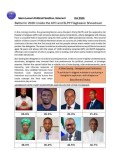
by Fatima Babih, EdD A critical reading of the Institute for Governance Reform’s “Sierra Leone’s Political Marathon, Volume II: Battle for 2028” (October 2026) The cover page of IGR’s new report gives opposition party APC aspirant, Sheikh Mohamed Kamara (aka … Continue reading →
Dear Mrs. April Omodu Kamara Jagaban, I write to you not to diminish your ambition, your support for your husband, or your right to be celebrated by those who admire you. I write because the recent images and videos of … Continue reading →
Pip: There is a phrase that sounds obvious until you realize how rarely it is honored: your rights should not depend on who is in power. Mama Salone Blog is making that case directly, and it is pointed at Sierra Leone right now.
Mara: Today we are looking at judicial independence, the detention of a lawyer mid-hearing, and what ordinary citizens can actually do when they believe due process has broken down.
Pip: Let's start with the case that set this off.
Our Rights Must Not Depend on Who Is in Power
Mara: The question this piece is asking is whether fundamental legal protections held in a specific, documented moment — and whether Sierra Leoneans at home and abroad have a role in pressing for an answer.
Pip: The facts as laid out are stark. On 8 October 2026, lawyer Joseph Fitzgerald Kamara was ordered into custody by the Chief Justice of the Supreme Court while he was actively representing the opposition in constitutional proceedings.
Mara: The post frames it precisely: "This is not simply about JFK. It is about the rights of every Sierra Leonean. It is about the independence of our legal profession. And it is about the safeguards that must exist whenever judicial power is used to take away a person's liberty."
Pip: That framing matters. Detaining a lawyer mid-case is not a procedural footnote — it reaches the question of whether the courtroom itself remains a protected space for legal argument.
Mara: The post is careful to acknowledge that courts do have contempt powers. Nobody disputes that. The issue is whether the principles of fairness, impartiality, and proportionality were applied here.
Pip: And Sierra Leone has been bound by the International Covenant on Civil and Political Rights since 1996, so there is an existing international framework to measure this against — arbitrary detention and the right to a fair hearing before an impartial tribunal are not aspirational, they are treaty obligations.
Mara: The response proposed is civic and procedural. The author has formally written to UN Special Procedures — specifically the Working Group on Arbitrary Detention and the Special Rapporteur on the Independence of Judges and Lawyers — and is inviting others to do the same, at urgent-action@ohchr.org.
Pip: The guidance on how to write is genuinely practical: use your own words, stick to facts you can source, keep it respectful. As the post puts it, credibility is the strongest tool available.
Mara: The closing line captures the whole argument in one sentence — judicial independence and judicial accountability are not opposites; they must go together.
Pip: Rights that only apply to the politically convenient are not rights at all.
Mara: And knowing the specific channel to raise your voice — that turns a principle into an action. More from Sierra Leone next time.
Fatima Babih, EdD On 8 October 2026, lawyer Joseph Fitzgerald Kamara (JFK) was ordered into custody by Chief Justice of the Supreme Court, Komba Kamanda, for contempt of court. It happened while he was representing the opposition in constitutional proceedings … Continue reading →
Pip: MAMA SALONE ~ Lioness of the West Coast has been following a paper trail from Freetown to Venice, and the trail just delivered its final answer — which turns out to be a question the Sierra Leonean government still has not answered.
Mara: Mama Salone Blog's investigative series closes today with documents obtained directly from La Biennale under Italian transparency law — records that show who signed what, in what order, and under whose instruction.
Pip: Let's get into the appointment that may not have been an appointment at all.
Who Appointed the Commissioner — and Did She Appoint Herself?
Mara: The central tension of this final installment is procedural and constitutional at once: La Biennale's rules require a government minister to appoint the Commissioner, and the Commissioner must flow from that authority — not the other way around.
Pip: The released correspondence shows the first letter to La Biennale came not from any ministry but from Office of the President letterhead, signed by Tony Morgan, Head of Strategy and Communication at State House. His opening line sets the tone: "I am under instruction by the First Lady H.E Dr. Fatima Maada Bio."
Mara: So the pavilion team — Commissioner, Deputy, curators, general organizers — was proposed before any government decision appears in the record. La Biennale's president wrote back reminding Morgan that only a competent governmental authority could sign, and that deputy commissioners would not be accepted.
Pip: Then the Foreign Minister's letter arrived. A minister signing is exactly what the procedure requires. Except his first sentence reads: "I am acting under the instruction of Her Excellency Dr. Fatima Maada Bio."
Mara: The post lays out what that inversion means in practice. The authority that was supposed to appoint the Commissioner is shown taking direction from the person to be appointed. As the piece states plainly: "a process in which the appointee instructs the appointer is not an appointment. It is ratification."
Pip: And ratification of a decision nobody on paper seems to have made — no Cabinet resolution, no stand-alone appointment instrument, no budget appears in anything La Biennale released.
Mara: The minister's letter also tracks Morgan's earlier draft almost word for word, and the only copy recipient listed is the Chief of Staff of the Office of the First Lady. The Ministry of Tourism and Cultural Affairs, the body Part I of this series identified as built for exactly this work, does not sign, is not copied, and is not mentioned anywhere.
Pip: The later operational records are just as pointed. Paolo Mozzo submitted catalogue texts in January 2026 and told La Biennale in February that "we have chosen" the pavilion's press office. The press agent then described Mozzo to Biennale staff as "il responsabile del Padiglione Sierra Leone" — the person in charge. No ministry, no Commissioner appears in any of those exchanges.
Mara: The piece also flags a catalogue discrepancy worth noting: the English text says the pavilion is "Sponsored by ECOWAS," while the Italian says patrocinato — patronage. Sponsorship and patronage are legally different, and the post asks directly who selected the exhibiting artists and whether any gallery or exhibitor paid a fee, which the procedures prohibit.
Pip: The series closes by naming exactly which offices owe answers — Foreign Affairs, State House, Tourism, the Office of the First Lady — and urging Parliament, the press, and the Anti-Corruption Commission to put those questions in writing under Sierra Leone's Right to Access Information Act.
Mara: The final framing is unambiguous: "The plan came first. The government's signature came second." The pavilion carried the Republic's name. The Republic is owed an account.
Pip: Six parts, one question — and the documents answer it by showing what's missing where authority should be.
Mara: Accountability gaps at the level of a national pavilion tend to point toward larger questions about how public power moves in Sierra Leone. Those questions aren't going away.
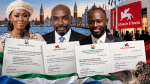
by Fatima Babih, EdD La Biennale’s response to my request provided records that settle who signed Sierra Leone’s application. They also expose the question this series began with: where did the Commissioner’s authority come from, and did it come from … Continue reading →
by Fatima Babih, EdD An Italian network, an unexplained financial trail and a national pavilion that carries the name of the Republic but not its visible government authority. A country does not enter the Venice Biennale by accident. It enters … Continue reading →