
Fatima Babih, EdD
Sierra Leonean Youth inclusion, public spending, and the deadly Kush crisis belong at the center of the investment conversation.
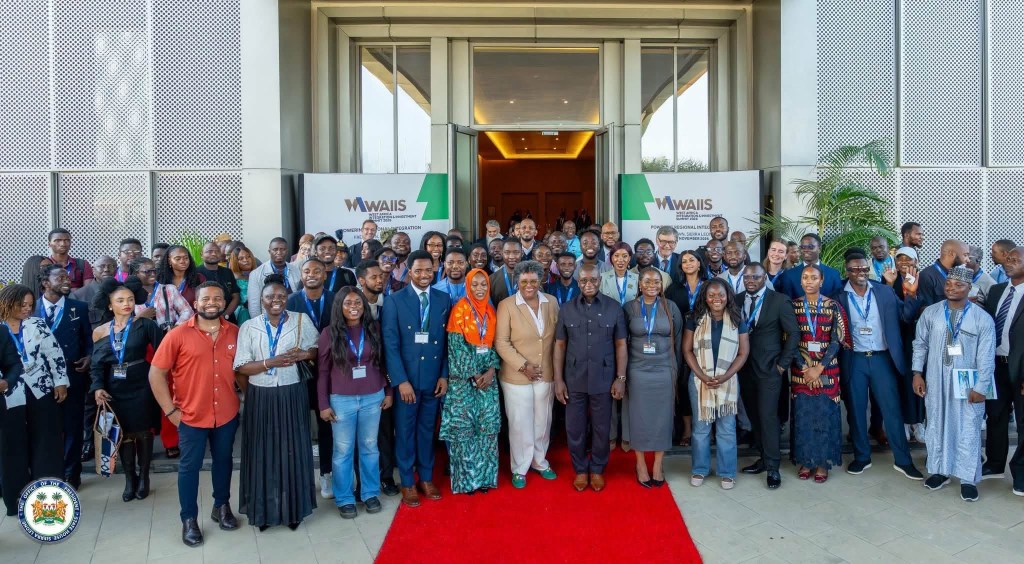
At the gleaming new Julius Maada Bio International Conference Center in Lungi, Sierra Leone is pitching its future to the world. The inaugural West Africa Integration and Investment Summit (WAIIS) brought together political leaders, investors, and project developers to discuss energy, minerals, agribusiness, and digital development. The promises are big: partnerships, regional cooperation, and economic transformation.
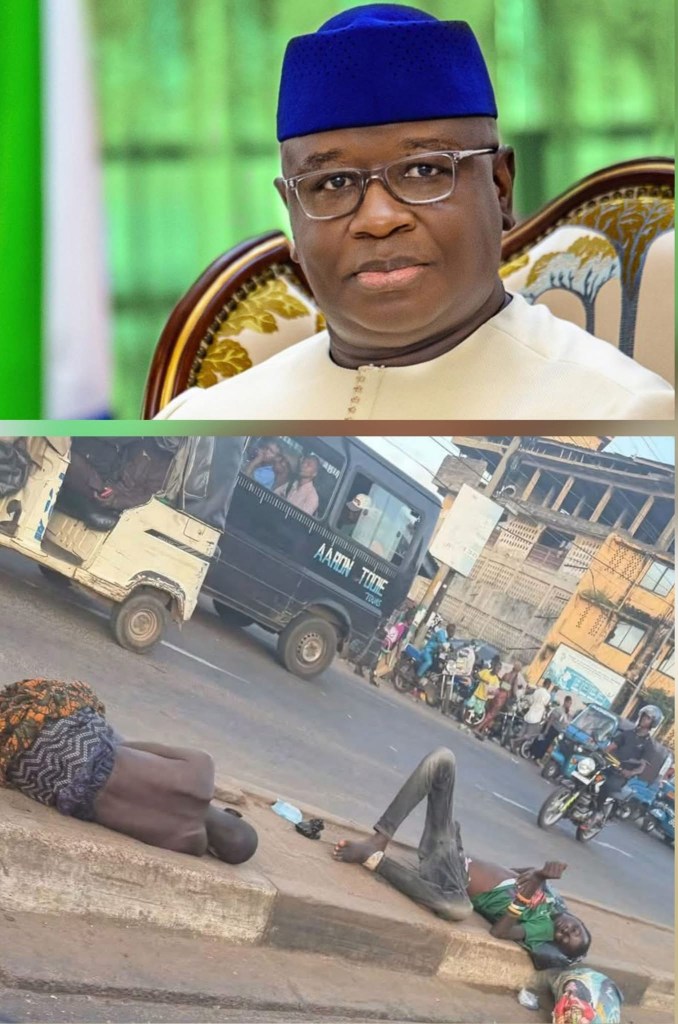
Across the Sierra Leone River estuary in Freetown, another Sierra Leone is waiting to be seen. Young people are losing their health, their homes, and their lives to Kush, a deadly drug that has taken hold of the capital’s streets.
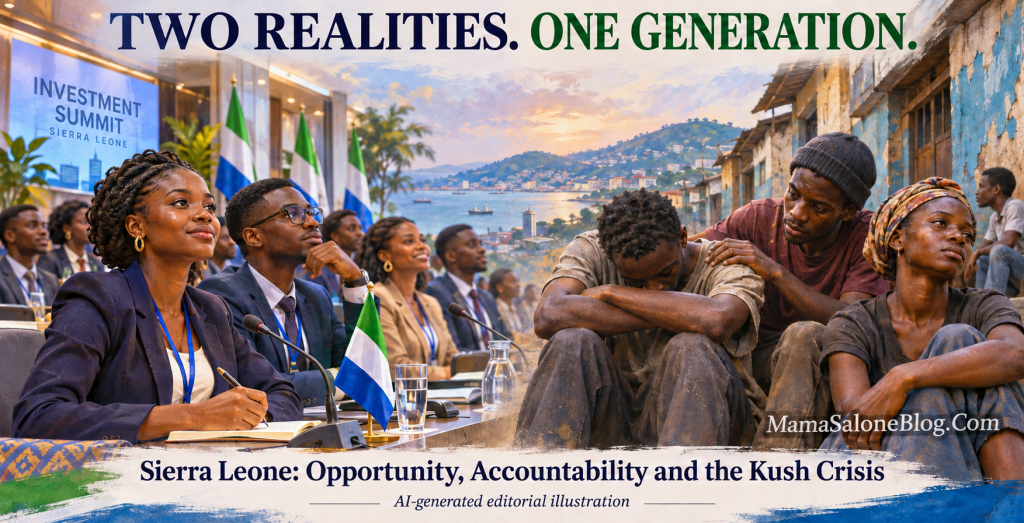
Both realities exist on the same day, a short boat ride apart. The true test of any investment summit is whether its benefits cross that water.
So, the question is simple: What will WAIIS deliver for ordinary Sierra Leoneans, and how will we know?
The Youth Out of the Photos
Photos of young participants at WAIIS are inspiring. They also raise questions that deserve answers:
- Who was invited?
- Which countries did they represent?
- How were they chosen?
The organizers describe an online expression-of-interest process, with attendance subject to invitation and approval by the WAIIS Secretariat. They also advertise youth programming. That establishes a door to the event. It doesn’t tell us who can access it.
Could a young farmer in Kailahun apply? An apprentice in Bo? A graduate in Makeni who has spent years looking for work? A young woman running a small business in a Kenema market? Was the opportunity publicized through radio and community networks, not just websites and social media? Was help available for transport and accommodation?
A photograph cannot answer those questions. The organizers can, by publishing their selection criteria, outreach channels, and participation figures, broken down by country, district, and gender.
Regional participation makes sense for a regional summit. But the real test is whether Sierra Leone’s own young people, across every district and circumstance, had a fair shot at taking part and shaping the summit’s priorities.
A Public Health Crisis Across the River
The Kush crisis makes these questions urgent. A March 2026 policy brief from the International Growth Centre (IGC) reports on research involving 400 active Kush users in Freetown. More than half of those surveyed, 52%, were homeless. Another 21% lived in squatter settlements. Their average age was just 27.
The research also shatters a common stereotype about addiction. Two-thirds of respondents (67%) had jobs before they started using Kush, and another 20% were in school. These were workers and students. Kush took their livelihoods and cut short their education. Recovery, then, requires more than treatment. It requires helping people rebuild their lives.
The toll is counted in lives. According to reporting on the mayor’s October 2025 correspondence, Freetown City Council collected 220 bodies between January 7 and October 8 of that year, and many of those deaths were suspected to be linked to Kush. Each was a person with a name, a family, and a future that should still be ahead of them.
Holding the summit in Lungi places it on the far side of the water from the Freetown neighborhoods where this crisis is unfolding in plain sight. A delegate moving between the airport, the hotel, and the conference hall can come and go without ever seeing the streets, bridges, and communities where young people are struggling to survive.
That distance is more than geography. It raises a hard question: Does the summit’s development agenda truly reckon with the conditions facing the country’s most vulnerable young people?
Any agenda that promises youth prosperity must explain how young people whose education, health, and livelihoods have collapsed will share in that future. Otherwise, “youth” becomes a word on a banner instead of a commitment.
Publish the Cost
Sierra Leoneans also deserve a clear account of what hosting WAIIS costs taxpayers.
So far, the public has not seen a verified total hosting budget or an itemized breakdown of the government’s contribution. That is a glaring gap in a country with so many urgent needs.
The government and organizers should publish:
- The approved budget and actual expenditure
- Funding sources and sponsorship receipts
- Procurement awards
- Separate figures for event production, hospitality, security, transport, and communications, distinct from spending on permanent infrastructure
- The value of public staff time, facilities, and services contributed to the event
Headline figures about a regional investment pipeline do not answer this question. Proposed projects, signed commitments, financing received, and hosting costs are four different numbers. Public reporting should keep them separate.
Without a cost breakdown, citizens cannot judge value for money or weigh this spending against the clinics, schools, and treatment services competing for the same scarce resources.
Following the Benefit to the Community
Ordinary Sierra Leoneans need a plain explanation of how investment commitments will change their lives:
- Which projects will create local jobs, and how many?
- How many apprenticeships and training opportunities will they offer?
- Will small Sierra Leonean businesses have access to supplier contracts?
- Will agricultural investment help farmers get their produce to market?
- Will energy projects deliver reliable, affordable electricity?
For young people struggling with drug dependency, the questions are just as concrete: access to treatment, continuing care, education, skills training, and jobs. The IGC research identifies three clear priorities: community prevention, evaluating rehabilitation programs, and investing in social and economic reintegration. The investors and policymakers gathered at WAIIS have a real opportunity to back exactly that.
The organizers propose tracking commitments through an investment scorecard and annual ministerial reviews. That is a promising start, but only if citizens can actually use it to see which projects are financed, which are operating, and who is benefiting.
Sierra Leone has every reason to seek investment. Its citizens have every reason to demand accountability, transparent terms, and measurable results.
Four steps would turn promises into proof:
- Publish who received access and how they were selected.
- Publish what the country spent.
- Name who is responsible for delivering each commitment.
- Report regularly on what reaches communities.
The summit’s success will not be measured in handshakes or photo ops. It will be measured in the lives of people far beyond its venue: the farmer seeking a market, the graduate seeking work, the small business owner seeking reliable electricity, and the young person seeking a way out of addiction.
They too are Sierra Leone’s investment priorities.
Sources

