
How Sierra Leone’s First Lady weaponized victimhood while her timeline keeps changing
by Fatima Babih, EdD
Sierra Leone’s First Lady Fatima Jabbie Bio, just gave an emotional BBC World Service interview that is aimed at cleaning her tarnished image and building international sympathy. Her narrative in this interview is framed as a powerful testimony of survival, resilience, and transformation. But this is far from the truth.
On face value, the story is compelling: A 16-year-old girl escapes forced marriage in Sierra Leone, flees civil war, seeks asylum in Britain, and rises from victimhood to become a champion for girls’ rights worldwide. Wow!
It’s the kind of narrative that makes Western donors reach for their checkbooks. The kind that gets you invited to speak at the United Nations General Assembly. The kind that transforms a political wife into an international icons.
There’s just one problem: It’s a narrative that keeps changing.
And when trauma narratives shift depending on the audience or goal, the political moment, and the branding strategy, that’s not testimony. That’s performance.
BBC Story vs. Paper Trail
In her recent BBC interview, Fatima Bio presents a crystal-clear timeline:
- Age 13: Father arranges marriage to older man
- 1996 at age 16: Escapes forced marriage and flees Sierra Leone directly for UK during civil war
- Seeks asylum: Rescued by British protection
- Transformation: From victim to advocate
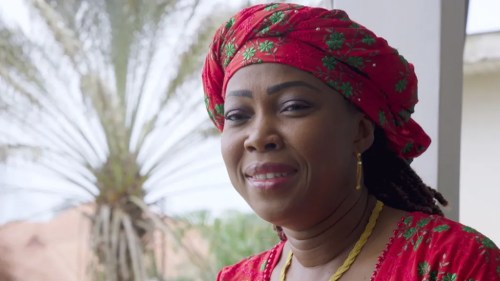
It’s emotionally powerful. It’s politically useful. And it contradicts Fatima Bio’s earlier public statements.
Before The Cameras Started Rolling
Back in 2018, before the international speaking circuit, before the UN appearances, before “Hands Off Our Girls” became a global brand, Fatima Bio told a different story:
“I went back to the Gambia at the age of 15 and left for the UK 18 months later.”
Not: Fled Sierra Leone directly to UK to escape marriage But: Relocated to The Gambia first, then moved to UK later
That’s not a minor detail. That’s a completely different migration story.
Timeline Doesn’t Add Up
Let’s lay out what we’re supposed to believe:
BBC 2026 Version:
- Age 16: Escapes forced marriage in Sierra Leone
- 1996: Flees directly to UK during civil war
- Seeks asylum from trauma and war
- Transforms into girls’ rights advocate
Earlier interviews Version:
- Age 15: Goes “back” to The Gambia
- 18 months later: Moves to UK
Motivation:
“Because it is an English-speaking country…and I have always loved the words United Kingdom”
These aren’t compatible stories. One is about desperate escape from immediate danger. The other is about voluntary relocation and educational opportunity.
One builds international sympathy and moral authority. The other sounds like normal West African family migration.
Guess which version Fatima Bio is now promoting to global audiences?
Missing Child Marriage Story
Here’s what’s particularly troubling: Before becoming First Lady, Fatima Bio gave numerous interviews about her life, ambitions, move abroad, and rise in public life.
The dramatic child-marriage escape narrative is largely absent from these earlier accounts.
Instead, her move to the UK was described in aspirational terms:
“Because it is an English-speaking country…and I have always loved the words United Kingdom”
That doesn’t sound like someone fleeing forced marriage and danger.
That sounds like someone pursuing opportunities abroad.
So, when did the child-marriage trauma story become central to Fatima Bio’s public identity?
- After she became First Lady and needed international credibility for girls’ advocacy work.
- After she started building donor relationships based on personal trauma.
- After she discovered that Western audiences love redemption narratives.
Timeline Disaster
The contradictions get even worse when you examine her educational claims.
Official government biographies state that Fatima Bio:
- Attended Ansarul Islamic School in Kono
- Completed secondary school at St. Joseph’s Convent in Freetown
But completing secondary school in Sierra Leone typically happens around ages 18-20.
So, if she was:
- Escaping marriage at age 16
- Fleeing to The Gambia at age 15
- Moving to the UK by age 16-17
When exactly was Fatima Bio completing St. Joseph’s secondary school in Freetown?
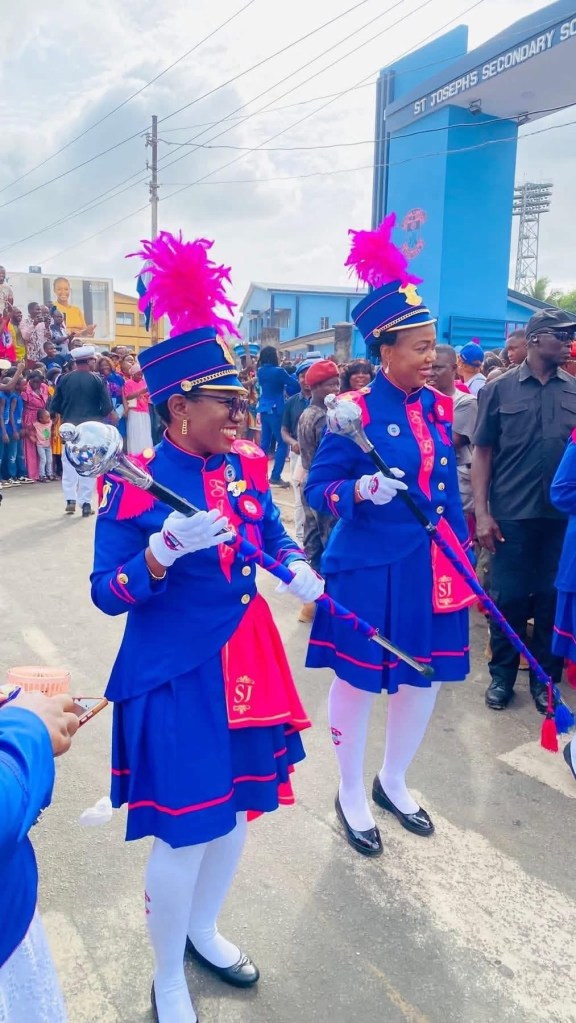
The timeline is mathematically impossible unless she was attending school in multiple countries simultaneously during war time.
This inconsistency in her narratives shows that Fatima Bio is constructing her stories rather than remembering them.
When Family Displacement Becomes Solo Escape
Even the war narrative shifts depending on audience.
BBC version: Lone teenage girl escapes during civil war chaos
Community accounts: Family relocated to The Gambia as part of broader wartime displacement involving her Gambian stepfather
One suggests individual heroism and trauma.
The other suggests normal family migration during unstable times.
Notice the pattern?
Every version that emerges publicly is more dramatic, more traumatic, more internationally sympathetic than the version that came before.
That’s not how genuine memory works.
That’s how political narratives evolve.
Weaponization of Victimhood
Let’s be absolutely clear about what we’re witnessing:
This is not about whether child marriage exists in Sierra Leone. It does, and it’s horrific.
This is not about whether girls deserve protection. They do, desperately and they are not getting any.
This is not about whether trauma deserves sympathy. It does, unconditionally when its genuine.
This is about whether personal trauma narratives should be immune from scrutiny when they become tools for political power, international influence, and moral authority.
Because that’s exactly what Fatima Bio has been doing here. She discovered that:
- Victim narratives generate Western sympathy
- Trauma stories open doors to international platforms
- Child marriage advocacy attracts donor funding
- Personal redemption tales build political capital
So, her stories get more traumatic, more dramatic, more internationally appealing over time.
The First Lady Syndrome Playbook
In my book The UNBECOMING Mrs. Maada Bio of Sierra Leone, I identified this exact pattern as “First Lady Syndrome”:
The accumulation of influence through image, prestige, proximity to power, and public sympathy, often without corresponding accountability:
Step 1: Construct compelling personal narratives
Step 2: Use narratives to build international platform
Step 3: Weaponize platform for political influence
Step 4: Attack anyone who questions the narrative
Step 5: Never provide documentation or consistent timelines
We’re watching this playbook in real time in Sierra Leone.
Why This Should Disturb Everyone
This isn’t just about one person’s inconsistent stories. This reveals something much more dangerous:
The rise of trauma theater as political strategy.
When powerful people discover they can construct victimhood narratives to shield themselves from accountability, democracy dies.
When personal trauma becomes untouchable political currency, we lose the ability to distinguish between genuine suffering and calculated performance.
When inconsistent stories are defended through emotional manipulation rather than factual verification, truth becomes optional.
This is how authoritarianism evolves in the social media age.
Genuine Trauma vs. Political Theater
Here’s how you distinguish real trauma testimony from political performance:
Genuine Trauma Survivors:
- Maintain consistent core facts across time
- Don’t dramatically reshape narratives for different audiences
- Focus on healing and helping others, not building political platforms
- Welcome verification and documentation of their experiences
- Don’t use trauma as immunity from all other accountability
Political Performers:
- Stories evolve to become more dramatic and sympathetic over time
- Narratives shift based on audience and political needs
- Use trauma as platform for power and influence
- Respond to questions with outrage rather than clarification
- Deploy victimhood as shield against all accountability
Which pattern are we seeing in Fatima Bio’s narratives?
A Dangerous Precedent
If we accept that trauma narratives are beyond scrutiny, even when timelines shift, details contradict, and stories evolve for political purposes, we’re creating a dangerous precedent:
- Any powerful person can claim victimhood and become untouchable.
- Any political figure can construct trauma narratives and demand immunity from accountability.
- Any leader can weaponize sympathy and call criticism harassment.
That’s not protection for victims. That’s protection for manipulators like Fatima Bio.
Actual survivors of child marriage deserve:
- Authentic representation, not political theater
- Consistent advocacy, not international branding opportunities
- Genuine support, not trauma narratives that shift with political winds
- Truth-telling, not storylines that serve power rather than healing
When trauma becomes theater, real victims are betrayed twice: First by their original experiences. Then by those who exploit their suffering for political gain.
The BBC’s Responsibility
The BBC and other international media outlets have a responsibility here. When political figures present dramatic personal narratives that differ from their earlier public statements, that’s not just human interest. That’s investigative journalism territory. Instead of simply amplifying emotional stories, responsible media should:
- Cross-check current claims against earlier interviews
- Examine timeline consistency
- Seek corroborating evidence
- Ask follow-up questions when stories evolve
When stories keep evolving to become more politically useful, more internationally sympathetic, more donation-friendly, that’s not memory. That’s marketing. Because truth should never depend on how much sympathy a story generates.
When trauma becomes theater, democracy dies. Sierra Leoneans deserve better.
This is Part 1 of the “Shape-Shifting Narratives” series examining the evolution of Fatima Bio’s public stories and what they reveal about power, truth, and democratic accountability in modern Sierra Leone.
Because truth doesn’t fear documentation. Only lies do.

