
by Fatima Babih, EdD
For years, Fatima Bio’s paid supporters told Sierra Leoneans that questioning the unbecoming conduct of their First Lady was “hatred,” “jealousy,” or political sabotage.
But today, the concerns her paid supporters dismissed are no longer confined to local or domestic political debate. They are now appearing in:
- international investigative reports,
- foreign parliamentary discussions,
- global anti-corruption conversations,
- and international media scrutiny.
The latest example comes from a troubling OCCRP report revealing that a British lawmaker has called for an investigation into Fatima Bio’s continued use of taxpayer-subsidized housing in the United Kingdom.
The issue may appear at first glance to be merely about a UK government housing in London. It is not. It is about something far deeper:
- ethics,
- privilege,
- abuse of political ambiguity,
- and the dangerous consequences of a First Lady operating in a constitutional gray area without accountability.
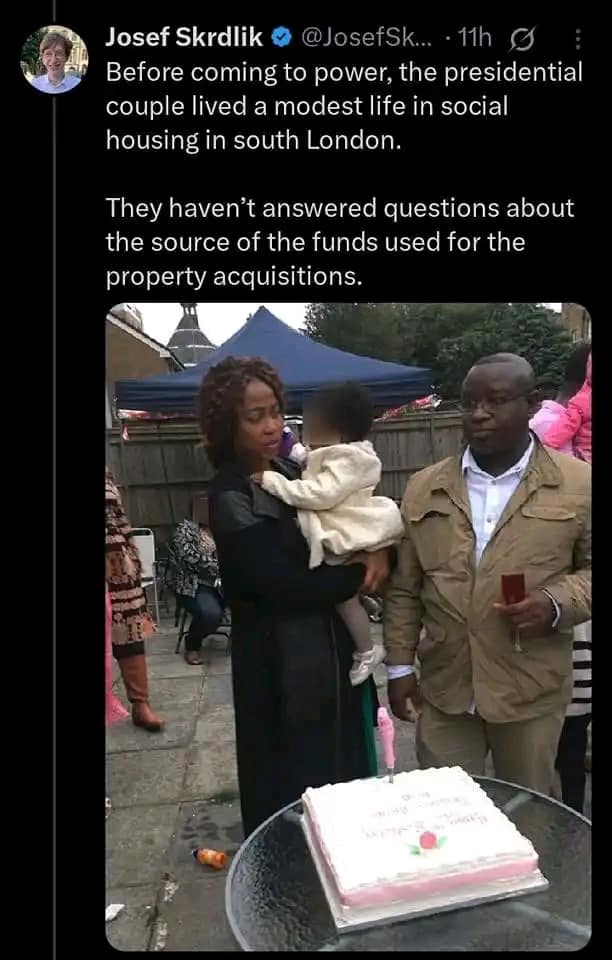
UK Government Housing Controversy
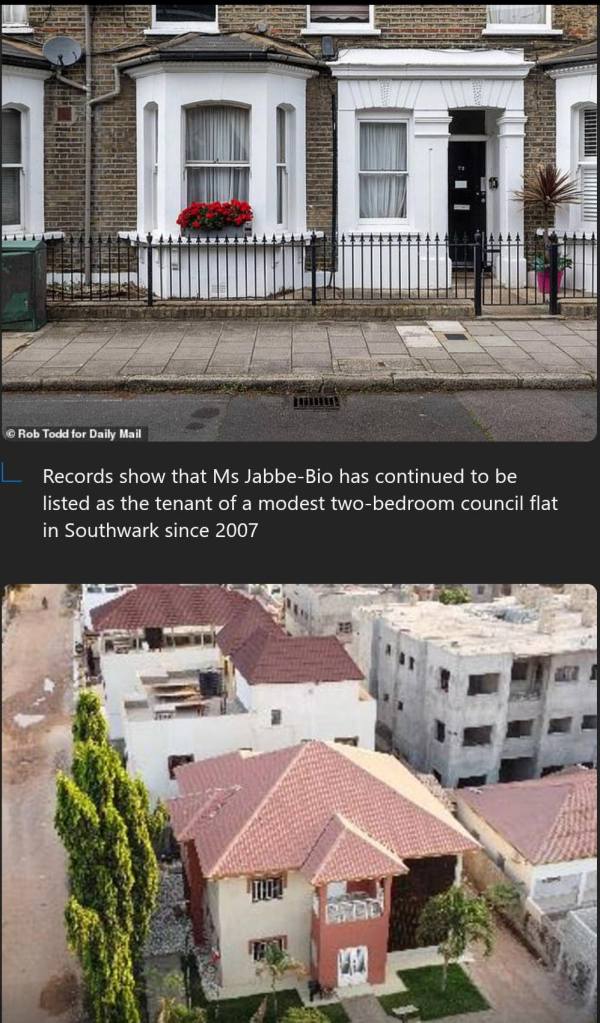
According to the OCCRP article, Fatima Bio admitted during a recent BBC interview that she still maintains a subsidized council flat in South London. Her defense was clear:
“I’m paying for my council house myself. I have not committed any crime.”
But the controversy is not simply about paying rent. Council housing in the UK exists primarily to support low-income residents and vulnerable families who lack adequate housing options; a category of the population Fatima Bio and her children were once members.
Critics, including UK Member of Parliament Neil Coyle, reportedly questioned whether it is ethically appropriate for:
- the wife of a sitting African president,
- living in a presidential lodge,
- while associated with luxury property allegations abroad,
- to continue occupying subsidized housing intended for struggling families.
That question has now moved beyond Sierra Leonean gossip into the realm of international public accountability.
And that is deeply damaging for Sierra Leone’s reputation.
It Is Not the Flat It Is the Pattern
The council housing controversy did not emerge in isolation. It comes after years of allegations and investigative reporting surrounding Fatima Bio’s:
- luxury properties,
- opaque wealth accumulation,
- political influence,
- donor funds,
- questionable public expenditures,
- and extravagant lifestyles
The OCCRP report references earlier investigations alleging that members of Fatima Bio’s family acquired multiple luxury properties in The Gambia after Julius Maada Bio became president. At the same time, Sierra Leone remains:
- one of the poorest countries in the world,
- heavily dependent on donor assistance,
- struggling with maternal mortality,
- youth drug addiction and unemployment,
- collapsing healthcare and education systems,
- and widespread hunger and poverty.
That contrast is politically explosive. Because public outrage intensifies when leaders appear increasingly disconnected from the daily suffering of ordinary citizens.
The Constitutional Gray Area Called “First Lady”
One of the central themes I raised a few years ago in my book: The UNBECOMING Mrs. Maada Bio of Sierra Leone: A Case of First Lady Syndrome was the danger of allowing a First Lady to operate in political spaces without constitutional definition, legal boundaries, or institutional accountability.
Sierra Leone’s Constitution does not create an executive office called “First Lady.”
Yet over the years, Fatima Bio has increasingly operated as:
- a political actor,
- a power broker,
- a government influencer,
- a donor-facing figure,
- a diplomatic representative,
- and at times, almost a parallel executive authority.
But unlike elected officials:
- she is not answerable to Parliament,
- not subjected to confirmation hearings,
- not audited publicly,
- and not directly accountable to voters.
This creates a dangerous governance vacuum. Power without accountability always creates risk. And that risk becomes even more dangerous when international corruption allegations begin to multiply around the same First Lady.
The International Consequences for Sierra Leone
The domestic damage of Fatima Bio’s behavior and actions is already severely affecting the nation. But the international consequences may be even worse. When the name of a country’s First Lady repeatedly appears in:
- harassment of foreign investors like Koidu Holdings
- corruption discussions,
- property investigations,
- drug-trafficking proximity controversies,
- donor-fund allegations,
- and ethical scandals,
it affects:
- investor confidence,
- diplomatic credibility,
- donor trust,
- international partnerships,
- and the global image of the country itself.
This is especially dangerous for Sierra Leone because the country relies heavily on:
- international goodwill,
- development assistance,
- foreign investment,
- and global institutional support.
Every new controversy weakens national credibility. And when foreign lawmakers begin openly discussing the ethics of Sierra Leone’s First Lady, the issue ceases to be “internal politics.” It becomes an international reputation crisis.
The Moral Optics Are Devastating
The optics surrounding this issue are particularly troubling. Think about the contradiction carefully: On one side:
- ordinary families in London remain on long waiting lists for social housing,
- struggling with rising living costs,
- homelessness,
- and economic hardship.
On the other side:
- Sierra Leone’s First Lady is associated with presidential privilege,
- international private jet travel,
- luxury lifestyle allegations,
- political influence,
- and high-profile public spending.
Even if no criminal violation is ultimately proven, the ethical contradiction alone is deeply damaging. Leadership is not judged only by legality. It is judged by integrity, judgment, restraint, and moral example.

First Lady Syndrome Was Never Just About One Person
When I wrote First Lady Syndrome, some dismissed the warning as political criticism, even though I am not a member of any political party in Sierra Leone.
But what we are witnessing today proves the issue was always bigger than personalities.
The real issue is what happens when:
- image replaces accountability,
- influence operates without oversight,
- and public office becomes entangled with personal branding, privilege, and unchecked access to power.
That is what “First Lady Syndrome” truly means. It is the gradual transformation of an unelected symbolic role into a center of political influence without democratic safeguards.
And Sierra Leone is now paying the price domestically and internationally.
Sierra Leone desperately needs:
- economic recovery,
- institutional credibility,
- justice reform,
- youth empowerment,
- investor trust,
- and national healing.
What it does not need is a political environment where the First Lady’s name repeatedly surfaces in controversy after controversy while citizens are told not to ask questions.
Because accountability is not hatred. Scrutiny is not jealousy. And public office, whether elected or unelected, must never become a shield against legitimate public concern.
The deeper tragedy is that while Sierra Leone struggles for dignity on the global stage, controversy surrounding its First Lady continues to dominate international headlines.

