Gallery

SHREDS OF EVIDENCE OF MRS. BIO INCITING & PERPETRATING VIOLENCE IN SIERRA LEONE

By United Voices for Sierra Leone With her unregulated access to the flow of money from the government of Sierra Leone and international donors, Mrs. Fatima Jabbie Maada Bio continues to pay lobbyists in the UK and the U.S. to … Continue reading
Gallery

Maada Bio’s Abuse of Power Takes Sierra Leone in a VICIOUS Direction

This gallery contains 5 photos.

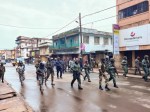
Sierra Leone President Maada Bio is taking the country toward a brutal era in the country’s history. He has literally declared war on the people, especially the youth. Anyone who opposes him in any sense will face the brute force … Continue reading

Podcast Episode: First Lady Fatima Bio Openly Challenges Anti-FGM Campaigners & Child Protect

Pip: When a First Lady gives a speech technically addressed to traditional women's society members but linguistically aimed at international NGOs, you have to admire the ambition — if not the direction.

Mara: This episode draws on reporting from Mama Salone Blog, and the territory is pointed: political theater dressed as cultural identity, and what happens when presidential ambition collides with child-protection advocacy.

Pip: Let's start with the speech itself — and why the language choices matter more than anything else in it.

First Lady Fatima Bio, the Sande Stage, and a Dangerous Signal

Mara: The central question here is whether Fatima Bio's appearance before Sande women in Sierra Leone's southeast was a cultural event or a political maneuver — and the analysis lands firmly on one side.

Pip: The speech was delivered in Krio to a predominantly Mende-speaking audience, which is the first tell. The argument is that the real audience wasn't in the room.

Mara: That's stated directly. The speech was meant for "anti-FGM activists, child-rights advocates, international NGOs, donor organizations, and critics questioning her sudden political embrace of Sande society." Not cultural communication — political signaling.

Pip: So the women sitting in front of her were essentially set dressing for a message aimed at people watching from outside the country.

Mara: And then there's the linguistic detail that does the most damage to her claimed cultural authenticity. She repeatedly said "Bondo" while addressing southeastern women who traditionally know the society as "Sande." She never once said "Sande."

Pip: That is a small word doing enormous work.

Mara: The piece calls it exactly that — enormously revealing. Anyone genuinely rooted in these traditions would instinctively use the regional term. The slip exposed what the analysis calls "a failed performance."

Mara: Then came the part that moves this beyond political theater. Bio told the society women they should not fear, that nobody can touch them, nobody can stop them, and they should continue their cultural practices freely.

Pip: With FGM prevalence among Sierra Leonean women aged fifteen to forty-nine sitting at approximately eighty-three percent — one of the highest rates in the world — that assurance is not a cultural affirmation. It's an instruction to continue.

Mara: It directly undermines the local Memoranda of Understanding that some communities have voluntarily adopted to protect girls under eighteen. Those MOUs represent fragile, hard-won progress, and the speech treated them as obstacles.

Pip: And she tied all of it to a political slogan — "Ebema" — which means the line between cultural gathering and campaign infrastructure has effectively disappeared.

Mara: The piece frames the contradiction plainly: internationally, Bio has built her reputation on protecting girls and opposing child marriage. That reputation and this speech cannot both be true at the same time.

Pip: The stakes, as the analysis puts it, are no longer cultural but national — reaching into public health, child protection, and Sierra Leone's international standing. That's where this lands.


Mara: The question the piece ends on is the one that stays with you: what kind of political future is being built when presidential ambition positions itself against child-protection advocacy?

Pip: Culture is a real thing worth protecting. It's just not a shield that fits over everything.

Gallery

First Lady Fatima Bio Openly Challenges Anti-FGM Campaigners & Child Protection Advocates

This gallery contains 4 photos.

by Fatima Babih, EdD As Fatima Bio intensifies what increasingly looks like her unofficial 2028 presidential campaign across Sierra Leone’s southeast region, her political strategy is becoming clearer by the day: Usurp the people’s culture,weaponize their identity,and mobilize traditional structures … Continue reading

Podcast Episode: First Lady Syndrome and the Crisis of Accountability: When Controversy Becomes a

Pip: There's a phrase that gets used to shut down any uncomfortable question about power: "That's just jealousy." Mama Salone Blog has been tracking what happens when the questions don't go away — and start showing up in foreign parliaments instead.

Mara: This episode follows that thread, moving through First Lady accountability, constitutional gray areas, and what international scrutiny actually costs a country that depends on global goodwill. Let's start with the question of who answers for what — and who doesn't have to.

When the First Lady's Name Becomes the Story

Pip: The central tension here is straightforward: what happens when an unelected figure accumulates political influence without any of the accountability structures that elected officials face? That's the ground this piece is covering, and the stakes are national, not personal.

Mara: The trigger is a recent OCCRP report about a British lawmaker calling for an investigation into Fatima Bio's continued use of subsidized council housing in South London. Her response to the BBC was direct: "I'm paying for my council house myself. I have not committed any crime."

Pip: And the piece is careful to say the flat itself isn't the point. The point is the ethical contradiction — council housing exists for low-income families on waiting lists, and the question being raised, now in the UK Parliament, is whether the wife of a sitting African president should still hold that place in the queue.

Mara: What the piece argues is that this controversy didn't arrive in isolation. It follows years of investigative reporting on luxury property allegations in The Gambia, donor fund questions, and what the author describes as a pattern of "opaque wealth accumulation" — all while Sierra Leone remains heavily dependent on foreign aid and ranks among the world's poorest nations.

Pip: That contrast is the thing that makes the optics genuinely combustible, not just awkward.

Mara: The constitutional argument runs underneath all of it. Sierra Leone's constitution creates no executive office called First Lady, yet the piece documents how Fatima Bio has functioned as a political actor, a diplomatic representative, and a donor-facing figure — roles with real power but no parliamentary oversight, no confirmation process, and no public audit.

Pip: Power without a return address, essentially.

Mara: The piece frames the international consequence directly: when a First Lady's name surfaces repeatedly in corruption discussions and property investigations, it affects investor confidence, donor trust, and diplomatic credibility — all things Sierra Leone cannot afford to lose. The author's phrase is precise: "nations, like individuals, eventually become known for the scandals they tolerate."

Pip: And the closing argument is that accountability isn't hatred, scrutiny isn't jealousy — those were always deflections, and the international stage has stopped accepting them.

Mara: Which raises the harder question underneath this one — what structural reforms would actually close the constitutional gray area the piece describes.


Pip: The line that stays with me: image replacing accountability isn't a personality flaw, it's a governance failure.

Mara: And one with compounding interest — each new controversy raises the cost of the next. More on where that leads next time.

Gallery

First Lady Syndrome and the Crisis of Accountability: When Controversy Becomes a National Liability

This gallery contains 4 photos.

by Fatima Babih, EdD For years, Fatima Bio’s paid supporters told Sierra Leoneans that questioning the unbecoming conduct of their First Lady was “hatred,” “jealousy,” or political sabotage. But today, the concerns her paid supporters dismissed are no longer confined … Continue reading

Podcast Episode: Cultural Celebration or Campaign Rally in Kenema? Fatima Bio’s Political Appropr

Pip: When the First Lady of Sierra Leone shows up to a cultural gathering wearing a headscarf printed with her own political slogan, you have to ask: whose culture, exactly, is being celebrated?

Mara: That question sits at the center of what Mama Salone Blog is examining — how traditional women's institutions are being pulled into the orbit of electoral ambition, and what that costs the communities those institutions are supposed to serve.

Pip: Let's start with the Kenema procession and what it actually was.

Cultural Celebration or Campaign Rally?

Mara: The tension here is specific: did a public event organized around Sande society in Kenema function as cultural preservation, or as the opening move in a 2028 presidential campaign?

Pip: The BBC interview answer is the load-bearing fact. When asked directly whether she planned to contest the presidency after her husband's term, Fatima Bio said, "If it is willed by God, nobody is going to stop me."

Mara: That is not a denial. And the post traces how the Kenema event fits a pattern of nationwide appearances that increasingly resemble campaign infrastructure rather than First Lady ceremonial duties.

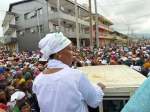
Pip: The coordinated white headscarves are the detail that collapses the official narrative. "EBEMA GBI" — her emerging political slogan — printed on the attire of women at a so-called cultural procession. That is a campaign visual, not a heritage one.

Mara: The post frames this as a structural problem, not just optics. The office of First Lady occupies what it calls a politically ambiguous space: not elected, not constitutionally defined, and not directly governed by campaign regulations. That ambiguity is being used to run a shadow campaign outside the accountability rules that apply to every other political actor.

Pip: Her husband publicly warned his own party against premature campaigning — "mango mango politics," he called it. The irony is doing a lot of heavy lifting there.

Mara: The post also challenges her cultural standing within Sande itself, arguing that her prominence in these spaces comes from proximity to state power rather than any organic tribal or lineage connection to the institution.

Pip: And then there is the contradiction the post calls impossible to ignore: someone internationally recognized for anti-child-marriage advocacy is now politically empowering institutions that, in many traditional contexts, have historically intersected with early sexualization and early marriage expectations for girls as young as eleven.

Mara: The post closes by asking where Sande's protective voice is amid Sierra Leone's current crisis of sexual violence and abuse — noting that the loudest mobilizations from these society structures increasingly look political rather than protective.

Pip: Culture absorbed into branding. The road to 2028 is apparently already paved.


Mara: The question underneath all of this is whether traditional institutions can survive being instrumentalized by elite ambition — and who pays the cost when they can't.

Pip: Sierra Leone is going to be answering that question for a while. We'll be watching.

Gallery

Cultural Celebration or Campaign Rally in Kenema? Fatima Bio’s Political Appropriation of Sande for Her 2028 Ambition

This gallery contains 2 photos.

by Fatima Babih, EdD On Saturday, May 23, 2026, Fatima Bio flooded social media with triumphant images and carefully curated videos, photos and crafted language celebrating what she described as a grand cultural gathering of Sande/Bondo women in Kenema. In … Continue reading

Gallery

Debunking Sierra Leone First Lady’s BBC Interview Narrative: How Fatima Bio’s Circular Logic & Arrogance Exposed The Country’s Narco-State Reality

This gallery contains 2 photos.

When Europe’s most wanted drug lord becomes your family friend, claiming ignorance isn’t just dishonest, it’s insulting to the nation! by Fatima Babih, EdD There are moments in political interviews when a single response destroys years of carefully constructed public … Continue reading

Gallery

When Trauma Becomes A Weapon: Deconstructing Fatima Bio’s Shape-Shifting BBC Narrative

This gallery contains 2 photos.

How Sierra Leone’s First Lady weaponized victimhood while her timeline keeps changing by Fatima Babih, EdD Sierra Leone’s First Lady Fatima Jabbie Bio, just gave an emotional BBC World Service interview that is aimed at cleaning her tarnished image and … Continue reading

Gallery

Sierra Leone First Lady Fatima Bio’s Promised Safe Homes for Girls That Never Manifested: Eight Years Later Where Did She Spend the Donor Funds?

This gallery contains 1 photos.

By Fatima Babih, EdD In June 2022, Sierra Leone’s First Lady, Fatima Bio, boarded a chartered private jet alongside an entourage reportedly numbering around 50 people and flew to The Gambia to receive an honorary doctorate award in Humane Letters. … Continue reading

Gallery

An Open Letter to Bo Central Police Family Support Unit Commander: Hold Your Officers Accountable & Help Deliver Justice

This gallery contains 3 photos.

The refusal of an FSU officer to testify in a long-delayed sexual assault case raises painful questions about duty, accountability, and the protection of girls in Sierra Leone. Dear Commander Massaquoi, I write to you publicly because this is not … Continue reading