
By Fatima Babih, EdD
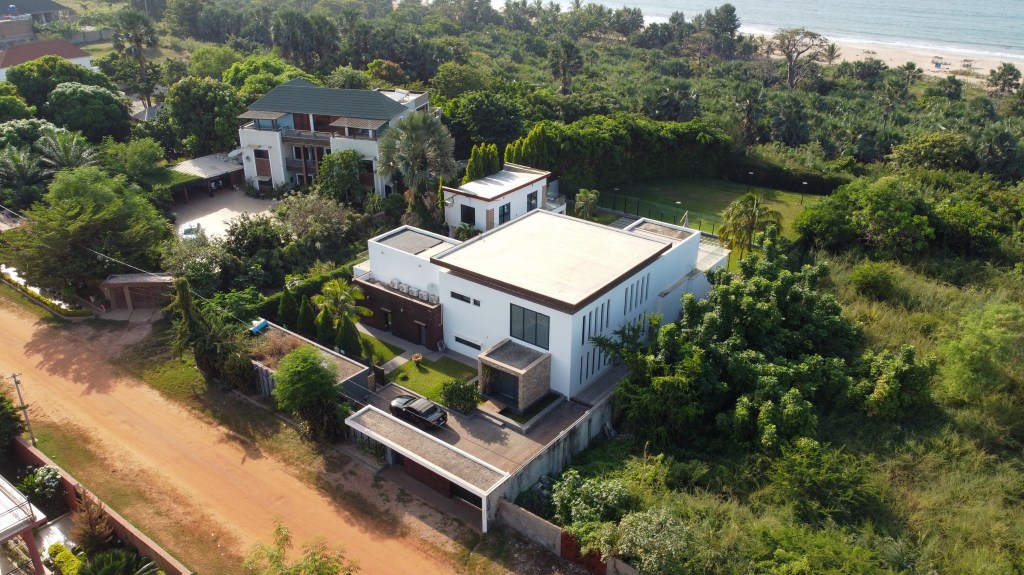
First Lady Fatima Bio moved on and even built ten mansions in her adopted country, The Gambia. The politicians also moved on, some to different ministries. The headlines faded. But in Kono District, especially Koidu Town, families are still paying the price.
There is a sentence in a recent video from Kono that should trouble the conscience of every Sierra Leonean:
“The government doesn’t care about us.”
Those words did not come from a politician seeking votes. They did not come from an opposition press conference or a social-media activist thousands of miles away. They came from a former worker of Koidu Limited living in Kono. And behind those words lies a story Sierra Leone desperately needs to hear.
Because long after Fatima Bio’s protest against the company ended, long after her video messages about Koidu Holdings stopped, long after her cameras moved to her political campaign rallies, something devastating remained behind in Kono:

people without jobs, families without reliable incomes, children whose school fees became a struggle, and an entire local economy trying to absorb the disappearance of one of its largest employers.
This is the story after the spectacle. This is the human cost of the closure of Koidu Limited.
Moses Mboma is a husband and father of four from Tankoro Chiefdom. He worked for Koidu Limited in its dewatering department. His testimony is striking precisely because it complicates the story Sierra Leoneans have been told about the labor dispute.
Mboma does not claim everything at the mine was perfect. Nor does he deny that workers had grievances. But he remembers something that is painfully absent today: a paycheck.
“All of us who worked in the company, I believe, had a good life,”
he says in the video.
“There was peace in homes, regardless of how inadequate some of my colleagues thought our pay was.”
Then comes the sentence that should force us to reconsider how we view the way this crisis was handled:
“Politicians interfered, even though they didn’t provide us with a job.”
By “politician” we know he means the one who interfered publicly, First Lady Fatima Bio, who is not a government official.
Mboma continues:
“They criticized the pay we received. But what we were paid took care of our needs.”
That distinction matters. A worker can be underpaid and still desperately need his job. A company can deserve scrutiny without the destruction of the employment on which an entire community depends. Workers can demand dignity, better conditions and fair compensation without wanting the enterprise that feeds their families to disappear.
Those truths can exist at the same time.
The Workers Grievances
We must acknowledge that the workers had their grievances. The dispute that ultimately preceded the shutdown involved allegations concerning wages and working conditions. Reuters reported in May 2025 that the workers’ union said employees were being paid using an outdated exchange rate and raised concerns about inadequate access to clean drinking water and toilets. Koidu Limited did not publicly respond to those specific allegations in the Reuters report (Reuters).
Workers had every right to demand fair treatment. That should never be minimized. But defending workers’ rights also means asking what happened after those workers lost their livelihoods.
Justice cannot be measured only by the righteousness of the original grievance. It must also be measured by the outcome. And the outcome in Kono deserves scrutiny.
Over 1,000 Jobs Disappeared
By May 2025, Koidu Limited had shut its mining operations and more than 1,000 workers had lost their jobs. The company said the prolonged strike had caused more than US$16 million in losses and estimated that approximately US$20 million would be required to restart operations (Reuters).
But one consequence requires no corporate press release to understand: people stopped receiving salaries. And salaries are not simply numbers deposited into bank accounts.
- A salary is food.
- A salary is medicine.
- A salary is school fees.
- A salary is rent.
- A salary is transportation.
A salary is the ability of an adult to look after his or her family without begging relatives and neighbors for help. Take away hundreds of salaries simultaneously in a closely interconnected community and you have not merely eliminated jobs. You have removed part of the economic bloodstream of that community.
“Someone Who Didn’t Need Help Now Needs Help”
The economic damage did not stop with the dismissed workers. In the video, a community leader explains the ripple effect with devastating simplicity:
“It has affected everyone in the community, because our community is very small. We are interrelated.”
Then he explains what that means in human terms:
“Someone who didn’t need help for their child’s school fees would now need your help for it.”
And:
“Someone who didn’t need any help to feed his family, now needs help to feed his family.”
That is what economic collapse looks like at the household level. Not GDP. Not export statistics. Not government talking points.
A father who used to help somebody else now needs help himself.
Recent reporting from Kono corroborates this broader picture. Engage Salone reported in September 2026 that the shutdown affected not only Koidu Limited’s direct employees but contractors and the wider local economy. Paramount Chief Paul Ngaba Saquee described formerly independent people becoming dependent on others after losing their livelihoods (Engage S alone).
That is the multiplier effect of unemployment. The worker loses his salary. The market woman loses a customer. The contractor loses business. The landlord loses rent. The child risks losing educational opportunities. The relative who once received financial help becomes responsible for providing it.
One lost job can destabilize several lives. Multiply that by more than a thousand workers. That is the Koidu story today.
And Then There Are the Dead
Perhaps the most disturbing allegation emerging from former Koidu Limited workers concerns those who did not live to see the mine reopen. Mboma says in the video that between 36 and 38 former workers have died since the company closed.
Recent reporting by Engage Salone similarly states that former workers say more than 30 of their colleagues have died since the shutdown. They attribute some of those deaths to the emotional and financial consequences of losing their livelihoods and to difficulty affording basic healthcare (Engage S alone).
This allegation is serious enough to demand investigation.
- Who were these workers?
- When did they die?
- What were the recorded causes of death?
- How many left behind spouses and children?
- Did loss of income prevent any of them from accessing medical treatment?
If dozens of former employees of one company have died within this period, the Sierra Leone government should at least care enough to know their names and causes of death. But that is not the case currently.
Women Paid the Price Too
The Koidu story is often told as a story about male mine workers. But unemployment rarely stays with the employee. It enters the home. Women who depended on household income feel it. Children feel it. Small traders feel it. Women who worked directly or indirectly with the miners feel it.
In the video, gender activist Victoria Favour Pombo explains that women worked at the company as cooks and in administrative positions, and that they were also deeply involved in the struggle over workers’ grievances.
Recent reporting from Kono similarly found that women were employed in administrative and cooking roles while others earned livelihoods as contractors and suppliers serving the mine (Engage S alone).
When a major employer collapses, therefore, counting terminated employees alone dramatically understates the damage. We must count households. We must count dependents. We must count informal businesses. We must count women whose livelihoods depended directly and indirectly on the mine. And we must count children whose futures become less secure when household income disappears.

When First Lady Hijacks A Labor Dispute
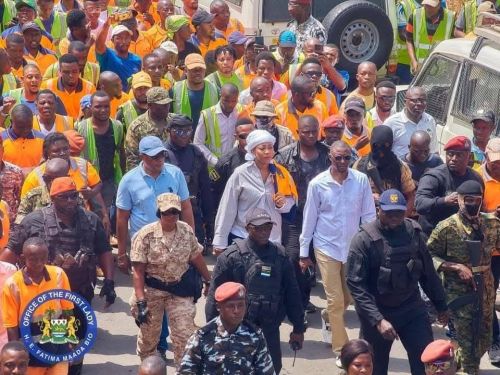
This is where the history becomes uncomfortable. On March 4, 2025, First Lady Fatima Jabbie Bio joined protesting Koidu Limited workers in Kono. Contemporary reporting documented her leading the protest and her public demands on the company , purportedly on behalf of the (SierraLoaded).
The dispute subsequently escalated. The First Lady publicly criticized the company. Koidu Limited accused her of unlawful interference and incitement, allegations she disputed through her lawyers, and threatened legal action against Koidu Limited. The First Lady’s interference in the labor dispute became national news (Reuters)
Lost amid the political warfare was a fundamental question: What method and outcome best protected the workers?
On March 20, 2025, the Ministry of Employment, Labour and Social Security and Koidu Limited issued a joint statement encouraging the national workforce to return to work while outstanding concerns were addressed. The statement said solutions to the Ministry’s recommendations would be pursued after workers returned and announced plans for a quarterly bonus scheme (Cocorioko). But Fatima Bio had stated that the workers would not return to work until their demands were met.
A few days after the joint statment, however, the company announced that it was moving into care and maintenance amid the continuing dispute, as the workers had refused to return to work. The company blamed the strike and what it described as political interference (Sierraloaded). Koidu Limited later laid off more than 1,000 workers.
The role played by the First Lady as a political actor should also be examined against what ultimately happened to the people whose interests everyone claimed to represent.
Advocacy must be judged by what happens to the people we claim to speak for. This is the lesson Kono’s experience should teach Sierra Leone. Public advocacy cannot end when the cameras leave. Political actors like the First Lady cannot march beside struggling workers, dominate the headlines, and then allow those same people to disappear from the national conversation when the consequences become inconvenient for her agenda.
And government cannot watch a dispute involving one of the country’s largest mining operations deteriorate into economic devastation and then behave as though this issue is simply yesterday’s news.
Everybody who exercised power in this crisis owes the people of Kono answers.
Diamonds Beneath Hardship In Homes
There is something particularly cruel about poverty in a place associated around the world with diamonds. For decades, Kono has helped produce extraordinary mineral wealth. Yet the ordinary people living above that wealth continue to experience economic hardship and insecurity.
That contradiction is older than Koidu Limited. And it will survive Koidu Limited unless Sierra Leone finally confronts the deeper question: Who is natural-resource development supposed to benefit?
If diamonds leave Kono while poverty remains, something is fundamentally wrong. If workers can spend years extracting valuable resources yet have no meaningful safety net when employment disappears, something is wrong in the nation’s governance.
If an industrial dispute can escalate until more than a thousand people lose their livelihoods without an effective national mechanism capable of preventing economic catastrophe, something is wrong in the nation’s governance.
And if nearly two years later former workers are still pleading to be seen and heard, then our failure is no longer simply industrial. It is moral.
“The Government Doesn’t Care About Us”
Near the end of the video, a former worker delivers perhaps its most haunting statement:
“The government doesn’t care about us.”
He adds:
“It doesn’t care that we all paid tax as employees for the development of the country.”
Whether one agrees with his conclusion or not, government officials should hear the pain behind it. These workers were taxpayers; parents; husbands; wives; consumers; citizens.
They contributed to Sierra Leone’s economy while diamonds worth millions of dollars left the soil beneath their communities. Today, many of them are asking their neighbors for help buying food and educating their children. That should disturb all of us.
Kono Does Not Need Another Political Performance
The people of Kono do not need another First Lady-led protest. They do not need another social-media war between the First Lady and the company. They do not need politicians fighting over who belongs or loves Kono most.
They need answers. They need paychecks. They need sustainable employment. They need functioning government institutions capable of resolving industrial disputes before workers become collateral damage.
They need corporate accountability that does not depend upon a First Lady’s political theatrics. They need government officials whose interventions are governed by law, competence and measurable outcomes. And they need a serious national conversation about what happens next.
The government of Sierra Leone is accountable for ensuring that a First Lady is never again allowed to interfere in an industrial dispute to this magnitude of deterioration until an entire district is left counting the human casualties.
The Kono people’s questions cannot be answered with EBEMA Gbi slogans.
We Must Put the People Back at the Center
For too long, the Koidu Holdings controversy became a battle of personalities: First Lady versus Koidu Limited. Meanwhile, the people whose livelihoods were actually at stake slowly dis appeared from the story.
It is time to put them back at the center.
- Listen to Moses Mboma.
- Listen to the women.
- Listen to the former workers.
- Listen to the families struggling with school fees.
- Listen to the people who once supported relatives but must now ask those same relatives for help.
- Listen to the Kono leadership.
And let us remember the former workers who are reported to have died before seeing their livelihoods restored. The diamonds may be underground. But the human cost is standing right in front of us.


It’s a sad state of affairs. I hope that workers in Sierra Leone will learn from the experiences of the former workers at Koidu Limited when it comes to Labour disputes with employers who are based overseas, primarily.
LikeLike