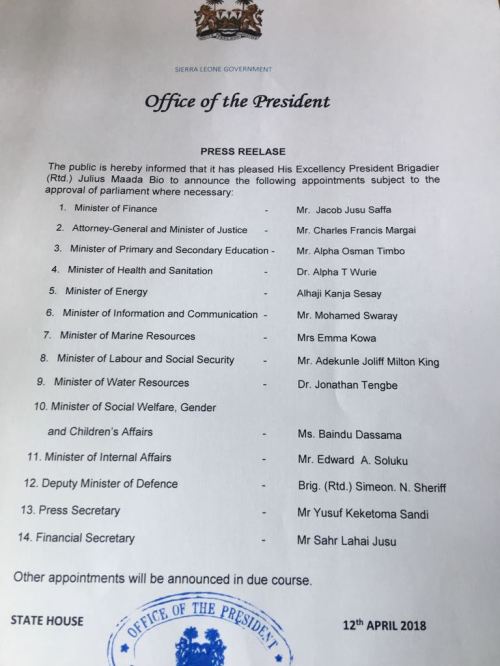
Sierra Leone’s new President, Julius Maada Bio, has started appointing members of his cabinet. As promised, Mama Salone is paying close attention to the gender mix of this administration. The Press Release indicates that more appointments will be following soon.
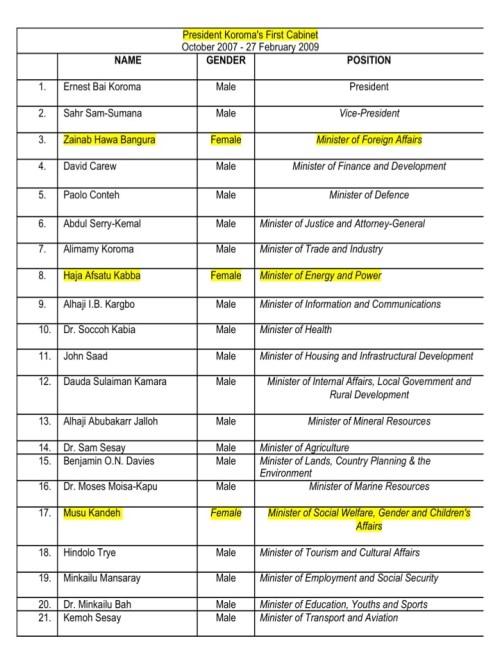
Meanwhile, out of 14 appointments, only 2 are women, so far. Since this is just the beginning, we are hoping that Mr. Bio will do better than his predecessor, Mr. Koroma of the opposition APC party, whose first full cabinet of 21 members consisted of only 3 women.
Even though this is just the beginning for President Bio, and we do want to remain positive, we cannot help but feel that 2 out of 14 is not an impressive start.
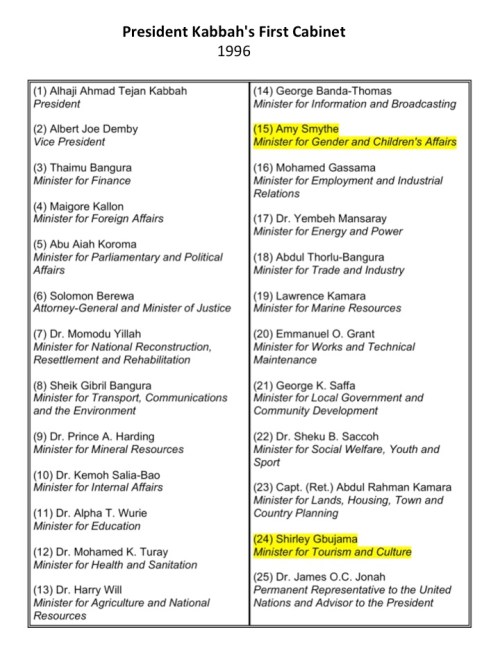
President Ahmed Tejan Kabba of the SLPP, who was replaced by the APC President Koroma, was not much of a friend to women in his appointments either. His first full cabinet of 25 members consisted of only 2 women. Pathetic!
Is President Bio heading down the same path as his predecessors of both parties in his cabinet appointments? Is he going to change this misogynistic trend in the cabinet and administrative appointments by Sierra Leone presidents?
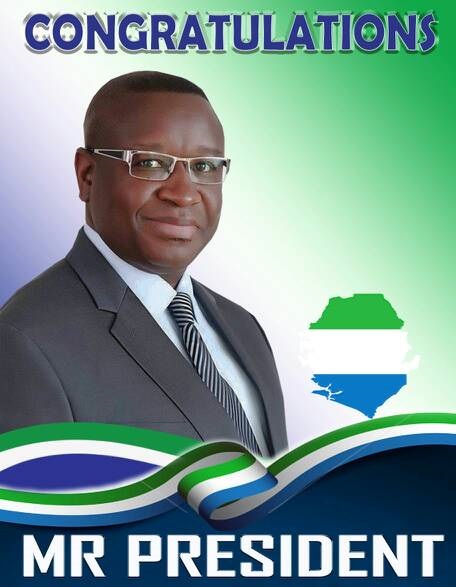
Congratulations Your Excellency, Rtd. Brigadier Julius Maada Bio, on becoming president of the Republic of Sierra Leone!
Mama Salone Blog wishes to express our utmost respect for you and sincere support of your leadership. May the Almighty bless our nation with abundant Peace. May He guide and protect you every step of the way. And May He guide your leadership decisions as you rule our beloved country in the next five years or beyond!!
Mama Salone Blog may not be on the band wagon with many of our compatriots whose way of showing patriotism is by glorifying you, before you even get the chance to tackle the smallest of our national issues. Rest assured, however, that Mama Salone Blog will commend you whenever your performance deserves it.
Mr. President, as the election dust settles, and the reality of governing a nation with dire challenges sets in, we hereby take this opportunity to call your attention to girls’ and women’s issues in our beloved country.
Mr. President, as you well know, a little over half of our country’s population is female (51%). But majority (63%) of this better half of the nation is illiterate and absent in the non-agricultural labor force and national governance.
This means that you have inherited a nation in which a huge percentage of its vital human capital is unable to contribute meaningfully to the development of our nation.
You are also no stranger to the fact that women in our country are perishing every day in the performance of the most natural of their human function in society, childbirth.
Our maternal mortality rate is so high (1,360 deaths per 100,000 live births) that our country has been labeled by international media as the worst place in the world to be a pregnant woman.
You are also aware, Mr. President, that the majority of our girls (over 60%) do not complete senior secondary school, that a high number of our adolescent girls (68%) succumb to early pregnancy, and that a high number of pregnant adolescent girls are dying in childbirth (40% of maternal deaths in the country).
To make matters worst, a huge number of our girls (52%) are married before the age of 18.
From the perspective of Mama Salone Blog, these problems are tantamount to national crisis, no less devastating to the nation than disease outbreaks and natural disasters.
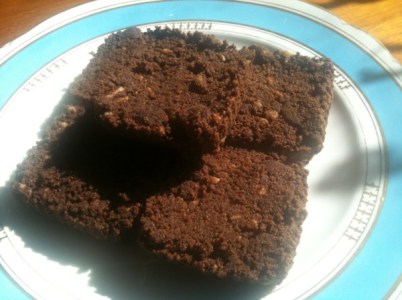
Mr. President, would you eat a half-baked cake?
Given its current deplorable condition, if our country were a cake, Mr. President, it would be a half-baked cake because of the incapacity of women to fully partake in its development, due to the systemic gender discrimination in our society.
As we are sure you would not eat a half-baked cake, so is our assurance that there could never be true socioeconomic progress for Sierra Leone, until girls and women attain equal opportunity to develop their capacity and fully contribute in nation-building.
In Mama Salone Blog’s view, the gravest crime committed by your predecessors, (both APC & SLPP administrations), is their neglect of issues affecting girls and women in our country.
Your predecessors failed girls and women woefully; they did not treat women’s issues as national priorities. Instead, your predecessors paid lip service by enacting toothless laws and policy instruments that were never effected. At the end of the day, your predecessors left women and girls in worse conditions than they found them.
As you can see Mr. President, the majority of girls and women in our country have endured a dreadful existence for decades, due to actions and inaction of your predecessors.
But make no mistakes, Mr. President, our Salone women are some of the most intelligent, resourceful, capable and resilient human beings you could ever find anywhere in the world. With beauty and grace to boost!
We are quite sure you will agree with us, especially since you know very well that you could not have won this election without the massive effort of women. Even though the surface of your campaign was male dominated, we all know that women were the grassroots foot soldiers that maintained the lifeline of your campaign. Not even illiteracy could stand in their way.
Mr. President, girls and women are not asking for charity or handout from you or anyone else. All they need from you is to level the playing field, by empowering them through education, healthcare and equal chances in national governance.
Mr. President, it is a moral imperative for you to shift the paradigm for women in Sierra Leone, so that our national cake could be fully baked for all to enjoy.
We believe in the honor system; therefore, Mr. President, we are putting our trust in your words, as expressed during your campaign and in your Manifesto (New Direction). We know that you have the ability to right many of the wrongs your processors inflicted on girls and women in our country. We have faith in your willingness to make good on your promise to take, not only the nation, but the trajectory of girls and women of Sierra Leone in a “New Direction.”
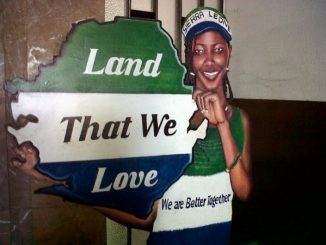
On this note, Mr. President, Mama Salone Blog will, henceforth, pay close attention to your decisions, actions, inaction, and general treatment of socioeconomic, civil, political, and other relevant issues pertaining to the welfare and empowerment of girls and women in the Land That We Love.
Regardless of who wins the March 27, 2018 presidential runoff in Sierra Leone (Salone), a demigod will be sworn in on inauguration day. After spending five weeks in Salone and observing activities at the height the 2018 election campaign season, … Continue reading →
In a recent post on social media, one group of Sierra Leoneans who had scheduled a meeting for dialogue on social issues were criticized for inviting cabinet ministers and other unelected officials. Some of the ministers invited were widely viewed … Continue reading →
It is by no coincidence that having been in the hot sits recently about corrupt practices, the Sierra Leone branch of the West African Examination Council (WAEC), with the help of the country’s “corruption czar” Anti-Corruption Commission (ACC), has now found the perfect scapegoats to divert negative attention from the agency.
It is unfortunate that instead of truly looking into WAEC malpractices that are dumbing down generations and hurting the entire education system in the country, the ACC, as usual, has stepped in to pick on the little fish in order to shield and protect the big fish in the pond.
Just a few weeks ago, during the National Primary School Examinations (NPSE), exam questionnaires were being re-used because there were not enough printed for the number of students who showed up to take the exam. Instead of each student receiving a clean exam questionnaire, they had to take turns; one set of students waits for the other to complete the exam so they could use the questionnaires.
When WAEC was confronted with this issue, the agency and its partner, the Ministry of Education, went on the defensive on every media outlet that would give them the time.
WAEC officials were claiming to have been instructed by the Ministry of Education to administer the exam to each and every student who shows up on the day of the exam, with no exceptions. According to WAEC, this meant that students did not have to be on the registration roster to be allowed to take the exam.
This argument is totally contradictory to the WAEC requirement that students who take national and sub-regional exams must pre-register weeks or months before the exams. Exam questionnaires and other materials are then ordered by WAEC based on the number of students who register for each exam. This is the logical procedure.
However, WAEC Sierra Leone claims to have ordered exam questionnaires based on the number of students who registered for the NPSE. The agency even claims to have ordered a surplus number of questionnaires for the exam. But, according to WAEC, school officials, especially from rural school districts, had failed to register their students accordingly. And that those unregistered students showed up for the exam anyway.
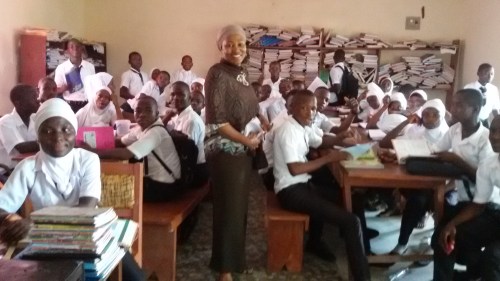
STUDENTS IN A PRIMARY CLASSROOM
Thus, WAEC blames the shortage of questionnaires on thousands of unregistered students showing up on the day of the exam. And because of their agreement with the Ministry not to turn any child away on exam day, WAEC officials claim they had no choice but to re-use exam questionnaires to accommodate the influx of unregistered exam takers.
We find this to be a very crafty excuse, which in our view, is WAEC’s and the Ministry’s way of dodging responsibility for their failings. So the truth will never be known about why WAEC did not have enough exam materials; worst of all, WAEC officials have no incentive to correct their malpractices because they could always put the blame on others.
It is sad that corrupt agencies and their officials have mouthpieces that speak for them in the media, spread their nefarious falsehoods, which we find very insulting to the people’s intelligence. Conversely, the people on whom all the blames are being dumped have no mouthpieces to speak for them.
ACC alleges to have arrested teachers and students in response to a ” a tip off.” That the teachers had acted as “examiners” during the exam and were marking the exams when they were arrested. Our questions:
Should this tip-off have gone to ACC or WAEC officials for action?
Why are teachers who are “Examiners” also marking exams?
Do WAEC officials supervise the examiners and markers?
Why are teachers who act as “examiners” also allowed to mark those exams?
Who does it benefit when “perpetrators” are so dramatically arrested by ACC?
When did cheating on exams become an arrestable offence in Sierra Leone?
We believe that the so-called tip-off was nothing but a concerted effort to find scapegoats in order to allay negative attention that has been swirling over WAEC recently. These arrests also show that WAEC and the Ministry of Education are not intending to do what it takes to clean up their malpractices. The same people they are failing to serve, the students and teachers of Sierra Leone, to whom they provide no resource support, are the same people they prey on as scapegoats to cover up their corruption.
ACC further alleges that the teachers were found marking exams in a secret location where students had been invited to retake the exam upon paying a fee the teachers charged.
This shows a fundamental flaw in WAEC’s practices. As the agency that administers all exams, it should actively supervise all exams and examiners, in order to maintain integrity of their agency, the exams and the education system. Can WAEC explain…
Why teachers who act as examiners are the same who mark the exams?
Were the “said teachers” marking the exams outside the proper protocol?
Why are WAEC officials not being arrested for not properly supervising exam marking?
ACC apparently “raided” the location where the teachers had been marking the exams and claim to have found five students retaking the exam at the time of their arrest. This is a very illogical strategy and warrants many questions:
How does this dramatic raid impact all the exams that were being marked in that location?
Were there any WAEC officials at the location where exams were being marked?
What was found in the raid that amounted to the arrestable offense?
ACC officials further claim to have arrested the landlord of the premises along with the teachers and students and are keeping them in custody as the investigations ensue.
This is another fundamental flaw in the WAEC system. Is there no standard rule on where exams could be marked? In this case, the landlord is being dragged into the case to make it more dramatic. If WAEC has rules and regulations on where exams can be conducted, then it must also have rules and regulations on where those exams can be marked and under whose supervision.
If there are such rules, then it should be standard procedure for exams that are not conducted and marked under prescribed procedures be systematically rejected by WAEC. This would reduce the incentive and opportunity for corruption.
ACC claims to have made the arrest as a move to improve the integrity of the education system. This could not be farther from the truth.
We argue that the arrests were part of the ACC’s modus operandi. Whenever a government institution, official or some other big fish is caught red handed in corrupt practices, such as WAEC has been caught recently, the ACC makes a dramatic arrest of a scapegoat, which puts the issue on the back burner of public discussions and life goes on. Meanwhile, the real criminals continue their shady activities in even more reprehensible ways.
The issue of rich and influential people using their wealth and power to give unfair advantages to their not-so-bright sons, daughters, nieces and nephews, is an age old problem in Sierra Leone. This has robbed many bright people of their rights to quality education and loss of many other benefits that are supposed to be based on merit. University scholarships and study abroad scholarships have always been funneled to students with social and political connections, regardless of their academic standings.
ACC does not help the children and youth of Sierra Leone by helping WAEC shift blame onto teachers and students, who may or may not be innocent. It would serve the education system better if WAEC would systematically condemn exams that are conducted or marked outside of proper procedures. This would reduce the incentive for fraud and eliminate opportunities for rogue teachers to sell exams.
Mama Salone is by no means condoning fraud or malpractices by faculty and staff in the school systems of Sierra Leone. We believe that there should be a consistent and systematic process of exposing and expelling faculty and staff who are found to be involved in fraudulent activities in the schools.
Dramatically arresting teachers and students is not the solution!
General elections are slated to take place in Sierra Leone on March 7, 2018. The whole country is abuzz now with an onslaught of candidates crawling out of the woodwork. Several of the 2018 contenders are hoping to become standard-bearers … Continue reading →
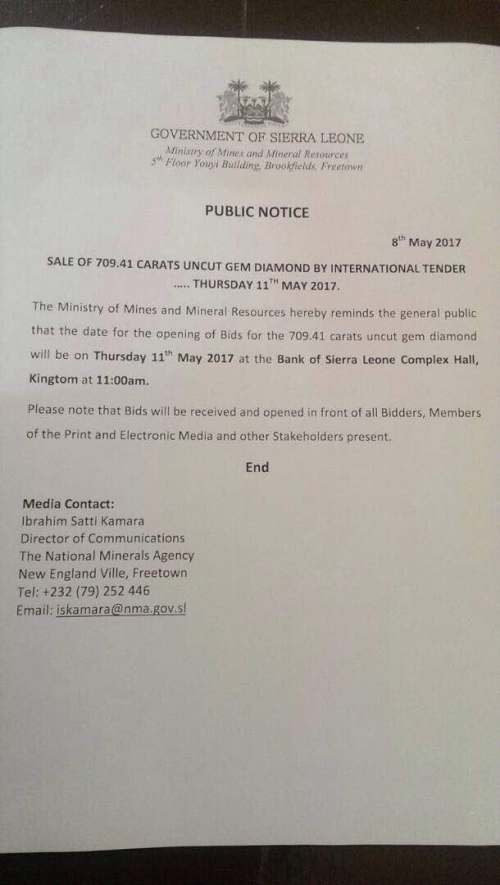
The biggest news out of Sierra Leone for the past couple of days has been the discovery of a giant diamond, which the Sierra Leone State House describes as a 706 carat diamond. This precious stone was found by a … Continue reading →
Having been in Sierra Leone for the past four weeks, wearing various proverbial hats, one of them as President of the Ansarul Alumni Association, my secondary school Alma mater. In this capacity, I had to visit a few of the many schools that are managed by our school’s Mission around the country.
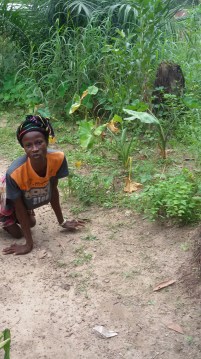
By mid last week, I had visited schools in Bo (South), Kono (East) and Freetown (West). Next on my list was a school in a town called Mile 91 (North). This is the town where Zainab Kamara lives. She is the crippled woman whose video story went viral a couple of weeks earlier. Since then, women on my DIAMONDS Women’s whatsapp forum had sent me messages encouraging me to look for her while in Sierra Leone. After finally being able to watch the video, I too grew interest in seeing her, but did not quite know how.
On Thursday, October 13, 2016, the day of my visit to the school in Mile 91, I toured with the vice principal, spoke to an assembly of students, and to faculty and administrators, as I do on all my visits. At the end of my tour, I asked whether anyone could show me where the famous Zainab Kamara lives in this town. I was then told that one of her daughters is a student at this very school. What a Blessing! I was then given permission to see her.
Shortly after, a beautiful, pleasant and neatly dressed young lady came to greet me. Hawanatu and I had a nice brief discussion, as she had to return to class. She assured me her mother and siblings are doing well. I asked whether she needed school fees, she informed me that she has been given a scholarship by an NGO, One Girl Salone. She explained that this organization has paid her tuition for the year, provided her with books, uniform and other school supplies.
I then encouraged her to make good use of this scholarship and any other opportunities she gets, to stay in school, study hard and make her mother proud by becoming a professional woman in the future. I made this shy 15-year-old blush in the presence of her vice principal when I asked her to promise not to get involved with men or get pregnant like most girls are doing these days. She promised me she would not and would stay and finish school.
Then I told her that I would like to enroll her into the DIAMONDS Girls Circle, a program of our nonprofit organization Girls LEAD Change, Inc., which works to help adolescent girls in disadvantaged communities combat negative societal trends, such as teenage pregnancy. Sierra Leone has one of the highest incidents of teenage pregnancy, even though many NGOs are offering scholarships to increase the number of girls in school, a high number of girls drop out of school daily due to pregnancy. Girls LEAD Change is trying to reverse this trend so that girls could reach their highest potential.
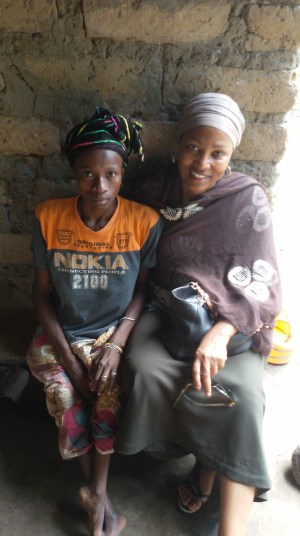
I arrived and parked a distance away from Zainab’s place, as there is no auto road to her house. I sent word to her. She quickly appeared down the road to receive me; in the typical way a Sierra Leonean receives a long lost relative, very warm and welcoming. She invited me to her house and led the way. She offered me a sit and we talked like sisters. I was concerned about hers and her children’s health. She assured me there were no issues of chronic illnesses; except for occasional bouts with malaria and the common cold, they were all doing well.
We talked about the challenges she is facing with the small house in which she and her children live. She talked about Umaru Fofanah and others who were trying to help her with this issue. She introduced her two sons who had just returned from school, the boisterous and polite boys greeted me with big smiles.
I told Zainab I had just met her older daughter who attends one of my alma mater in town. I told her how the women in my organization and I felt it was important for me to meet her in person so we could have an ongoing relationship henceforth. Which she welcomed. I asked for her permission to enroll her daughter in our DIAMONS Girls program. She happily approved.
Zainab & Fatima
Of course, our discussion led to her famous garden. She gladly took me round, showing me the various fruits and vegetables she is growing. I asked whether she sells them. She told me she does not, that she shares her harvests with her family, friends and neighbors. She also said that thieves take a lot of them. She pointed to the banana tree near her kitchen, which had no fruits on it because thieves had plucked off the bunch the night before, probably to sell. These thieves are obviously able-bodied individuals with functioning legs, eyes, arms, etc., stealing what a crippled woman had labored to plant.
As we were saying our goodbyes and passing the garden near her house, I expressed admiration for the huge garden eggs. She asked if I liked garden eggs? I told her I did very much and was planning to buy some at the next junction on my way to Freetown. Right away she started plucking garden eggs for me. Before long, Zainab was sending me off with two small bags of garden eggs. Who is the “disabled” woman now? I do not think I could survive long if I had to maintain a garden in order to eat.
On my way to see her, I thought I was visiting a crippled “disabled” woman. After our visit, however, her physical deformity was no longer prominent in my thoughts about her. Instead, I remember a gracious hostess who infused me with the human spirit; she made every effort to make me feel comfortable in her home and did not want me to leave empty handed. At no moment during my visit did I feel that Zainab wanted anything from me. An epitome of the Sierra Leonean women I grew up with, she reminded me so much of my grandmother, MaBatu (Habibatu Swaray), God rests her soul, in whose home no guest slept hungry; regardless of what time they arrived.
Zainab is passionate about her garden, which serves not only to feed her family, but also as a way for her to give to others as best as she could. This amazing woman is a positive reminder that no matter our situation in life, we must strive to sustain ourselves and maintain our dignity as human beings by using whatever physical and mental ability with which we are endowed.
I therefore do not see Zainab Kamara as “disabled,” despite her crippled condition. Rather, I see her as “disadvantaged.” A woman with no legs to walk with and no formal education, in a country where you are already at a disadvantage as a woman; the odds are stacked against Zainab and other women with physical and mental disabilities in Sierra Leone. There are no dignified provisions by her government and society, for her to maintain her household and raise her children. She has chosen to do so by using her hands, brain and God-given talent, to function in a society where people in her condition often become beggars in the streets.
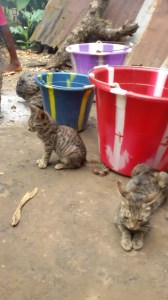
Zainab’s Kittens
This phenomenal woman does not need handouts from us; instead, she needs us to lend a hand in helping her do better what she has already been doing to sustain her family.
To avoid duplication of efforts, we are supporting Umaru Fofanah’s lead in helping to secure financial resources for Zainab and her children. He is a reputable Sierra Leonean journalist and BBC reporter who has taken interest in Zainab’s story. He has set up a trust fund for her in Sierra Leone and the United Kingdom. For now, we encourage members of our DIAMONDS Women’s forum, Mama Salone readers and the general public to please give Zainab a hand by donating to her trust funds.
Thank you in advance & May Almighty God Reward your Generosity!!
As time goes on, we will share information on other ways of helping and we welcome any ideas of how best we can support this dignified phenomenal woman, Zainab Kamara of Mile 91, Sierra Leone.
Here is the Trust Fund information culled from Umaru Fofanah’s Politico article:
The chronic polarization of Kono peoples must stop. While they are asleep by their focus on superficial divisions, the criminal political elite of Sierra Leone is robbing them blind of their land and their human and peoples’ rights.
When a leader wants absolute power but still needs the outside world and donors to see him as a “democratic” leader, he crafts laws that give legitimacy to his nefarious plans; in this way, outsiders can ignore what he does in the name of sovereignty. This is how the Mines & Minerals Act of 2009 came into being in Sierra Leone, at the behest of the current President Ernest Bai Koroma, the “Supreme Leader” with absolute power in “democratic” Republic of Sierra Leone.
This Act instituted a structure in which a place such as Kono District, which is the most diamondiferous district in Sierra Leone, belongs to the political elite and their network. A quick glance at the act tells you that in a place like Kono, the people have lost all rights to their land; the land and what it contains not only belong to the president and his cronies, they have absolute power over the people. This law has taken the people of Kono into a deep hole from which they must find a way to crawl out.
Mines and Minerals Act of 2009- Section 2 – Ownership of minerals
(1) All rights of ownership in and control of minerals in, under or upon any land in Sierra Leone and its continental shelf are invested in the Republic not withstanding any right of ownership or otherwise that any person may possess in and to the soil on, in or under which minerals are found or situated.
(2) The Minister shall ensure in the public interest that the mineral resources of Sierra Leone are investigated and exploited in the most efficient effective and timely manner.
We have all decried the constant police brutality against the people of Kono, especially the youth, whenever they try to protest the injustices they are facing. We have wondered about the arrogance and over-confidence of cabinet ministers who operate in Kono. These ministers are well known for threatening, intimidating and ordering police to arrest, imprison and even kill Kono people who raise their voices against the injustices they face. The absolute power and impunity of Kono ministers are based in the laws.
Ancestral homes are bulldozed daily and people of Kono are relocated by foreign owned mining companies to shabby new locations far away from schools, markets and hospitals. Schools that have existed for decades are bulldozed and relocated to areas that are inaccessible to the children who attend them. The list goes on and chronically corrupt politicians, their network and local leaders continue to enrich themselves at the expense of the people’s lives and livelihood.
The daily or weekly kimberlite blasting by a powerful mining company, Koidu Holdings aka OCTEA, has been causing so much physical, psychological and emotional havoc on the people of Kono; the tremor caused by the dynamite blasts leads to many miscarriages among pregnant women in the vicinity, it also leads to psychological trauma, especially for older survivors of the decade long war. But it is all legitimate because the Mines & Minerals Act of 2009 says it is,
Section 36: Compulsory acquisition of private land.
(1) The Minister may, by order published in the Gazette, compulsorily acquire private land or rights over or under private land for use by the holder of a large- scale mining licence.
As a result, the people of Kono are internally displaced and are facing serious oppressive treatment by the police and the government officials they take orders from. Protecting the source of their diamond wealth has led the politicians and their vulture western investment partner companies to commit serious abuse of human rights in Kono District, yet, these atrocities may seem legally justified based on the mining laws.
In one rare video report of atrocities in Kono, (which may well be a government commissioned propaganda report), a government minister is asked to explain the situation regarding the recent Congo Bridge destruction and mishandling of the youth and other citizens who tried to protest in Koidu City. Part of the minister’s explanation is that the bulldozing, digging, dredging, etc., were being done to “remove unsuitable materials…to protect the people and their interests.” It is very obvious from his responses that the overconfident minister is fully aware of the injustice of this mining activity, which is leading to the loss of a vital bridge and the lives and livelihood of the people. The Mining Act of 2009 provides legitimacy for this minister to claim that he has commissioned a mining company to “remove unsuitable material…,” a language borrowed from the law, which gives him the power to order the wrath of police brutality on the people, which in the last incident, resulted in serious injuries and at least one fatality that we know of in Koidu City.
Diamonds have been mined in Kono District for over 80 years; but the previous regime of the late President Tejan Kabba and the current regime of President Ernest Bai Koroma are probably the worst in history for Kono and its people. Things are only going to get better for Kono District and its people when,
the people use their collective political powers to demand changes in the structure that the current regime has put in place in the guise of a mining law.
Kono people unite in holding their legislators accountable for partaking in the drafting and passing of such laws.
People of Kono realize that politicians are false prophets, their promises are fake and only meant to deceive them into giving them the very powers they end up using against them.
the people of Kono use their voting power to push for changes in the laws that have built the structure in which they have lost their birth rights to their land.
The people of Kono must unite and find legitimate means of using their collective voices to uplift themselves out of this hole dug bycrafty laws drafted by crafty politicians.