A major barrier to gender equality in Sierra Leone and one factor leading to the crumbling of the foundation for women’s progress is the gap in girls’ education.
First, let’s look at some important numbers: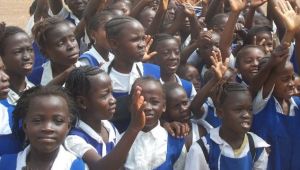
52% of the population in Sierra Leone is female
37% of students enrolled in school are girls (primary and secondary)
19% of students at the University of Sierra Leone are women (‘03/04)
23% of women have attained education
23.2% of females are employed in non-agricultural work
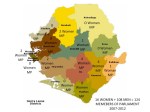
13% of female representation in government
The disparities are glaring!
As we can see, the pattern of inequality starts from the very early stages of education and continues into women’s future; which limits their number in higher education and limits their number in non-agricultural employment and further reduces their number in higher-level government representation.
2012 is election year in Sierra Leone, and there has been a lot of talk about  increasing the number of women in political representation to 30% from the current 13%; our question though is where will the 30% come from when only 23% of women have attained education? Without a critical mass of educated women to enlist from, is this just another political rhetoric to fool us into believing that women’s issues are being considered? In our view, yes!
Some of the factors leading to this phenomenon have been observed by the United Nations Children’s Fund (UNICEF) in Sierra Leone, which recently pointed to issues of high drop-out rates and low enrollment of girls in secondary schools due to pregnancy, early marriage and preference by families in using scarce financial resources toward educating boys.
The majority of girls in Sierra Leone live in abject poverty, making them vulnerable to sexual exploitation by older men and teachers for economic reasons. An older man, for instance, would volunteer to help pay a girl’s tuition, this seeming kindness would lead the girl to succumb to his sexual advances, which usually results in pregnancy that ends the girls schooling career. Girls are also vulnerable to sexual exploitation by male teachers, as UNICEF referenced “sexual abuse by teachers” as part of the challenges girls in Sierra Leone face in secondary school.
For girls in Sierra Leone, pregnancy is a definite end to their dream of attaining education; a girl who gets pregnant while in school is maligned and shamed, most of the time is forced to marry the man who impregnated her, especially if he is an older man and is willing to marry and support her. In cases where the father of her child is an adolescent boy who cannot support her, the girl just drops out of school to find a means of supporting herself and her child. For most girls, this begins a vicious cycle of dependency on men, which could result in abuse and exploitation by men who take advantage of her vulnerability.
Low enrollment and high dropout of girls from school leave a critical mass of girls out of the classroom, resulting in lack of education among the majority of women, who are then deprived of the opportunity to fully participate in political processes due to this lack of education.
This is one of the major barriers to progress for women as it creates a huge dividing line between educated and non-educated women. There is no sisterhood between these two groups.
We will address this issue in our next post.