
Dear President Maada Bio and President Mamadi Doumbouya,
I write to you not as a diplomat, not as a politician, but as a concerned citizen of this region, and as someone who believes that leadership is measured not by power, but by foresight.
There is a particular kind of damage that no diplomatic communiqué can repair, the kind that settles quietly into the mind of a child and stays there for decades, shaping how they see the world, how they define strength, how they understand what their country means and what it is worth.
That damage may already have been done. As the saying goes, “a picture is worth a thousand words.” A photo from the recent Sierra Leone–Guinea border incident showed something the world rarely pauses long enough to consider.
Look at what it shows: in the foreground, children with their backs to the camera, small and eagerly watching. One wears a Ronaldo (footballer) jersey, a child, just a child. In the background, Sierra Leonean soldiers in their uniform are seated on the ground, surrounded and outnumbered by Guinean armed forces standing over them as a crowd of civilians looks on.
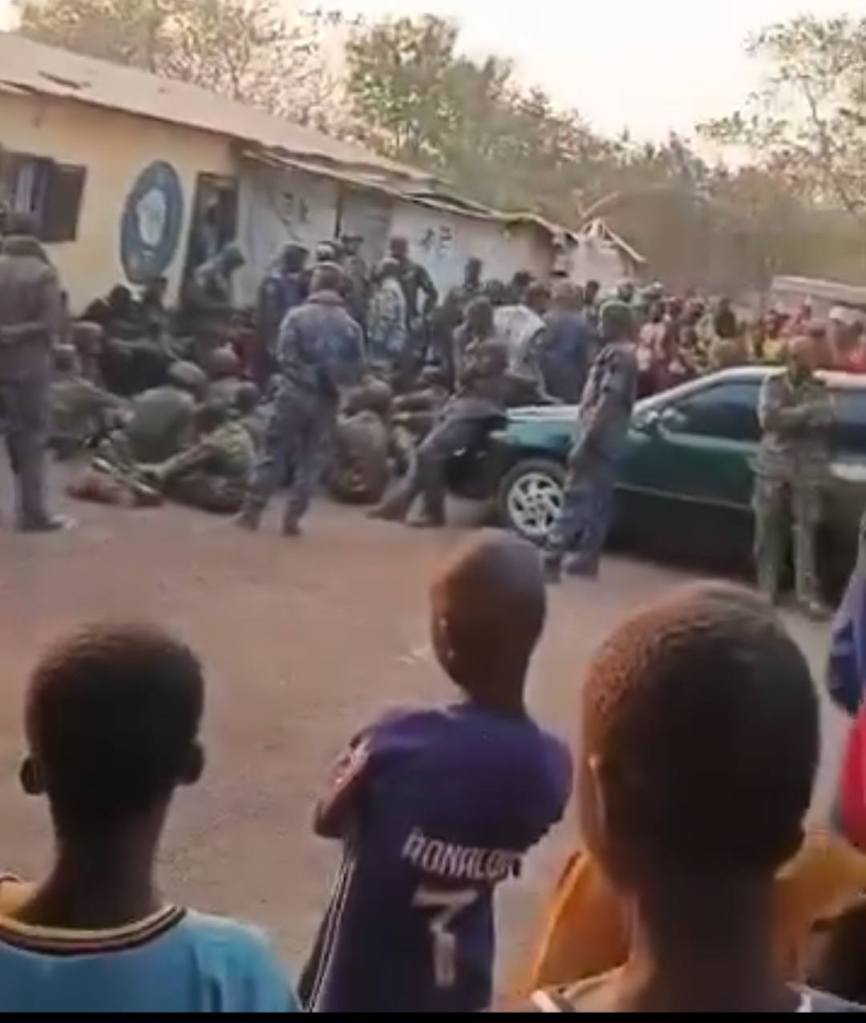
The children in this photo are not incidental to this scene. They are the scene. Their small backs, their stillness, their wordless witnessing, that is the image I would like you to keep in mind as you read this letter.
These children are not distant observers from another continent. These are border-town children. Some are Sierra Leonean. Some are Guinean. They grow up playing in the same dust, speaking similar dialects, sharing markets, crossing back and forth with their families. Their lives are intertwined by geography and history.
Sierra Leonean soldiers, men in military uniform, men whose constitutional purpose is to embody and protect national sovereignty, seated on the dusty ground, disarmed, subdued, surrounded by Guinean forces. Whatever the operational facts ultimately reveal, and whatever the diplomatic resolution eventually produces, those images went somewhere before the negotiations began. They went into the hearts and minds of the children.
Children from both sides of that border were standing there, absorbing. And what children absorb today does not disappear. It calcifies. It becomes their identity and vision tomorrow.
Bloodline Before Borderline
I do not write this as a distant observer. The narrative that has been passed down to me and my generation in my maternal family is that my maternal great-grandfather, a learned and proud Jagankay from the noble Mansaray clan, migrated from Guinea to Sierra Leone.
My grandfather turned his farmland in Sierra Leone into a home, and he and his brothers developed it into a village. They named it Tuba (Touba), after their ancestral village in Guinea, which their father had left many years earlier to settle in Sierra Leone.
I was born in Sierra Leone, but my bloodline does not recognize the border that now separates these two sister nations. Long before colonial cartographers drew their lines, our people moved freely, married across what would become state boundaries, built communities that straddled what is today divided by checkpoints and flags.
My story is not unique. Across Sierra Leone and Guinea, countless families carry the same layered ancestry. The sisterhood between Sierra Leone and Guinea was not invented by diplomats or politicians. It was built by ordinary people, across generations, through migration and marriage and mutual survival. That shared humanity is the deeper geography of this West African region, older than any border, more durable than any political arrangement.
Which is exactly why that image of the children from the border community is so grave.
What the Children Witnessed
There is a distinction that must be named clearly, because it is being overlooked in the noise of military analysis and political positioning.
The soldiers on the ground were having a professional and constitutional crisis. That is serious, and it demands serious accountability, accountability I have addressed separately and directly in relation to President Bio’s constitutional obligations as Commander-in-Chief under Sections 40 and 165 of the Constitution of Sierra Leone.
But the children on both sides of that border were having a psychological crisis.
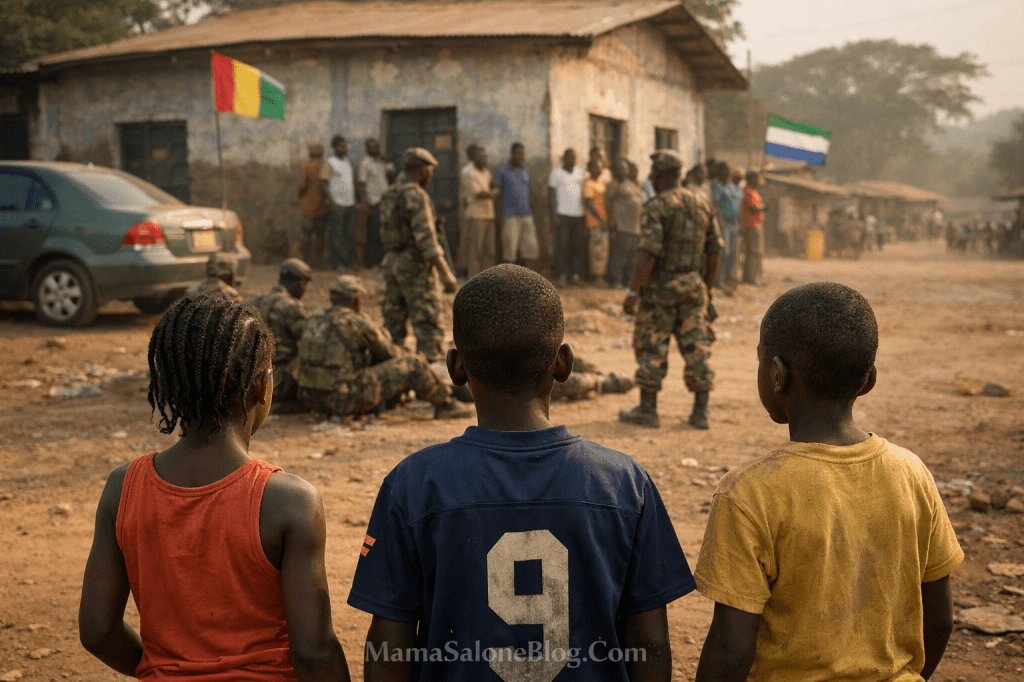
Children do not process geopolitical incidents the way adults do. They do not weigh operational context or evaluate rules of engagement. They absorb images. They internalize symbols. And the symbol those children absorbed that day was stark and unambiguous: men who are supposed to protect us can be made to sit on the ground, disarmed and surrounded, by the soldiers of a neighboring country.
- What did the Sierra Leonean children take from that scene?
- What story did it tell them about their country, its strength, its dignity, its capacity to protect them?
- What relationship did it plant between them and the idea of national security, and by extension, national pride?
And what did the Guinean children take from it?
Power expressed as dominance over a sister nation is not a healthy lesson in sovereignty. It is a seed of contempt that, left unaddressed, grows into the very instability it claims to resist.
Both sets of children deserved better from the leaders who bear the responsibility to protect them.
My Grandfather’s Village
My grandfather’s generation built a village knowing they would not live to see it fully flourish. They did not build it for themselves. They built it for continuity. They named it not only to honor their ancestral home but for the future generation to have a connection to their Guinean root. They built it for people they would never meet, for descendants who would carry names and inherit land and grow up in an environment shaped by choices made long before their birth.
That is what real leadership looks like. It looks beyond the immediate moment, beyond the political cycle, beyond the approving crowds. It asks the question that most powerful people are too intoxicated by the present to ask: what will remain when I am gone?
President Bio and President Doumbouya, you are not merely administrators of current governments. You are custodians of future generations. You are making decisions today that will shape the emotional and political inheritance of children who have no voice in your deliberations, but who will spend the rest of their lives living inside the consequences of your actions.
The border between Sierra Leone and Guinea is not simply a military or diplomatic matter. It is a shared space of ancestry, culture, memory, and fragile peace. A security incident at that border is a generational incident. Its effects do not stop at the negotiating table.
What This Moment Demands
President Bio,You are Commander-in-Chief. and the Armed Forces are constitutionally charged with defending Sierra Leone and preserving its territorial integrity. These are not ceremonial words to be invoked at independence day parades and forgotten at the border. They are obligations, owed not only to the current electorate but to every Sierra Leonean child who must inherit the nation you will leave behind.
President Doumbouya, your authority as Commander-in-Chief in Guinea carries an equal and parallel responsibility. But the defense of Guinea’s sovereignty must never become a mechanism for fracturing the cross-border bonds and bondlines that have sustained both peoples for generations. Dominance achieved at the cost of a neighbor’s dignity is not security. It is a long-term liability.
Both you gentlemen must now do more than manage this incident. You must actively repair what has been cracked, not only in the formal relationship between the two states, but in the story this moment has told to the children who witnessed it.
That means clear communication, offered openly and without the evasion of bureaucratic language. It means mutual respect expressed in visible, concrete terms, not buried in joint statements that no child will ever read. It means direct engagement with border communities, the families who live inside this shared history and who are now living inside this shared anxiety. And it means a visible, unambiguous commitment to peace, not as a diplomatic formality, but as a governing value that shapes every decision that follows.
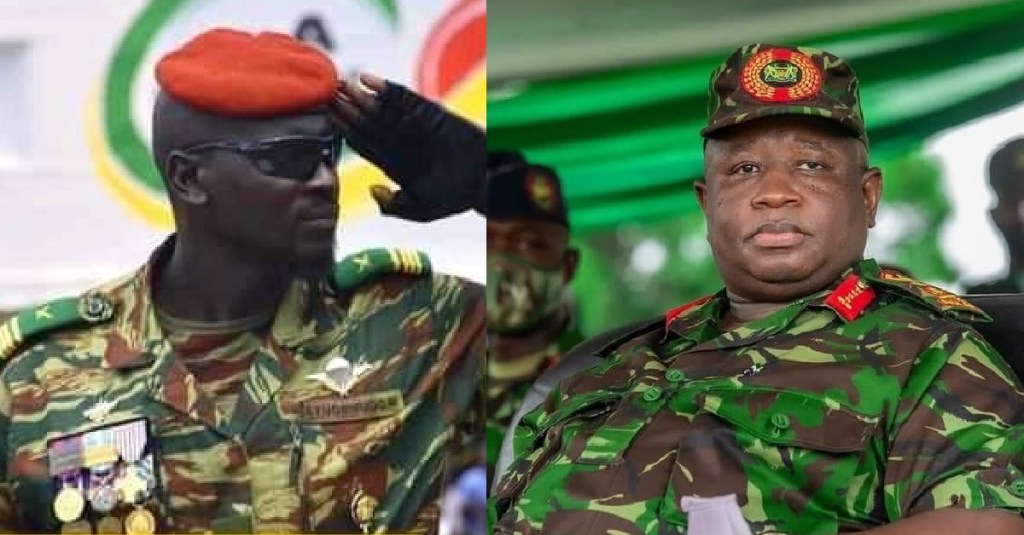
Power is transient. Every leader knows this, though most govern as though they have forgotten it.
When your tenures end, what will remain is not the power and force you exercised but the conditions you created for your people. If the relationship between Sierra Leone and Guinea is undermined by this moment, through pride, through neglect, through a failure to lead with generational vision, then future generations will pay a cost they did not bargain for and cannot escape.
But if you act now, decisively and with moral seriousness, to restore dignity, reinforce cooperation, and visibly protect the peace along this border, then you will have done what my grandfather’s generation did when they built a village in Sierra Leone and named it after a village in Guinea: you will have governed not for applause, but for posterity.
The children who stood at that border and watched are going to grow up. They will lead businesses, communities, and perhaps, one day, our nations. The leadership vision they inherit will be shaped by what you do in the days and weeks ahead.
History is not only made in grand parliamentary moments and signed treaties. It is made in the images that settle into children’s minds at borders, at moments of national strain, when the adults who are supposed to protect them are tested and the watching world holds its breath.
The children are watching. The question is what will they see next? History is watching and so are we all.
Long Live Sierra Leone!
Vive la Guinée!
Respectfully Yours,
Dr. Fatima Babih
—————-
The author’s family history spans the Sierra Leone–Guinea border. This letter is written in the conviction that the bonds between our peoples are older, deeper, and more durable than any single political incident, and that leadership worthy of those bonds demands our voices.
 MAMA SALONE ~ Lioness of the West Coast