
by Fatima Babih, EdD
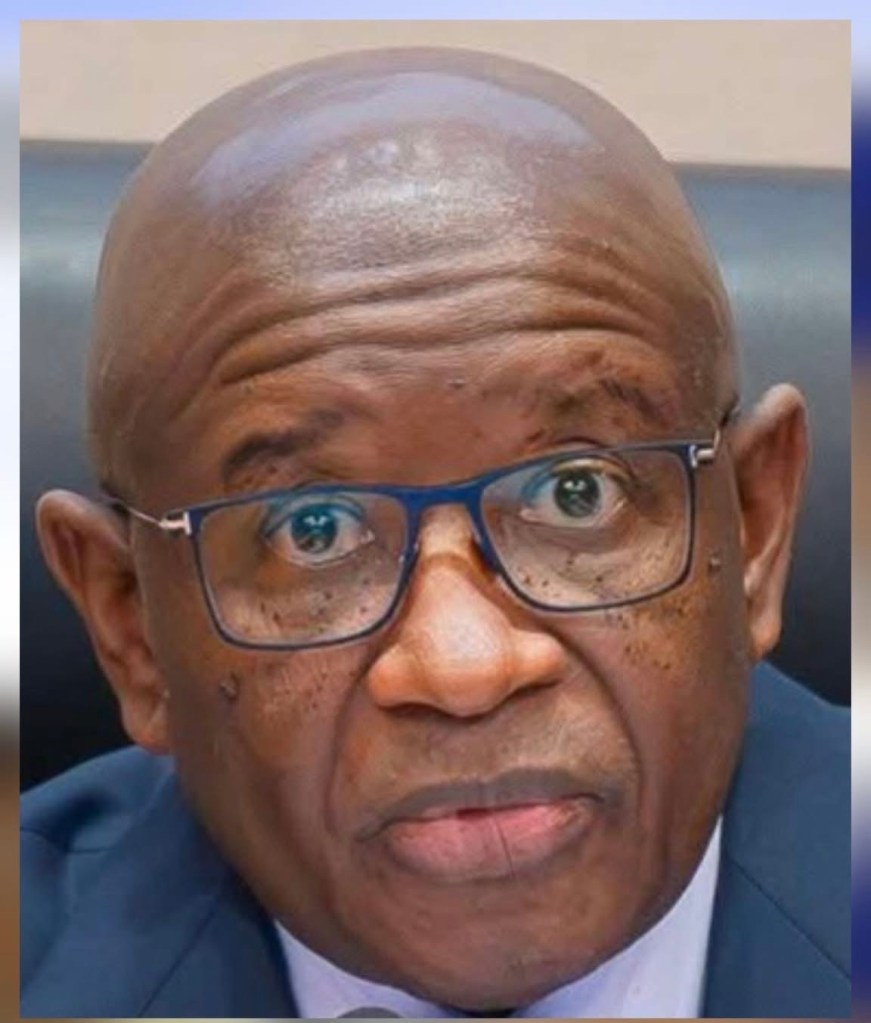
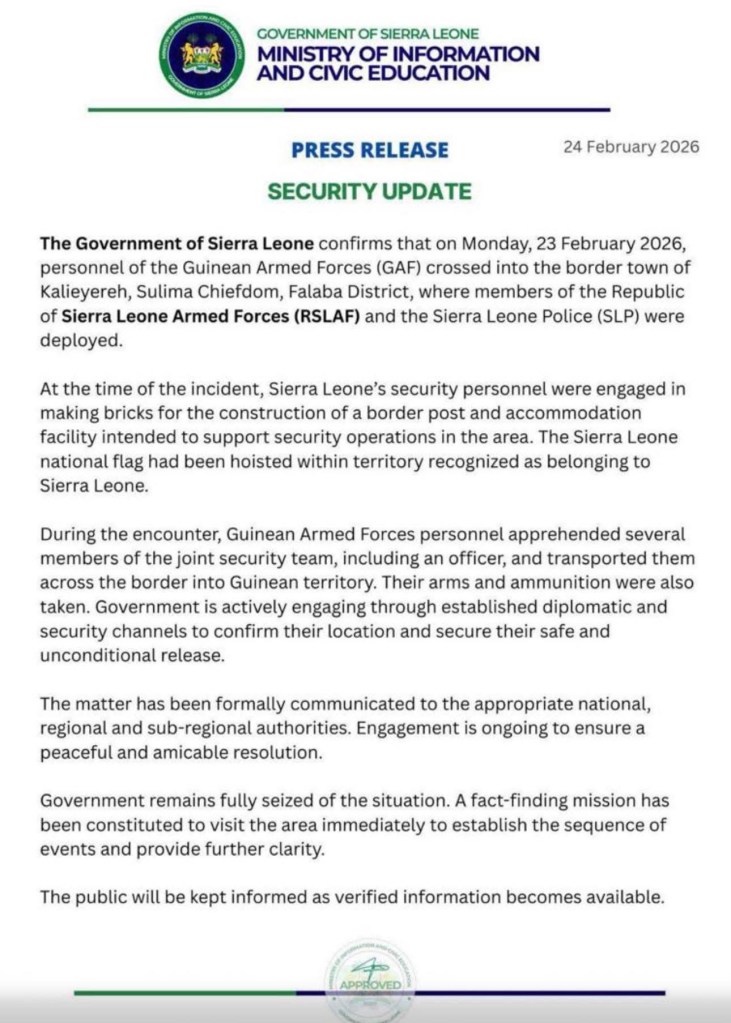
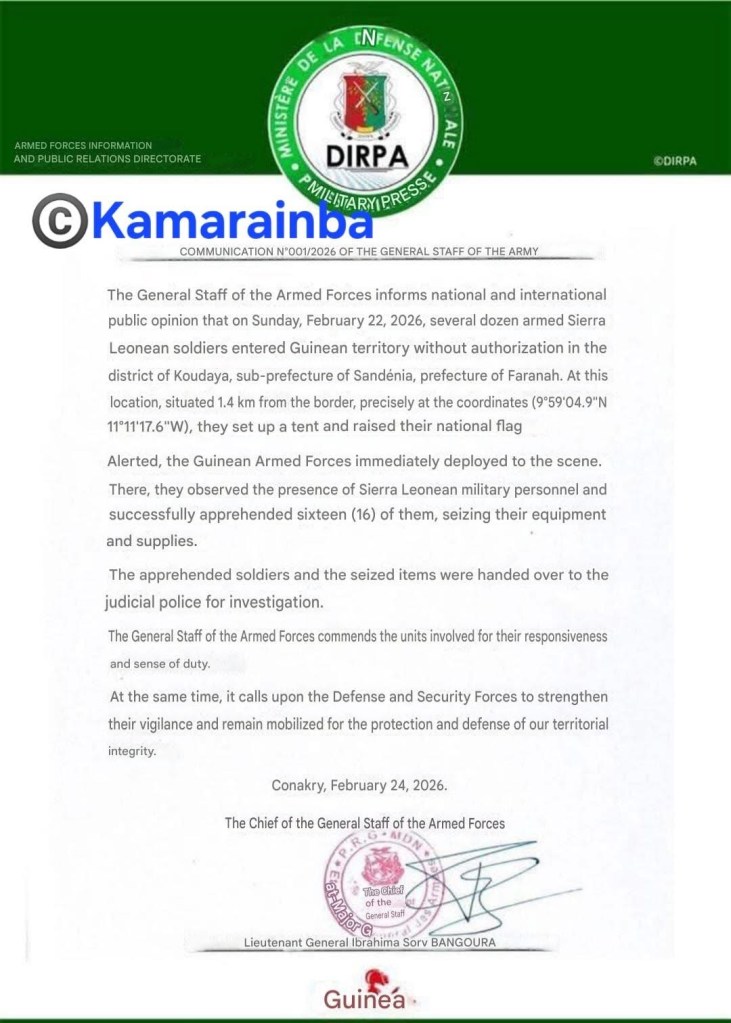
The detention of sixteen Sierra Leonean soldiers by Guinean forces is not a border misunderstanding to be managed quietly through diplomatic channels. It is a constitutional moment, and it demands a conclusion that the evidence and the constitutional text now make unavoidable: President Julius Maada Bio can no longer credibly discharge the office he holds.
We the people must ask President Julius Maada Bio to resign.
That call is not rhetorical. It is grounded in the text of the Constitution itself.
The Oath & the Office
In the Constitution of Sierra Leone (1991), executive authority is vested in the President and exercised in accordance with the Constitution. The section reads,
The executive authority of Sierra Leone shall vest in the President and shall be exercised by him either directly or through members of the Cabinet, Ministers, Deputy Ministers or other persons appointed by him in accordance with the provisions of this Constitution. (Section 40(1))
Section 40(3) goes further. It does not merely grant the President a title. It charges him, personally and without delegation, as Head of State, Head of Government, and Commander-in-Chief of the Armed Forces, and it read:
The President shall be the Head of State, the Supreme Executive Authority of Sierra Leone and Commander-in-Chief of the Armed Forces of Sierra Leone. (Section 40(3))
Clearly, the office of the president is not a ceremonial office. The power it confers is inseparable from the responsibility it imposes.
The presidential oath, as prescribed in the Third Schedule to the Constitution, binds the officeholder to preserve, protect and defend the Constitution and the laws of Sierra Leone. The Constitution, in turn, establishes Sierra Leone as a sovereign Republic.
Territorial integrity is not a policy preference that may be deprioritized when domestic concerns are pressing. It is structural to the constitutional order. When armed members of the Republic of Sierra Leone Armed Forces are apprehended and disarmed by a foreign military on sovereign or disputed ground, the oath is not peripheral to the incident. It is the precise lens through which the President’s fitness for office must now be judged.
Armed Forces & Constitutional Charge
Section 165(1) constitutes the Armed Forces of Sierra Leone. Section 165(2) charges them with the defense of Sierra Leone and the preservation of its territorial integrity.
There shall be an Armed Forces of Sierra Leone which shall consist of such military forces as may be prescribed by or under an Act of Parliament (Section 165(1)).
The Armed Forces shall be charged with the defence of Sierra Leone and the protection of its territorial integrity and with such other functions as may be prescribed by or under an Act of Parliament (Section 165(2)).
Taken together, these provisions constitutionally establish the existence of the Armed Forces (Section 165(1)), Their core mandate, defence and protection of territorial integrity (Sectiot 165(2)), and the President’s supreme command authority over them in Section 40(3).
Those functions are not aspirational. They are the constitutional purpose of the institution. The President, as Commander-in-Chief under Section 40(3), is the apex of the command authority that gives those functions meaning.
When Sierra Leonean soldiers are detained across a border and their weapons seized by a neighboring military, the constitutional responsibility does not diffuse across ministries or dissolve into bureaucratic uncertainty.
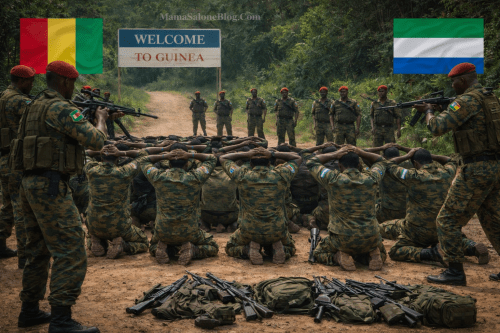
It ascends, by constitutional design, to the Commander-in-Chief. President Bio holds that authority. The detention of Sierra Leonean soldiers is, therefore, a failure that lands squarely at the door of Julius Maada Bio.
Inexcusable Paradox
Recent months have seen vigorous enforcement of the Cyber Security and Crime Act, sustained application of public order provisions, and prosecution of speech-related offenses. The machinery of internal enforcement has operated with notable energy.
The border incident now exposes what that energy has cost the country: deficiencies in military readiness, strategic coordination at the border, and intelligence and surveillance capacity that left Sierra Leonean soldiers vulnerable to detention by a neighboring force.
The state apparatus in President Bio’s regime has been directed more forcefully inward, toward controlling citizens’ expression, than outward toward equipping and deploying the Armed Forces for their Section 165 mandate.
That is not a political observation. It is a constitutional indictment.
The President’s duty under Sections 40 and 165 is not selective. National defense cannot be subordinated to domestic political priorities. Under President Bio’s watch, it has been. That subordination has now produced a tangible and humiliating consequence for the Republic of Sierra Leone.
Regional Dimension Deepens Failure
President Bio currently serves as Chairman of ECOWAS; the regional body charged with stability across West Africa. When the Chairman of that body presides over a scenario in which his own nation’s armed forces are detained and disarmed by a neighboring state, the authority he claims on the regional stage is directly and publicly undermined.
The credibility of Sierra Leone’s voice in ECOWAS, and in the broader international community cannot survive a Commander-in-Chief who cannot secure his own borders. This is not merely an embarrassment. It is a demonstration that the executive branch has failed in its most fundamental constitutional obligation.
Constitutional Case
The Constitution does not shield the Commander-in-Chief from scrutiny when national security obligations are compromised.
The President shall be removed from office if he is found guilty of any violation of this Constitution or of gross misconduct in the performance of the functions of his office (Section 48(1)).
For the purposes of this section, ‘gross misconduct’ means a grave violation or breach of any provision of this Constitution or a misconduct of such a nature as amounts to a serious failure in the discharge of the functions of his office (Section 48(2)).
These Sections provide for the removal of the President for gross misconduct in the performance of the functions of his office, defined to include violation of the Constitution and serious failure in the discharge of official duties. The threshold is high, but what has occurred at the Guinea/Sierra Leone border meets the threshold.
Border security has been inadequately managed. Armed Forces modernization has lagged behind operational demands. Diplomatic engagement failed to prevent or resolve this escalation. These are not administrative shortcomings. They are serious failures in the discharge of the President’s most solemn constitutional duties.
The appropriate constitutional response is resignation. That is not a call for instability. It is a call for accountability, the precise form of accountability the Constitution anticipates when executive failure compromises the integrity of the Republic. Parliamentary inquiry, independent investigation, and lawful removal processes remain available should President Bio decline to act with the honor the office demands. The Constitution provides the mechanism. The moment demands its use.
Constitutional Verdict
Section 165 charges the Armed Forces with preserving territorial integrity. Section 40 vests command authority in the President. The presidential oath binds the officeholder to defend the Republic. Taken together, those provisions do not merely describe a role. They set a standard. President Julius Maada Bio has fallen below that standard in a manner that is visible, consequential, and constitutionally indefensible.
This is not a partisan argument. It is a constitutional one. The detention and disarming of Sierra Leonean soldiers by a neighboring military force is not an incident to be managed with press releases and diplomatic pleasantries. It is a sovereignty failure on the watch of a Commander-in-Chief who swore to prevent exactly this. Leadership is measured not only by the authority exercised inward, but by the security maintained outward. That security has been breached. The Constitution of Sierra Leone is unambiguous about where responsibility lies, and equally unambiguous about the remedies available when it is not discharged.
As Commander in Chief of the Armed Forces, President Julius Maada Bio Must Resign for Failing to Defend the Republic of Sierra Leone and Preserving its Territorial Integrity.
 MAMA SALONE ~ Lioness of the West Coast