
by Fatima Babih, EdD
Part II of a multi-part analytical series examining the February 9, 2026 AYV interview with First Lady, Fatima Jabbie Bio.
In Part I, we examined the interview setting. Now we turn to substance, and to an uncomfortable truth. Sometimes defending democracy means defending people you critique.
This is one of those times.
One of the earliest and most consequential exchange in Fatima Bio’s February 9 interview centered on a question that has followed her for years: her nationality. All thanks to her frequently conflicting public statements.
The AYV host asked directly:
What are your ties to The Gambia? A lot of allegations, actually. Some say you are a Sierra Leonean. Others say you’re typical Gambian. Who are you?
Fatima Bio responded (Verbatim):
I’m an African. The thing is um the reason why I don’t really focus on having this discussion with people is the fact that in Sierra Leone a lot of people don’t read their constitution. That’s the problem because if you read your constitution you will not be making baseless allegations. First of all, I don’t have any reason to say I’m a Sierra Leonean if I’m not a Sierra Leonean. The constitution made it very clear as long as one of your parent are born in Sierra Leone. You’re a Sierra Leonean. And what qualifies me double is the fact that I was born here. My mother was born here and I was born here.
Because I was born here doesn’t mean I would have to abandon where my father come from. My father is a Gambian and I would not be ashamed to say I’m a Gambian too because I mean the blood that runs in me comes from two people. My mother and my father. Now why would I celebrate my mother and not celebrate my father? That would be a hypocrite of me.
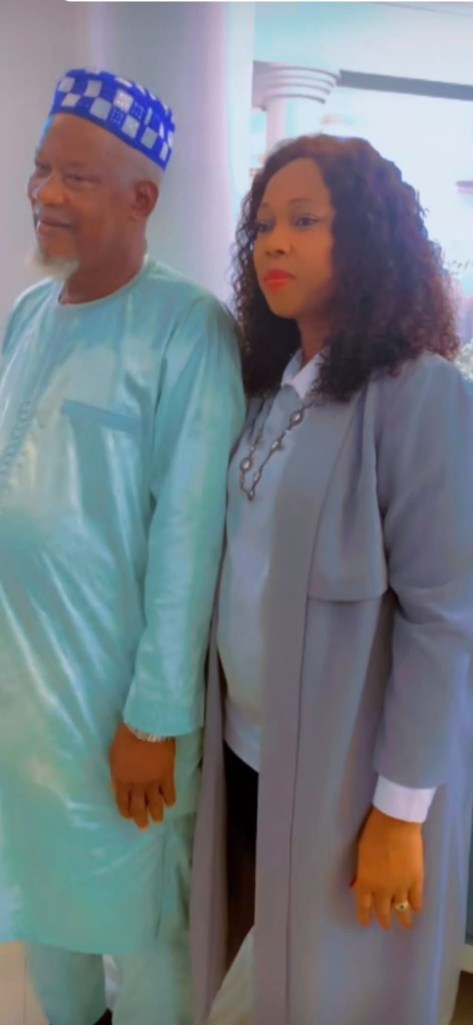
At first glance, her statment appears straightforward, a declaration of dual heritage and constitutional citizenship. But amid persistent speculation about a possible 2028 presidential bid, this exchange carries deeper constitutional implications.
And here is where many critics, myself included, have inadvertently weakened our own argument by conflating two distinct questions. It is critical to separate what the law actually asks:
Question 1: Is Fatima Bio a citizen of Sierra Leone?
Question 2: Is she qualified to be President under the 1991 Constitution?
These are not identical questions. And only one of them matters for the citizenship debate.
Constitution Requirements
Section 41 of the 1991 Constitution establishes that a person qualifies for election as President if they:
- Are a citizen of Sierra Leone;
- Are a member of a political party;
- Have attained the age of forty years;
- And are otherwise qualified to be elected as a Member of Parliament.
Notice what is not required:
- That both parents be Sierra Leonean;
- Exclusive nationality by birthplace;
- Proof of “pure” Sierra Leonean lineage.
The Constitution requires citizenship, by birth or by descent (acquiring citizenship automatically at birth through a Sierra Leonean parent (jus sanguinis). Period.
Citizenship Law
The legal framework is more nuanced than many public debates suggest. The Sierra Leone Citizenship Act, 1973 (as amended) distinguishes between citizenship by birth (which requires birth in Sierra Leone along with qualifying descent) and citizenship by descent (which applies to persons born outside Sierra Leone who have a qualifying Sierra Leonean parent). Therefore, the issue cannot be reduced to birthplace alone.
The decisive question is whether the statutory conditions for citizenship under the applicable provision are satisfied. That distinction is critical.
If Fatima Bio’s mother is a Sierra Leonean citizen, and if nationality law recognizes citizenship by descent through a qualifying parent, then legally speaking, Guinean-born Fatima Bio would satisfy the constitutional requirement of citizenship, regardless of birthplace narratives or relocation history. Full stop.
That is not a political endorsement. It is constitutional literacy.
Law Over Preference
By no means am I endorsing Fatima Bio’s potential presidential ambition. I am merely defending the law of the land.
If we claim to defend the rule of law, we must apply it consistently, even when it protects those we critique. Otherwise, we are not defending democracy. We are defending preference. And preference is not law.
Sierra Leone is currently engaged in constitutional review and amendment exercises. At such a moment, public debate must be accurate and grounded in law, not merely convenient.
When our critique is focused exclusively on birthplace mythology or oversimplified nationality narratives, we inadvertently strengthen Fatima Bio’s narrative and divert attention from the real constitutional questions.
Citizenship in Sierra Leone is governed by the nationality law. If Fatima Bio meets the legal definition of citizen under that law, the citizenship argument collapses. And the debate must move to stronger grounds.
The Public Record
Biographical transparency remains relevant, even if not legally disqualifying. Fatima Bio’s Official biographies identify Umaru Jabbie, a Guinean, as her father and Tidankay Jabbie, a Sierra Leonean, as her mother.
Investigative reporting by the Organized Crime and Corruption Reporting Project (OCCRP) documents that Fatima Bio’s mother re-married a Gambian national, Alhagie Mustapha Darboe, and that during the civil war period, Alhagie Darboe relocated his family, including his stepdaughter, Fatima Jabbie, to The Gambia.
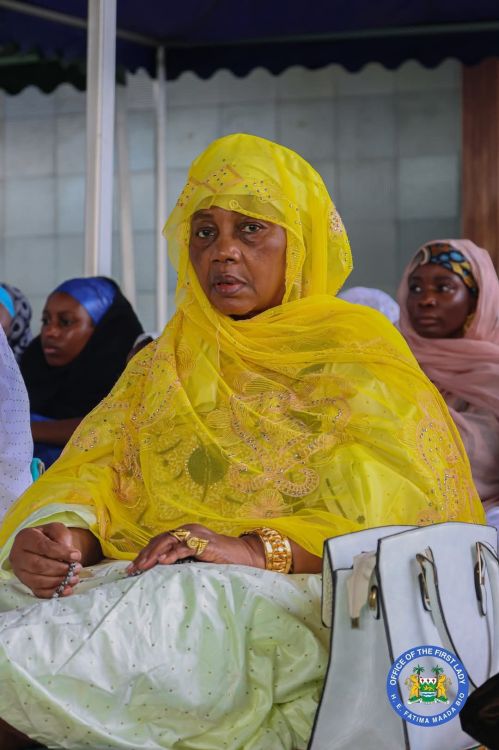
If these public records are accurate, Fatima Bio’s ties to The Gambia stem from wartime family relocation and her mother’s remarriage. That context complicates simplistic claims that she is constitutionally ineligible based solely on her Gambian connections. More importantly, it underscores why documentation, not emotion, must guide the debate.
Danger of Emotional Framing
Consider Fatima Bio’s statement again: Why would I celebrate my mother and not celebrate my father? That would be a hypocrite of me. This is emotionally compelling rhetoric. It is also a deliberate reframing to transform a constitutional question into a moral accusation.
In other words, she is suggesting that questioning her eligibility amounts to attacking her family loyalty. That is a false equivalence. Constitutional interpretation is not an opinion poll on family loyalty. It is a legal exercise.
The real question is not whether she can celebrate both parents. The real question is: What do official records show, and what does nationality law require? If she is a citizen of Sierra Leone by descent through her mother, she clears the constitutional threshold. The conversation about her eligibility must then shift.
The Eligibility Debate
Once Fatima Bio’s citizenship is established, and by the plain text of the 1991 Constitution, it appears to be, the serious democratic questions are no longer about nationality. They become questions of:
- Governance record: What has she actually accomplished versus claimed?
- Institutional boundaries: Has she overstepped the role of First Lady?
- Use of public resources: How have public and donor funds been deployed through her office?
- Financial transparency: Where does the money come from and where does it go?
- Relationship to party structures: Is she building a political machine within state institutions?
- Temperament toward citizens: How does she respond to criticism and dissent?
- Political conduct: Does her behavior reflect democratic values or authoritarian instincts?
These are substantive debates. These are worthy debates. These are the debates that strengthen democracy. Obsessing over birthplace conspiracies weakens them.
A Principled Stand
In addressing this portion of the February 9 interview, which carries genuine constitutional implications, it was necessary to approach it through a legal lens. This approach keeps us grounded in truth, even when that truth complicates our own political arguments.
At the interview, Fatima Bio attempted to settle her citizenship question through emotional framing and appeal to family loyalty.
This analysis settles that question through law. And on this specific point, the law appears to favor Fatima Bio.
That does not mean she is qualified to be president in the broader democratic sense. It means the disqualification lies elsewhere.
The citizenship question must be resolved through law, not through sentiment. The remaining questions raised in that interview require the same rigor. They require scrutiny. They require evidence. They require disciplined analysis.
 MAMA SALONE ~ Lioness of the West Coast