All Sierra Leoneans Must Take Responsibility for Her Death and for the Protection of Girls and women!!
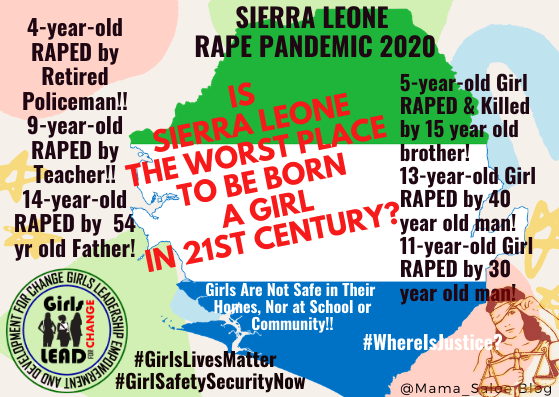
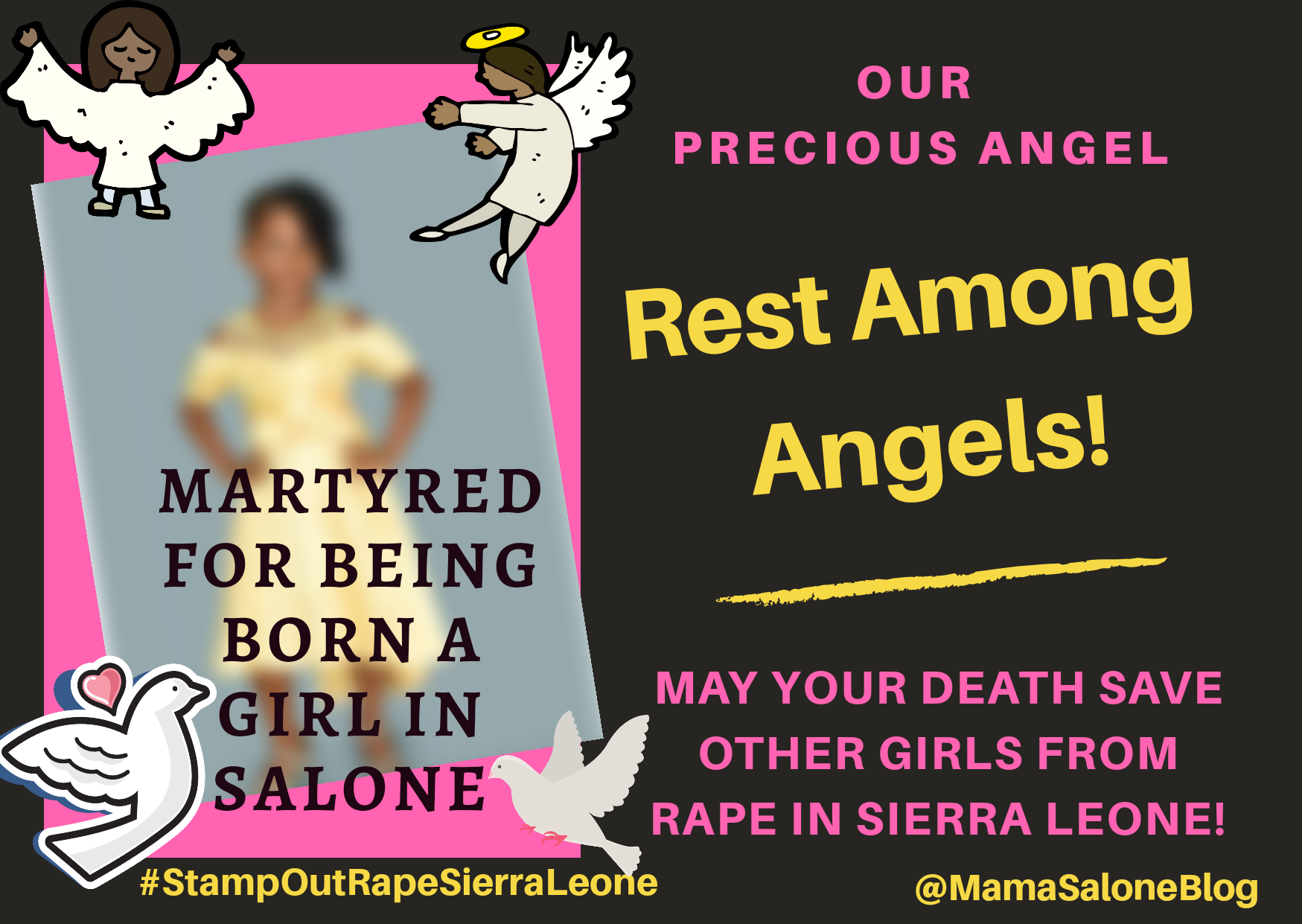
The victim, a 5-year-old girl, whose name and photos have been shared liberally on social media, but will be referred to in this article as our Precious Angel. She was born in Sierra Leone to an American father; which makes her a U.S. citizen born abroad, as she held a U.S. birth certificate and passport.
The father who lives in the United States, reports in audio heard on social media, that he received a call from Sierra Leone on the morning of June 17, 2020 (or thereabout) with news that his otherwise, healthy little girl was dead, with no cause of death reported to him, and that the burial arrangement was underway to bury her immediately.
The father reports that he insisted that his daughter’s body should not be buried until an autopsy was performed to know the cause of her death; so, an autopsy was performed.
The autopsy result, which has been widely shared on social media, shows that the poor Precious Angel’s cause of death is “MANUAL STRANGULATION, also called ASPHYXIAL DEATH.”
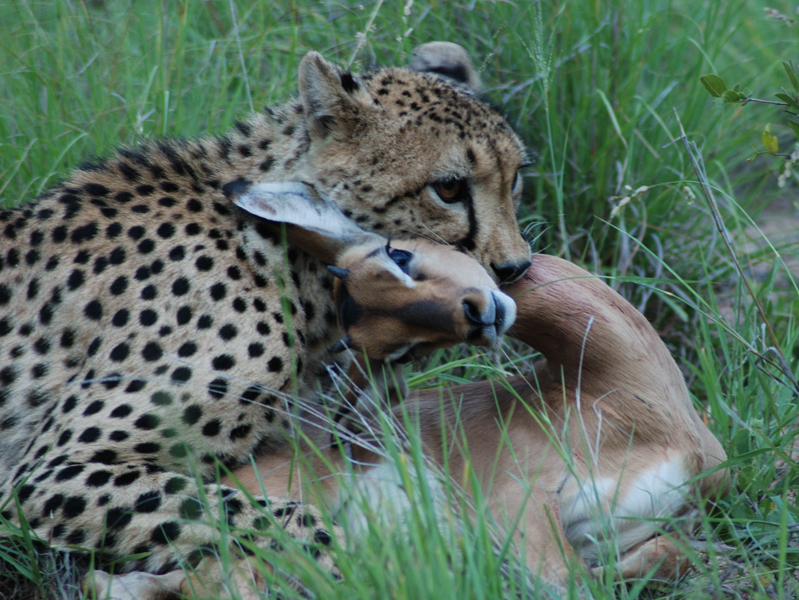
Strangulation is how large predator animals kill their prey.
This means the RAPIST, acting like an animal, strangled our Precious Angel by placing her in some kind of a chokehold or otherwise obstructed her normal breathing process; her inhaling and exhaling or respiration was stopped physically through the forceful hold by the RAPIST.
We all witnessed George Floyd dying in the same manner, in a video that showed the wicked policeman Derek Chauvin, with his knee on Floy’s neck, while Floyd cried “I can’t breathe.” George Floyd was a 46-year-old man of almost 6 feet tall and over 180 pounds, yet we all felt the frightful agony of his asphyxial death; we can still hear the echo of his cry for his mother.
Our Precious Angel’s death in this same heartless, brutal manner brings some questions to mind:
- Did our Precious Angel cry to her rapist “I can’t breathe?”
- Did she call for her mom or dad?
- Could anyone, besides her rapist, hear her cry?
These are questions that are distressing me and I’m sure doing the same to others.
The autopsy of this Precious Angel shows that, as a result of the rape, she suffered VIRGINAL and ANAL DILATIONS. This means that she was raped multiple times through both front and back. The autopsy also shows that her tongue was bitten; probably from the RAPIST holding on to her tongue with his teeth.
All of these brutalizing perpetrated on this Precious 5-year-old baby girl would have severely injured or killed any adult woman of any age.
Imagine the horror and pain of a 5-year-old baby girl dying in such a brutal, senseless way!
The RAPIST, in this case, is alleged to be a teenager, 15 or 17-year-old (who looks older in his pictures) identified as IBRAHIM BAH, who lived in the same household with the victim.
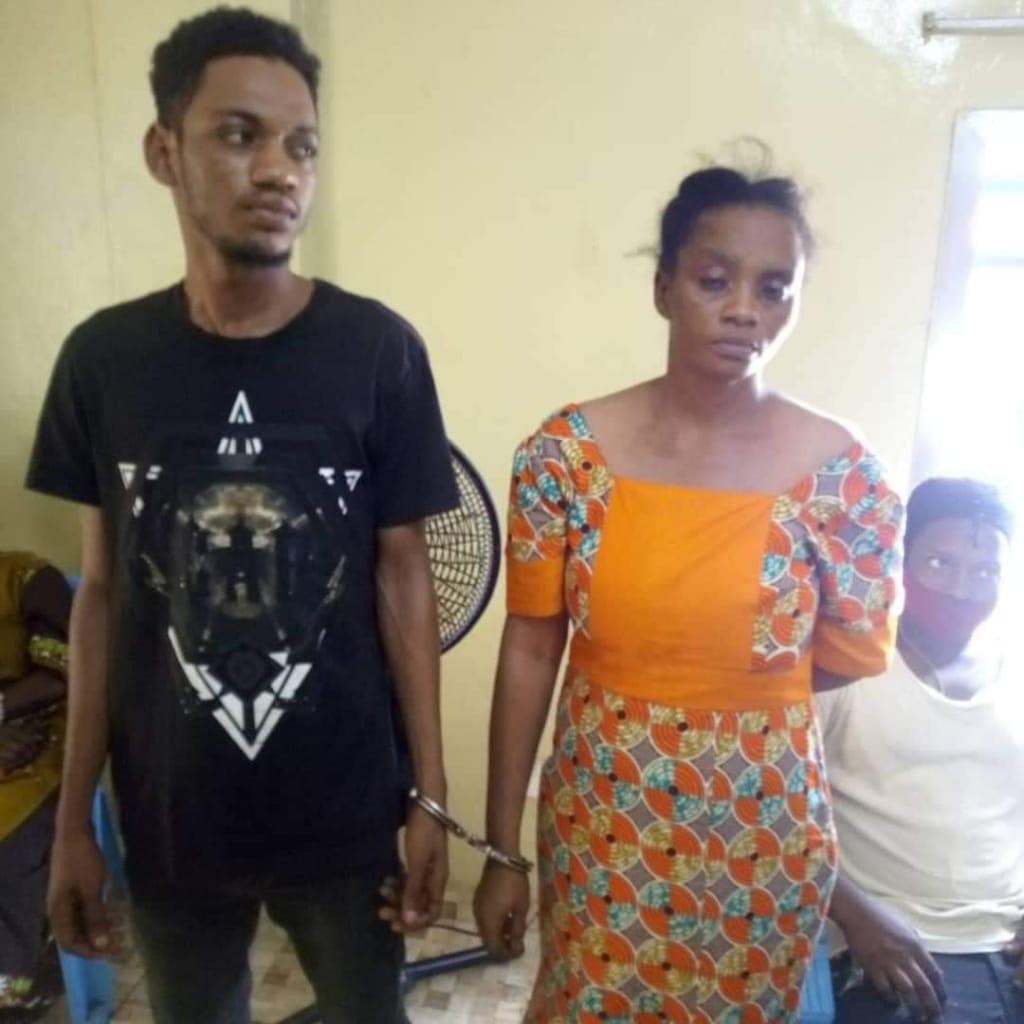
There are various versions of how this predator is related to his victim. One version is that the RAPIST is the biological half-brother of the victim and her 8-year-old sister, who has also been allegedly raped by this same RAPIST in the past.
He is also reported to be the biological brother to the victim’s mother, which would make him the uncle; and also, as the biological son of the victim’s aunt, which makes him a cousin. The fact, though, is that the RAPIST is a family member, who either resided with the victim in the same household or within the same community. But even if he lived in another town, the familial ties put our Precious Angel right in the wicked hands and filthy hold of this vicious predator.
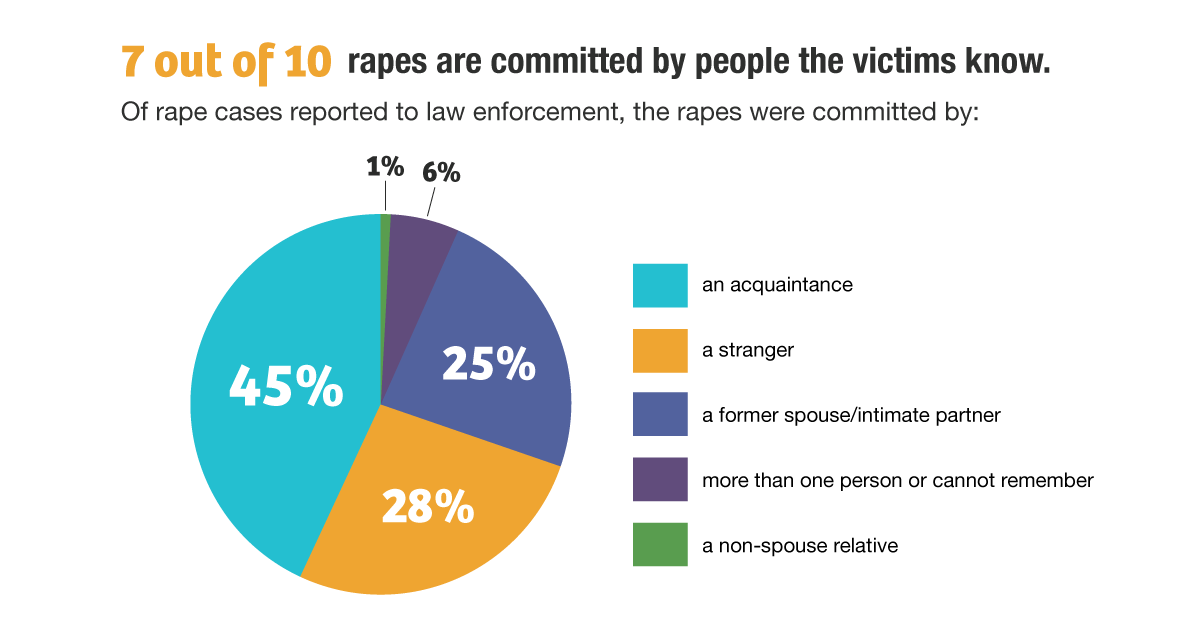
Sadly, statistics show that nearly 75% of RAPISTS are not strangers to their victims, so only 25% of rapes are committed by people outside the family and community of the victim.
Since learning about the brutal death of our Precious Angel, I have been filled with so many emotions. I feel guilty, sad, angry, and depressed all at once. As an advocate and activist for girls and women’s rights and wellbeing, I feel guilty that I have not been able to contribute enough to have helped put things in place to protect the life of this Precious Angel; and probably many more girls in Sierra Leone, who are being buried without autopsy or public notice when they are brutally raped and murdered.
The adults in the family of the Precious Angel and her community must also feel guilty that they did not provide a safe home for her to live and thrive.
The government of Sierra Leone should feel guilty that with all its laws on the books, its weak legal system and social institutions have not handled rape cases judiciously nor have they provided safety and security for girl children in Sierra Leone to live and thrive.
Civil society in Sierra Leone, including community leaders, community members, families, and all ordinary folks must feel guilty that they have all failed our Precious Angel and other girls by not treating rape as a serious crime against humanity.
ROOT OF THE RAPE PROBLEM IN SIERRA LEONE SOCIETY
No legislation is going to stamp out rape in Sierra Leone until the people of Sierra Leone change their attitude about rape and change the way they view it and handle it. The normal handing of rape in Sierra Leone is the root cause of this problem. When a rape case is taken to the police, they usually ask that the families settle it as family or community matter, especially since 9 out of 10 times the RAPIST is a member of the same community.
The families would then get together and sort it out, leaving the girl, to deal with her mental, emotional, and physical wounds. All parties would be begging the parents or guardians of the victim not to “ruin the rapist’s future” by insisting on the legal prosecution process. And many times, when the rape results in a pregnancy, the girl is forced to go and stay in the home of the rapist’s family, to be cared for by them until she gives birth to the child.
This is the tip of the iceberg for how rape is a deep-rooted societal problem in Sierra Leone. I, therefore, propose that Sierra Leoneans must unite around the rape issue so that we can unearth this horrible ill from its root in the family and community units.
ALL SIERRA LEONEANS MUST SHARE THE SENSE OF GUILT AND RESPONSIBILITY FOR THE DEATH OF OUR PRECIOUS ANGEL AND OTHER RAPE VICTIMS!
As parents, especially mothers, we do everything in our power to protect our children from outside sexual predators and other harms, but it is almost impossible to protect them from those who are in our households, families, and communities. Therefore, all Sierra Leoneans must use this time of grief for our Precious Angel to reflect and ask themselves some questions:
- How have we viewed rape in our families and communities?
- Since we know that rape is perpetrated by people in our homes, communities, how can we use this information to stamp out rape in our families and communities?
- How can we recognize RAPISTS in our midst, in our own households, families, and communities?
- How can we STOP this gross violation of girls’ and women’s right to life and the right to live in safety and security?
- How can we stop such sadistic, sick, and wicked souls from living and cohabitating with our precious girls and women in society?
- what are the signs we should look for in boys and men as red flags for rape?
- How many potential rapists, young or old, men do we have living among normal people in households and communities in Sierra Leone?
- How can we protect our baby girls from such sadists within the family, community, and country?
This gruesome death of our Precious Angel should not be in vain and should be a wakeup call for all Sierra Leoneans to be vigilant and work to stamp out rape.
Sadly though, there is no sign of Sierra Leoneans uniting, not only to fight for justice for our Precious Angel but to also fight to prevent future RAPISTS and KILLERS of our precious girls in Sierra Leone. Based on the numerous audios and social media postings, the case is already being hijacked by people with various ulterior and political motives. This is the tragedy that will make the gruesome death of our Precious Angel go in vain and lead to continued rapes and killings of our precious girls.
HOW MANY MORE STORIES OF RAPE OF OUR PRECIOUS GIRLS ARE WE GOING TO WRITE AND TALK ABOUT BEFORE WE START FIGHTING TO STAMP OUT RAPE IN THE LAND THAT WE LOVE??
I hope and pray that this is the last rape story in Sierra Leone that needs to be written on Mama Salone Blog!

@Fatimababih #StampOutRapeSierraLeone