Category Archives: EXPLOITATION

Gallery

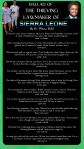
Sierra Leone: Ballad of the Thieving Lawmaker

This gallery contains 2 photos.

Corrupt politicians may get away with their crimes, but we the people will tell the stories of their crimes to our grand children in prose, songs & poetry. Read Background Story: https://yame.space/whats-up-africalinks/2024/1/30/the-paran-affair Clerk of Sierra Leone Parliament Paran Tarawally and … Continue reading

Gallery

Silent Injustice: Sierra Leone Judiciary Continues to Fail Rape Survivors with Impunity

By Dr. Fatimawahab Babih For most Sierra Leoneans, “judiciary” is just a word, and “high court” is just a building because this institution and its judges are not serving to work for the people or justice in that country. Once … Continue reading

Gallery

SHREDS OF EVIDENCE OF MRS. BIO INCITING & PERPETRATING VIOLENCE IN SIERRA LEONE

By United Voices for Sierra Leone With her unregulated access to the flow of money from the government of Sierra Leone and international donors, Mrs. Fatima Jabbie Maada Bio continues to pay lobbyists in the UK and the U.S. to … Continue reading

Gallery

HANDS STILL ON OUR GIRLS: MRS. FATIMA MAADA BIO’S UNFULFILLED PROMISES & CONTINUED EXPLOITATION OF GIRLS IN SIERRA LEONE

This gallery contains 5 photos.

By Dr. Fatima Babih In Sierra Leone, where the lives of girls hang in the balance, there is a stark and harrowing reality that hardly makes the news. It is a story of injustice, deceit, and the relentless pursuit of … Continue reading

Gallery

Judicial Corruption in Sierra Leone: Magistrate Lloyd Jusu Continues to Serve Injustice in Bo

This gallery contains 3 photos.

Sierra Leone has become a real jungle, survival of the fittest. Those with political connections and money are the fittest and can do unto others as they wish. With their political connections and money, the judicial system is at their … Continue reading

Gallery

THE RAPING OF GIRLS IN SIERRA LEONE CONTINUES UNABATED

By Fatima Wahab Baby Girls and Adolescent Girls in Sierra Leone continue to be savagely raped, not by strangers but by men in their families and communities. There seems to be no deterrence for this savagery, as only a minute … Continue reading

HUMAN TRAFFIC RECRUITERS THRIVING IN SIERRA LEONE: IS GOVERNMENT UNAWARE OR COMPLACENT?

Despite the recent deportation of 85 Sierra Leonean women from Kuwait to Sierra Leone in May 2020, authorities in another West African country, Senegal, on June 23, 2020, arrested 87 young Sierra Leonean women, who had been brought to Dakar by a network of HUMAN TRAFFIC RECRUITERS and were waiting to be smuggled to the Middle East.

87 Sierra Leonean Women Arrested in Senegal

87 Young Women from Sierra Leone Smuggled into Senegal. Photo credit: SeneWeb

The 87 Sierra Leonean women in Senegal, who were found in houses in the suburbs of the capital Dakar, had been kept in hiding from the authorities, while the network of traffickers worked their magic to get them out of Dakar and across the desert, into Middle Eastern countries, such as Kuwait, Lebanon, etc., by all means possible. But thanks to the vigilance of the Senegalese authorities, this particular consignment of potential modern-day slaves has, hopefully, been saved.

Many of the recent deportees from Kuwait were the women whose video and audio messages we have all watched and heard, about being enslaved, tortured, and dehumanized in many other ways in Kuwait and other Middle Eastern countries. Many of these women were appealing to the public to rescue them and help them return home to Sierra Leone, Ghana, Nigeria, Uganda, and many more.

Photo credit: ThisIsSierraLeone.com

The Kuwaiti government, which had never cared much about the women’s plights, decided to deport the women back to their countries in the middle of the COVID 19 Pandemic.

Upon arrival in Sierra Leone, 67 of the deportees tested positive, even though the Kuwaiti government claimed they had tested negative before their departure.

The 85 Sierra Leonean women returned home with nothing but their breath, whatever illness they might have picked up and years of trauma that will forever haunt them emotionally, mentally, and probably physically.

HUMAN TRAFFIC RECRUITERS promise the women lucrative jobs as maids and childcare workers in the Middle East. But once they arrive, their passports are taken away from them by their employers, who treat them as slaves. The women work around the clock without pay or freedom to move around or leave.

A woman from Sierra Leone burned in Kuwait by her slavers. Photo credit: Abiodunborisade.com

The reasonable wo/man might think that after all this, the Middle East slave labor industry would have been shattered in Sierra Leone and Africa at large. But the reality is far from it.

In Sierra Leone, HUMAN TRAFFIC RECRUITERS are operating openly. Their advertisements are circulating mostly on WhatsApp open forums that have become the staple for young people in Sierra Leone. This makes one wonder whether the government of Sierra Leone is aware or just complacent about being a source country for this global slave labor industry.

On the issue of the women who were suffering in Kuwait and begging the Sierra Leone Embassy to rescue them, an Embassy official stated that,

Sierra Leonean housemaids working in Kuwait were recruited by agents approved by the Ministry of Labour of Sierra Leone with absolutely no knowledge of their presence by the Embassy of Sierra Leone in Kuwait (AYV Newspaper, 2020).

So, if the Sierra Leone Ministry of Labour is approving these recruitments, then that answers the question as to whether the Sierra Leone government is unaware of or complacent about HUMAN TRAFFIC RECRUITERS’ ability to openly operate in the country.

HUMAN TRAFFIC RECRUITERS in Sierra Leone are boldly transporting their chatel across the borders, to other West African countries for shipment to the Middle East into modern-day slavery and indentured servitude.

The image below is an example of the bold advertisement by recruiters in Sierra Leone, who are OPENLY sharing these ads on WhatsApp groups, and probably through other non-electronic means.

Sierra Leone Human Traffic Recruiters Advertisement

When this RECRUITER in the above ad was contacted, s/he informed the person that there was a group in Freetown that was ready to depart as soon as airline flights resume in Sierra Leone.

S/he advised that if the person wanted to be in the next group, the person should try and get a passport, a medical clearance, which s/he said would be provided by doctors in the HUMAN TRAFFIC RECRUITERS’ network.

S/he advised that the total cost is $10,000.00 (ten thousand US dollars) and the person would have to pay an initial amount, equivalent to $3,500 (three thousand five hundred US dollars). Upon completion of the process, the potential slave would pay the balance of $6,500 (six thousand five hundred US dollars) before leaving the country.

The ad even says that the potential slave can pay the balance at the airport; from this, we can deduce that none of the women are paying the full $10k before they leave the country. It would be impossible for these Sierra Leonean women, who are trying to flee poverty, to afford $10K. Even the women who engage in prostitution to pay for such a trip cannot accumulate such an amount in a short time. It is obvious that the only amount needed by the HUMAN TRAFFIC RECRUITERS is the $3,500 for the paperwork and airline tickets to their designated port of entry into the Middle East.

Ultimately, the potential slave is told to pay the balance of the money when she starts working in the Middle East, which is how slavery begins. The Middle East employers usually make payments directly to HUMAN TRAFFIC RECRUITERS; that is how they get paid and disappear from the sight of the enslaved women they recruit.

The reasonable wo/man may ask, ‘Why are young women putting themselves up for sale in the modern-day slave market?’ Here are some likely reasons:

  • First of all, HUMAN TRAFFIC RECRUITERS are conmen, and women who are well-versed in the art of inducement.
  • Young women in Sierra Leone see very little prospects in their future by staying in the country.
  • The majority of young women are illiterate, as Sierra Leone has one of the lowest female literacy rates in the world.

All this and more, make young women in Sierra Leone easy prey for persuasive, sweet-talking HUMAN TRAFFIC RECRUITERS. 

As authorities in Senegal have demonstrated by halting the passage of the 87 Sierra Leonean women into slavery, the government of Sierra Leone too can step up and play a major role in halting the operations of HUMAN TRAFFIC RECRUITERS in the country. 

@Fatimababih

@Mama_Salone

#StopHumanTraffickingSierraLeone

#ModernDaySlavery

———————

Sources:


5-YEAR-OLD AMERICAN GIRL BRUTALLY RAPED and KILLED IN SIERRA LEONE: LET THE HILLS AND VALLEYS RE-ECHO HER CRY

All Sierra Leoneans Must Take Responsibility for Her Death and for the Protection of Girls and women!!

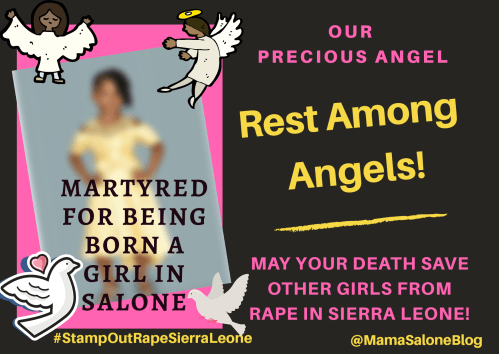
The victim, a 5-year-old girl, whose name and photos have been shared liberally on social media, but will be referred to in this article as our Precious Angel. She was born in Sierra Leone to an American father; which makes her a U.S. citizen born abroad, as she held a U.S. birth certificate and passport.

The father who lives in the United States, reports in audio heard on social media, that he received a call from Sierra Leone on the morning of June 17, 2020 (or thereabout) with news that his otherwise, healthy little girl was dead, with no cause of death reported to him, and that the burial arrangement was underway to bury her immediately.

The father reports that he insisted that his daughter’s body should not be buried until an autopsy was performed to know the cause of her death; so, an autopsy was performed.

The autopsy result, which has been widely shared on social media, shows that the poor Precious Angel’s cause of death is “MANUAL STRANGULATION, also called ASPHYXIAL DEATH.”
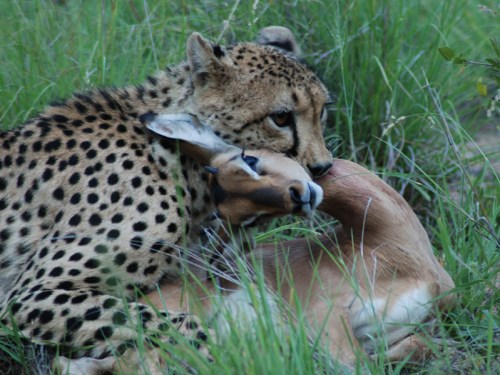
Strangulation is how large predator animals kill their prey.

This means the RAPIST, acting like an animal, strangled our Precious Angel by placing her in some kind of a chokehold or otherwise obstructed her normal breathing process; her inhaling and exhaling or respiration was stopped physically through the forceful hold by the RAPIST.

We all witnessed George Floyd dying in the same manner, in a video that showed the wicked policeman Derek Chauvin, with his knee on Floy’s neck, while Floyd cried “I can’t breathe.” George Floyd was a 46-year-old man of almost 6 feet tall and over 180 pounds, yet we all felt the frightful agony of his asphyxial death; we can still hear the echo of his cry for his mother.

Our Precious Angel’s death in this same heartless, brutal manner brings some  questions to mind:

  • Did our Precious Angel cry to her rapist “I can’t breathe?”
  • Did she call for her mom or dad?
  • Could anyone, besides her rapist, hear her cry?

These are questions that are distressing me and I’m sure doing the same to others.

The autopsy of this Precious Angel shows that, as a result of the rape, she suffered VIRGINAL and ANAL DILATIONS. This means that she was raped multiple times through both front and back. The autopsy also shows that her tongue was bitten; probably from the RAPIST holding on to her tongue with his teeth.

All of these brutalizing perpetrated on this Precious 5-year-old baby girl would have severely injured or killed any adult woman of any age.

Imagine the horror and pain of a 5-year-old baby girl dying in such a brutal, senseless way!

The RAPIST, in this case, is alleged to be a teenager, 15 or 17-year-old (who looks older in his pictures) identified as IBRAHIM BAH, who lived in the same household with the victim.
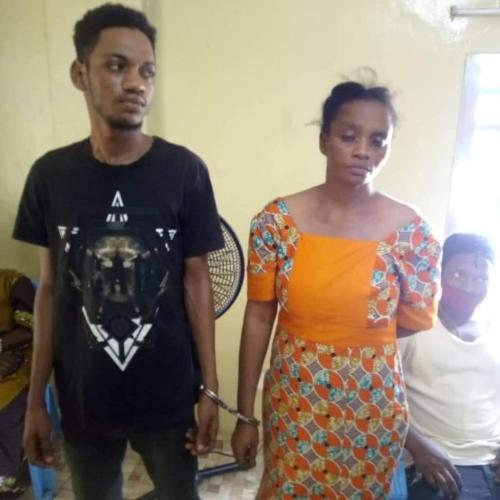
There are various versions of how this predator is related to his victim. One version is that the RAPIST is the biological half-brother of the victim and her 8-year-old sister, who has also been allegedly raped by this same RAPIST in the past.

He is also reported to be the biological brother to the victim’s mother, which would make him the uncle; and also, as the biological son of the victim’s aunt, which makes him a cousin. The fact, though, is that the RAPIST is a family member, who either resided with the victim in the same household or within the same community. But even if he lived in another town, the familial ties put our Precious Angel right in the wicked hands and filthy hold of this vicious predator.

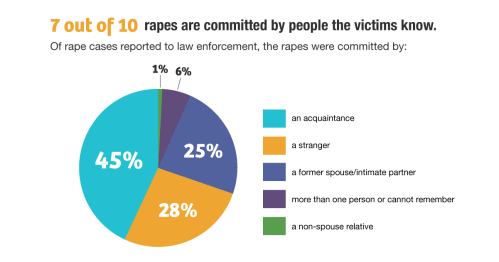
Sadly, statistics show that nearly 75% of RAPISTS are not strangers to their victims, so only 25% of rapes are committed by people outside the family and community of the victim.
Since learning about the brutal death of our Precious Angel, I have been filled with so many emotions. I feel guilty, sad, angry, and depressed all at once. As an advocate and activist for girls and women’s rights and wellbeing, I feel guilty that I have not been able to contribute enough to have helped put things in place to protect the life of this Precious Angel; and probably many more girls in Sierra Leone, who are being buried without autopsy or public notice when they are brutally raped and murdered.

The adults in the family of the Precious Angel and her community must also feel guilty that they did not provide a safe home for her to live and thrive.

The government of Sierra Leone should feel guilty that with all its laws on the books, its weak legal system and social institutions have not handled rape cases judiciously nor have they provided safety and security for girl children in Sierra Leone to live and thrive.

Civil society in Sierra Leone, including community leaders, community members, families, and all ordinary folks must feel guilty that they have all failed our Precious Angel and other girls by not treating rape as a serious crime against humanity.
ROOT OF THE RAPE PROBLEM IN SIERRA LEONE SOCIETY

No legislation is going to stamp out rape in Sierra Leone until the people of Sierra Leone change their attitude about rape and change the way they view it and handle it. The normal handing of rape in Sierra Leone is the root cause of this problem. When a rape case is taken to the police, they usually ask that the families settle it as family or community matter, especially since 9 out of 10 times the RAPIST is a member of the same community.

The families would then get together and sort it out, leaving the girl, to deal with her mental, emotional, and physical wounds. All parties would be begging the parents or guardians of the victim not to “ruin the rapist’s future” by insisting on the legal prosecution process. And many times, when the rape results in a pregnancy, the girl is forced to go and stay in the home of the rapist’s family, to be cared for by them until she gives birth to the child.

This is the tip of the iceberg for how rape is a deep-rooted societal problem in Sierra Leone. I, therefore, propose that Sierra Leoneans must unite around the rape issue so that we can unearth this horrible ill from its root in the family and community units.

ALL SIERRA LEONEANS MUST SHARE THE SENSE OF GUILT AND RESPONSIBILITY FOR THE DEATH OF OUR PRECIOUS ANGEL AND OTHER RAPE VICTIMS!

As parents, especially mothers, we do everything in our power to protect our children from outside sexual predators and other harms, but it is almost impossible to protect them from those who are in our households, families, and communities. Therefore, all Sierra Leoneans must use this time of grief for our Precious Angel to reflect and ask themselves some questions:

  • How have we viewed rape in our families and communities?
  • Since we know that rape is perpetrated by people in our homes, communities, how can we use this information to stamp out rape in our families and communities?
  • How can we recognize RAPISTS in our midst, in our own households, families, and communities?
  • How can we STOP this gross violation of girls’ and women’s right to life and the right to live in safety and security?
  • How can we stop such sadistic, sick, and wicked souls from living and cohabitating with our precious girls and women in society?
  • what are the signs we should look for in boys and men as red flags for rape?
  • How many potential rapists, young or old, men do we have living among normal people in households and communities in Sierra Leone?
  • How can we protect our baby girls from such sadists within the family, community, and country?

This gruesome death of our Precious Angel should not be in vain and should be a wakeup call for all Sierra Leoneans to be vigilant and work to stamp out rape.

Sadly though, there is no sign of Sierra Leoneans uniting, not only to fight for justice for our Precious Angel but to also fight to prevent future RAPISTS and KILLERS of our precious girls in Sierra Leone. Based on the numerous audios and social media postings, the case is already being hijacked by people with various ulterior and political motives. This is the tragedy that will make the gruesome death of our Precious Angel go in vain and lead to continued rapes and killings of our precious girls.

HOW MANY MORE STORIES OF RAPE OF OUR PRECIOUS GIRLS ARE WE GOING TO WRITE AND TALK ABOUT BEFORE WE START FIGHTING TO STAMP OUT RAPE IN THE LAND THAT WE LOVE??

I hope and pray that this is the last rape story in Sierra Leone that needs to be written on Mama Salone Blog!
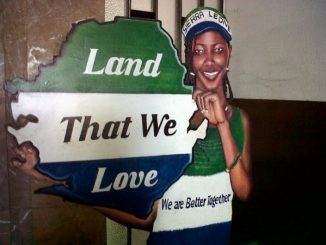
@Fatimababih                                                             #StampOutRapeSierraLeone

 

Let’s Talk About Rape in Salone: It is the Big White Elephant in the Room We Must Attack NOW!

The rape of our girls is not an issue we should discuss with sugar-coated words or discuss in euphemism or measured words. Rape has put girls and women in  dire situations in Sierra Leone; this is a problem that requires our attention as a people, now.

The only time rape makes the news in Sierra Leone, is when the victim dies, as in the death of Hannah Bockarie in 2015 (May her soul rest in peace), who was gang-raped and killed on a beach in Freetown. Also, most recently, a five-year-old girl, who was raped and rendered permanently paralyzed, caught the attention of President Julius Maada Bio, who declared the State of Emergency, as a result.

Thank you to the president for showing that girls are worthy of our leaders’ time and attention, by acknowledging rape as a national crisis! However, the actions he has taken so far, which send a clear message of commitment to do something about the crisis, are just the beginning. We, as a people, must be equally committed to annihilating the beast that rape has become in Salone for so long. It is going to take a national conversation, concerted efforts and change in societal attitude regarding rape.

Social media responses to a recent revelation by a Sierra Leonean woman, Ms. Naasu Fofanah, that she was raped by a Reverend Mereweather Thompson, when she was only 15 years old, has not as much as raised an eyebrow in Salone or the diaspora. In this society, a woman accusing a man of rape is quickly dismissed and the woman gets disparaged for smearing his name. Let’s just say, even in today’s social media craze, such revelations never go viral, they are nipped in the bud among Sierra Leoneans.

One response to Ms. Fofanah’s letter, claims that “many people are asking…why is it only now that madam Fofanah is, making such allegations public?” And posting a response on his Facebook timeline, about the allegations against him, Rev. Thompson, asks many seemingly oblivious questions, one of them: “Would anyone who had been raped continue to keep in touch with the perpetrator?”

Surely, if “many people are asking” such questions, it is a clear indication that many Salone people are not in touch with the realities of prevalent rape in our nation, and not aware of its effects on victims. These lines of questioning are emblematic of the rape culture that has led to the perpetuation and tolerance of rampant rape of girls and women in our country.

To be clear, when we say a culture of rape, we mean that when a people in a society do not frown upon the sexualization of little girls, by giving them into early marriage and accepting adolescent pregnancies as a norm, that society has a culture of rape. This is what Sierra Leone has become.

People who ask such questions are ignorant of the harmful psychological effects of rape on victims, especially adolescent girls. It is a well documented world-wide knowledge (except in Sierra Leone) that rape victims suffer various emotional and mental harm, that may prevent them from reporting their victimization. Those who seek psychological help, may eventually process their ordeal and gain enough fortitude to open up about it, privately or publicly. Which is a major part of their total healing. But most victims, never report and they suffer a life time of consequences.

To be sure, Ms. Fofanah, has in the past identified herself as a rape survivor, which is the first step in a victim’s healing process. The only part that is new is revealing the name of her alleged rapist, which speaks more to the triumph of her healing process than anything else. Secondly, every Sierra Leonean knows that when a girl is raped, especially by a prominent or influential man, it is her word against his words. We all remember the university student who was allegedly raped by the deputy minister of education; he suffered no consequences and she suffered tremendous browbeating by the Sierra Leonean public, in addition to her physical and psychological ordeal.

The Salone public is merciless to rape victims, so it takes a strong woman, like Ms. Fofanah, to know all this about our society, and still be brave enough to open up and share her ordeal.

Regarding Rev. Thompson’s question, yes, rape victims have been known to keep in touch with their rapist, and some even fall in love with the perpetrator. Indeed, many in Sierra Leone have married their rapists, which is part of the reason for the prevalence of early marriages. The Reverend does not deny having sexual intercourse with the 15 year old Ms. Fofanah, but he denies raping her. Even if that 15 year old girl was madly in love and consented the charismatic Reverend’s touch, having sex with her was statutory rape, so if he does not deny having sex with her when she was 15, he and all the men in Salone who have cravings for juvenile girls (Juvies), must know that they are committing rape.

So, Ms. Fofanah’s story is the story of the vast majority of rape victims in Sierra Leone, who are adolescent girls; they are frequently enticed and cajoled by trusted older men in their communities, and sometimes they are forcefully raped. They seldom tell anyone, and as a result, they go on living with tremendous psychological burdens.

Therefore, for the Reverend to ask such a question, is not only insensitive to the suffering of rape victims, but evidence of his male superiority attitude. In a severely patriarchal society like Sierra Leone, men who abuse women, do not see their wrong, they feel self-righteous and belittle complaints made against them.

In Salone, men who are sexual abusers, frequently use adolescent girls sexually in the same manner they use their toilets; they have no love or compassion toward the girls, they just use and discard them when they get horny, and then on to the next victim.

Based on what Ms. Fofanah says in her letter, the Reverend perpetrated both enticement and forceful rape. As a child of 15, she was vulnerable. He was and still is, after all, a “man of God” who all and sundry nearly worship; as Salone people evoke God frequently but worship political leaders and men of God.

And like all adolescent girls in Salone know, the 15-year-old Ms. Fofanah knew that no one, not even her mother, would believe her, had she named such a prominent, influential, “respected” man of the community. Moreover, her alleged rapist, being a married Christian man, who cannot marry two wives, would have denied the child, because his wife would have never allowed him to bring an outside child into their household; a child that would have been referred to as a “bastard.”

In Salone, a child that is referred to as a “bastard” is not a child born out of wedlock; but a child for whom a man is not identified as the man who impregnated the mother. That is why Sierra Leoneans consider “bastard,” one of the worst offensive insults in our society.

Adolescent girls whose babies are considered “bastards” are those who do not name their rapist or whose rapists deny impregnating them. Which leaves the child without an identifiable father, hence a “bastard.” The girls who are forced to marry their rapist or whose rapists admit impregnating them, save their babies from this stigma and potential maltreatment, as such children are often treated badly. But such marriages mostly take place in poor rural regions, where community leaders intervene and urge a rapist to “step up” and marry a girl he had defiled, if he is man enough to admit that he had intercourse with the girl child.

However, when a girl is raped and impregnated by an affluent, prominent or influential man, in the city, marrying her rapist is out of the question, which is a blessing in disguise. Such men would never admit to having sex with the girl; if the girl names him, the girl would be chastised by the public for “tainting the good name of a respected man in the community.” In very rare cases, when a prominent man admits to impregnating a girl, his wife would never accept such a baby and the girl becomes a single mother, vulnerable to other sexual predators who promise to help her support her child. A vicious cycle of exploitation and lifetime hardship ensues.

Even though the law says that a child under the age of 18 cannot consent to sexual intercourse, no one in Sierra Leone seems to realize that each girl who is given into early marriage, is essentially being handed over to a man to be raped repeatedly, subjecting her to a lifetime of physical and psychological health issues. When an unmarried girl under 18 ends up pregnant, there is usually no law enforcement intervention, and in the rare instances when a case is reported, the Sierra Leone police do not take rape cases seriously, as the society acts like it is not a crime.

Ms. Fofanah’s wise mother knew that childbirth in adolescence was not only hazardous to her 15-year-old daughter’s health and life but would also ruin her education and future prospect of self-sufficiency. Chances are had Ms. Fofanah kept the pregnancy, she would have been kicked out of school, as all pregnant girls get kicked out of school in Salone, especially in those days. This is how so many girls’ lives have been ruined.

This is the reality that Ms. Fofanah’s mother was facing so many years ago, when the 15-year-old was too afraid to name her rapist. Her mother did not want her daughter to end up with a stigmatized child, and she certainly did not want her daughter’s chances of getting an education ruined.

Today, Ms. Naasu Fofanah is a well-rounded, educated, eloquent, self-sufficient woman, who is a passionate advocate for girls and women. The Lioness that she is, she has roared her truth by writing that letter to her alleged rapist, which should signal to all Salone men and women that the repercussions of rape last a lifetime.

We must, therefore, start talking about rape in Sierra Leone, as one of the most pervasive problems affecting girls and keeping women behind, on so many levels in our society.

#LetsTalkAboutRapeSalone

See similar posts below on Mama Salone Blog:

University Student Allegedly Raped by Sierra Leone Deputy Minister of Education

THE REASONS VICTIMS DO NOT REPORT RAPES IN SALONE.

Juvie Offensive: Sexual Exploitation of Girls.

Would anyone who had been raped continue to keep in touch with the perpetrator?

Why is it only now that madam Fofanah is making such allegations public?

Gallery

SALONE ELECTIONS 2018:THE MAKING OF A DEMIGOD

This gallery contains 4 photos.

Regardless of who wins the March 27, 2018 presidential runoff in Sierra Leone (Salone), a demigod will be sworn in on inauguration day. After spending five weeks in Salone and observing activities at the height the 2018 election campaign season, … Continue reading