
By Ahmed Abdul Wahab
Background
Sierra Leone, a small country on the west coast of Africa, with a population of about seven million, is divided into five administrative units known as Provinces: (1) Northern Province, (2) Eastern Province, (3) Southern Province, (4) Northwestern Province and the capital area known as (5) Western Region. The Provinces are further divided into 16 Districts, and each district is subdivided into 190 Chiefdoms.
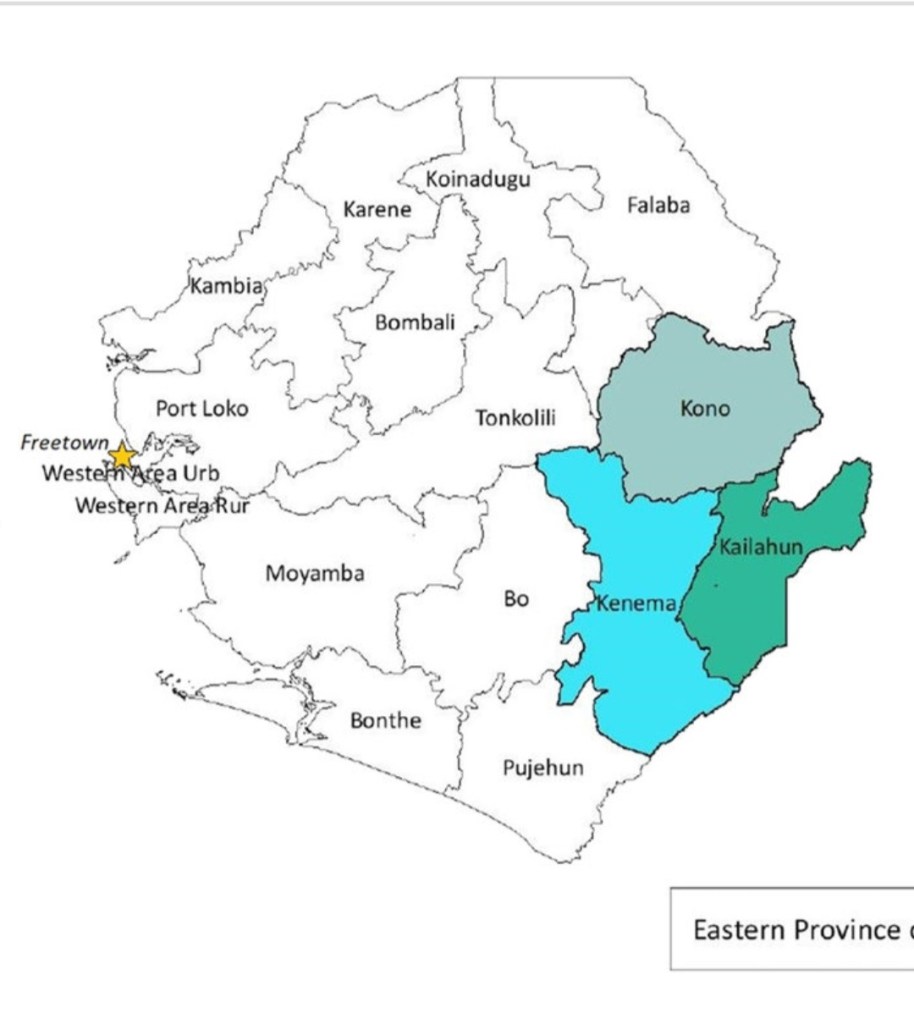
Eastern Province in Color
This commentary focuses on Kono, one of three districts in the Eastern Province, with Kenema and Kailahun being the other two. Kono District is subdivided into fourteen (14) chiefdoms, as shown in blue on the map below. These chiefdoms are at the grassroots and heart of every district within each province, with traditional chiefs at the helm of leadership within the Local Government framework.
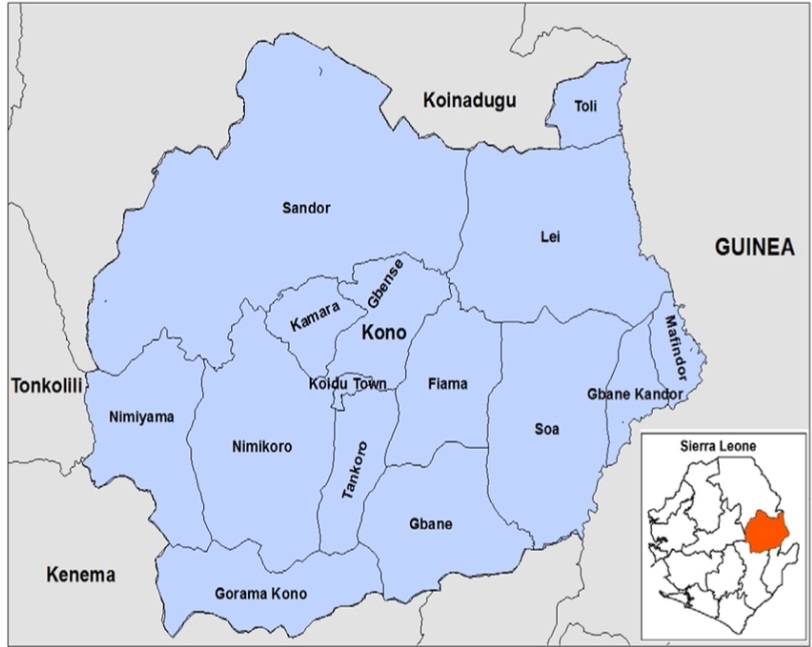
Map of Kono District. Source: OCHA/Relief Web
The people of Gbense Chiefdom found themselves at a crossroads following the passing of Honourable Paramount Chief Sahr Fengai K. Kaimachende in January 2022, after a six-year tenure. As per the Chieftaincy Act of 2009, a new Paramount Chief must be elected within twelve months in such circumstances. However, the election process in Gbense extended beyond the legally stipulated timeframe.
The Chieftaincy Act of 2009 also grants the Minister of Local Government the authority to appoint a Regent Chief during the interim period. Chief A.M. Kamanda assumed this role, which required him to maintain neutrality in the election process while overseeing the chiefdom’s affairs.
The Chieftaincy Act 2009 also provides that the Minister of Local Government can appoint a Regent Chief as the caretaker of the chiefdom in the interim period before the election of a new Paramount Chief. The regent chief can vote in the election of the new Paramount Chief; however, the regent chief cannot openly support or campaign for a candidate. In the case of Gbense Chiefdom, Chief A.M. Kamanda was appointed and acted as Regent Chief until January 16, 2024, when the people voted for a new Paramount Chief.
Battle for Gbense Chieftaincy
Sierra Leone functions under a tripartite governance system consisting of Central, Local, and Chiefdom governance. There are 190 chiefdoms in this third governance system in the country. In the Gbense election, seven aspirants vied for the Paramount Chieftaincy:
- Komba Sangor Korgbende Kaimachiande
- Sahr Barkuneh Korgbende Kaimachiande
- Sahr Yambasu Korgbende Emmanuel Kaimachiande
- Sheku Korgbende Kaimachiande
- Sahr Sona Njarquee Morgbuanbisie
- Tamba Komoh Thorlie
- Sahr Samuel Marke Thorlie

These aspirants represent three ruling houses: Kaimachiande, Morgbuanbisie, and Thorlie. The internal dynamics of these competing families contributed to a prolonged electoral journey, lasting two years instead of the prescribed one.
Election Controversy
Prior to the election day, concerns surfaced about alleged dismissals of aspirants and electorates by election authorities. Accusations included the refusal to distribute council receipts, a vital prerequisite for voting eligibility. The senior district officer responsible for this distribution was purportedly negligent, leading to suspicions of conspiracy as messages directed individuals to collect receipts from a specific aspirant’s camp.
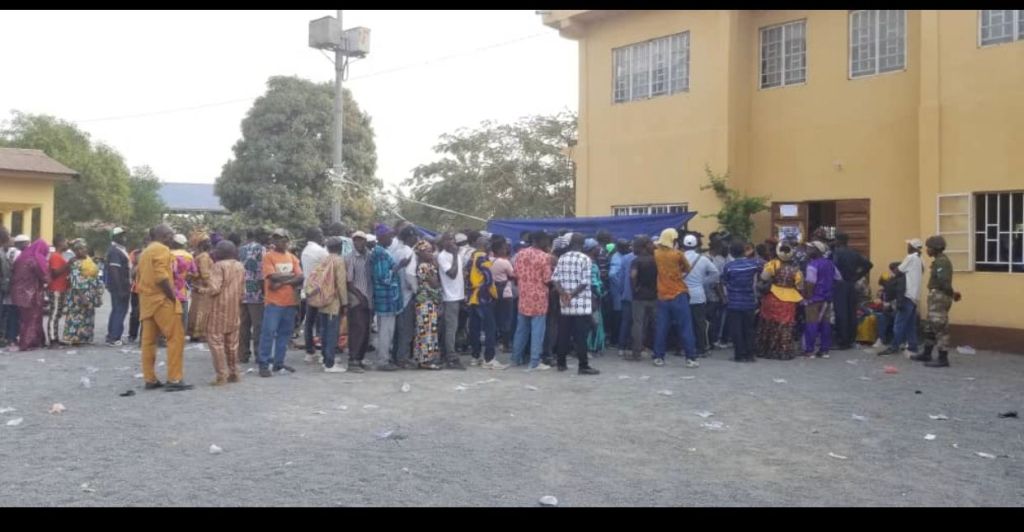
The Regent Chief, Chief A.M. Kamanda, also came under scrutiny amid claims of partisanship and using his authority to intimidate section and town chiefs. Allegations surfaced that a section chief opposing the authorities’ favored candidate was suspended, raising doubts about the fairness of the electoral process.
Despite the controversies, the Gbense election concluded peacefully on January 16, 2024, ushering in Komba Sangor Korgbende Kaimachiande as the new Paramount Chief. As the chiefdom looks forward to his stewardship, hopes are high that he will lead with wisdom and promote the well-being of the chiefdom.

A Plea for Preserving Tradition
Nevertheless, the election’s controversies have sparked calls for government intervention and a plea for central government politicians to refrain from meddling in chiefdom governance affairs. The undue influence of central government officials in chiefdom elections is viewed as a threat to the integrity of Sierra Leone’s traditional leadership.
In a direct appeal to the president, the people of Gbense are calling for the protection of local cultures and warning against replicating past actions that compromised the integrity of chiefdom elections. These appeals underscore the importance of maintaining cultural values and allowing local communities to choose their leaders without external interference from central government politicians; emphasizing the need for strengthening democracy rather than undermining it.
Reference
Food and Agriculture Organization of the United Nations. Sierra Leone Chieftaincy Act 2009.
 MAMA SALONE ~ Lioness of the West Coast